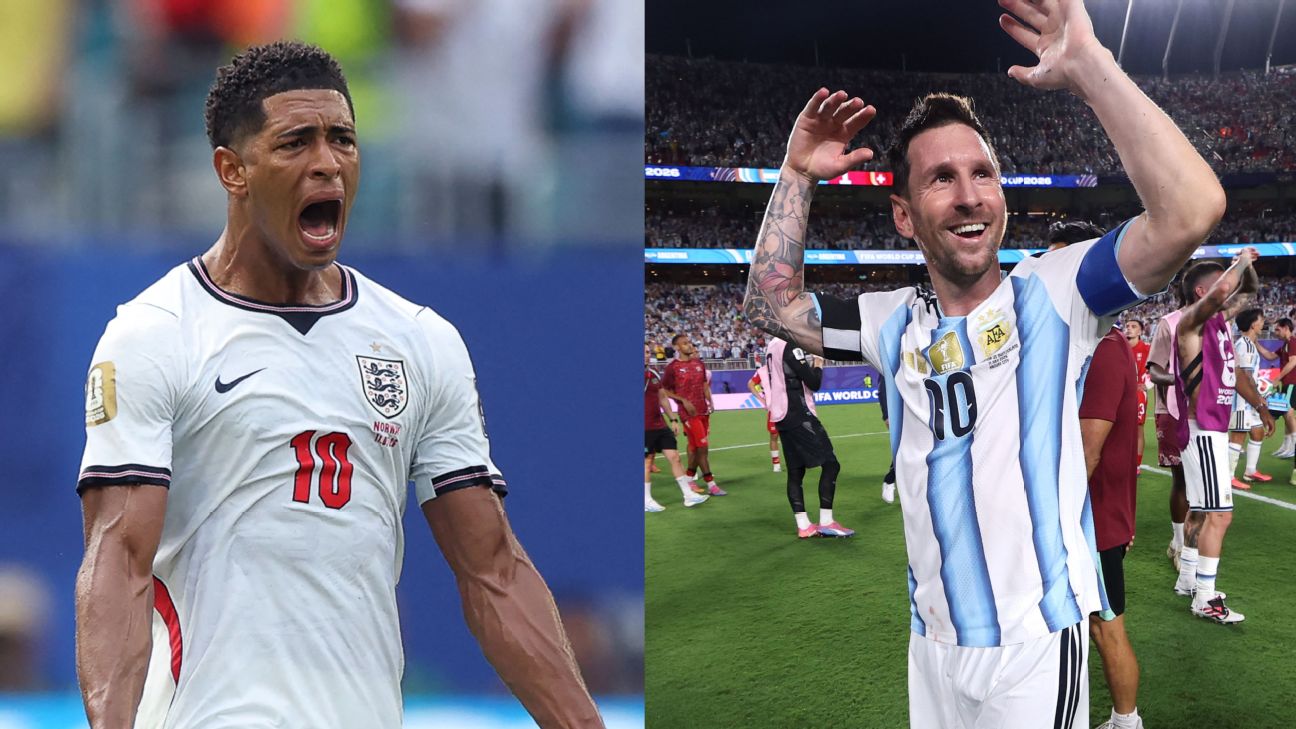
England and Argentina are set for a mouth-watering World Cup semi-final on Wednesday, July 15, at Atlanta Stadium. Kick-off is at 3:00 p.m. ET (7:00 p.m. GMT / 8:00 p.m. London time), with FIFA permitting the stadium to keep its famous roof branding visible.
The two rivals boast a rich history filled with memorable clashes, and both head into the contest eager to reach the final after grinding out victories throughout the tournament.
The winner of the semi-final will secure a place in Sunday’s FIFA World Cup final against Spain at MetLife Stadium in New Jersey. The fixture sets the stage for a meeting between two talented generations, with Harry Kane and Lionel Messi both chasing another defining achievement in their illustrious careers.
While much attention is focused on the tactical battle, the fixture has also highlighted the shared emotions of supporters from both countries. In downtown Atlanta, Argentina fan Mariano Di Croce and England supporter Neil Smith reflected on the history and significance of the rivalry.
Di Croce described the constant pressure felt by Argentine fans, saying they have a popular expression that they are “born to suffer.” Smith related to that feeling, pointing to England’s series of heartbreaking exits from recent major tournaments as a source of similar frustration.
A Common Journey of Faith and Frustration
For Smith, this World Cup has had a unique feel, but one thing hasn’t changed—the unwavering belief of England supporters. Even with a place in the final on the line, fans from both nations spoke warmly of the respect they have for each other and their shared love for the game.
Argentina’s Agustin Lopez expects a tense, low-scoring battle, describing it as “an interesting fight, but not a real one.” Di Croce and Smith also agreed that respect between the two countries is absolute, both answering “100 percent” when asked about the relationship between their supporters.
A Historic Rivalry Renewed
The England-Argentina rivalry stretches back decades, fuelled by political history and unforgettable football matches, including the 1982 Falklands conflict.
Its most famous moment came at the 1986 World Cup, when Diego Maradona scored the controversial “Hand of God” goal before producing a brilliant solo strike that is still regarded as one of football’s greatest goals.
The legacy of the 1986 quarter-final continues to be viewed differently by both nations. In England, former defender Terry Butcher and goalkeeper Peter Shilton have both publicly criticised Maradona over the controversial “Hand of God” goal, with Shilton describing it as deliberate cheating.
In Argentina, the victory has often been associated with broader national symbolism. Former defender Oscar Ruggeri has recalled that Maradona referenced the Falklands conflict in his pre-match address as he sought to motivate the team ahead of the historic encounter.
From Scandal to Glory
The England-Argentina rivalry has never lacked controversy. One of its most infamous chapters came in the 1966 World Cup quarter-final, when England manager Alf Ramsay described Argentina’s players as “animals” following a heated encounter. The match later became one of the key moments that inspired the introduction of yellow and red cards.
Geoff Hurst recalled it as “probably the nastiest and toughest game we experienced,” although he conceded Ramsay’s language was inappropriate. Argentina captain Antonio Rattin, who was sent off, believed the referee had favoured England throughout the contest.
More drama followed in 1998, when David Beckham’s red card after an incident with Diego Simeone added another unforgettable chapter to one of football’s greatest rivalries.
Reflecting on the 1998 incident, Diego Simeone acknowledged that he had taken advantage of the situation, stating that any player would likely have acted in the same manner.
Beckham responded in the best possible way four years later, scoring the winning penalty against Argentina at the 2002 FIFA World Cup. He later said the moment represented an opportunity to prove himself rather than simply erase the disappointment of the past.
A Test for Football’s Greatest
Lionel Messi has spoken about the importance of facing England for the first time, describing the fixture as a special encounter against a respected football nation. The Argentine captain praised England’s status in world football and said competing against top-level opposition is always a memorable experience.
Meanwhile, Sir Geoff Hurst has emphasised the challenge posed by Messi and Argentina, warning that the veteran forward remains a significant danger despite his age. Hurst stressed that World Cup achievement carries a much deeper meaning, extending beyond football to represent national pride and international recognition.
A City Ready for Football’s Biggest Moment
Authorities in Atlanta have stepped up security preparations ahead of the highly anticipated clash due to the fixture’s historical sensitivities.
The Atlanta Police Department has increased its personnel and resources, while Argentina’s Security Minister Alejandra Monteoliva confirmed that supporters will enter Atlanta Stadium through separate gates. Restrictions have also been placed on provocative displays relating to the Falkland Islands dispute.
However, organisers and supporters remain focused on the football, with the Football Supporters’ Association commending England fans for their behaviour during the tournament.
A Legacy Built Through Football
When England and Argentina meet, the past is never far away. The memories of 1966, 1986 and 1998 provide the backdrop, but this generation has the chance to create its own defining moment.
Beyond the history and emotion surrounding the rivalry, the semi-final will ultimately be decided by performance, resilience and the pursuit of greatness. Both nations are chasing more than a win—they are fighting for their place among football’s enduring legends.