


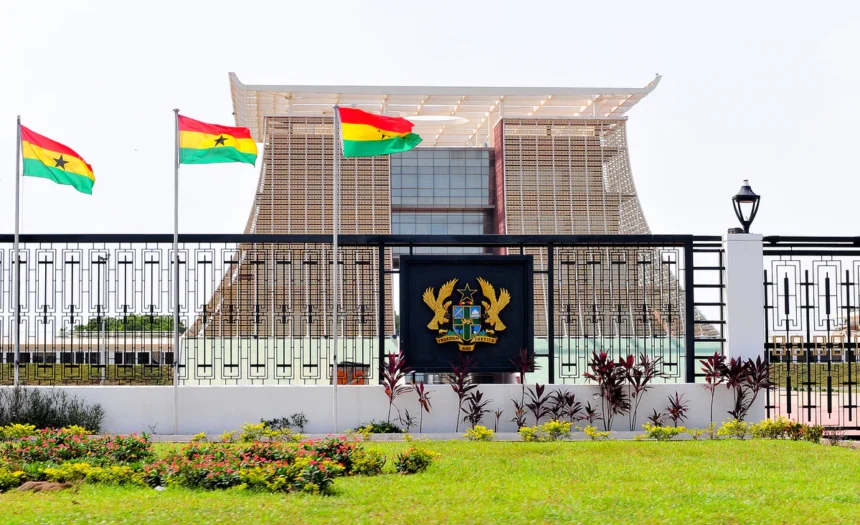
Source: Mavis Fantevi
The Government of Ghana has announced the successful conclusion of its Extended Credit Facility (ECF) programme with the International Monetary Fund, marking what officials describe as the end of the country’s financial bailout relationship with the Fund.
In a statement issued by the Presidency Communications Office on Friday May 15,2026, the government said the completion of the programme signals the restoration of macroeconomic stability, improved debt sustainability, and renewed investor confidence after years of economic turbulence.
According to the statement, the administration of John Mahama moved decisively in 2025 to recalibrate the IMF-supported programme after it reportedly went off track at the end of 2024.
The government cited aggressive fiscal consolidation measures, expenditure rationalisation, and structural reforms as key drivers behind the turnaround.
Officials said the reforms have produced notable gains, including a sharp decline in inflation, a stronger Ghana cedi, reduced public debt relative to GDP, and a rebound in economic growth.
The statement also highlighted improvements in Ghana’s sovereign credit ratings, noting that the country had moved from restricted default status to a “B” rating with a positive outlook following multiple upgrades.
Government further disclosed that Ghana’s gross international reserves had climbed to approximately US$14.5 billion by February 2026, representing nearly six months of import cover.
Authorities said the reserve growth has strengthened the country’s ability to withstand external shocks.
Despite ending the bailout programme, Ghana will continue engaging with the IMF through a Policy Coordination Instrument (PCI), which government described as a non-financing technical assistance arrangement designed to support economic reforms and strengthen policy credibility.
The Presidency stressed that the PCI does not constitute another bailout programme and will not provide direct financial support.
Instead, officials said it would offer technical guidance, capacity development, and help attract private investment and development financing.
Government believes the arrangement will support efforts to secure investment-grade status for Ghana, reduce borrowing costs, attract long-term institutional investors, and stimulate infrastructure and private sector growth.
The statement concluded by reaffirming the administration’s commitment to fiscal discipline, prudent economic management, and creating a stable environment for domestic and foreign investment.