


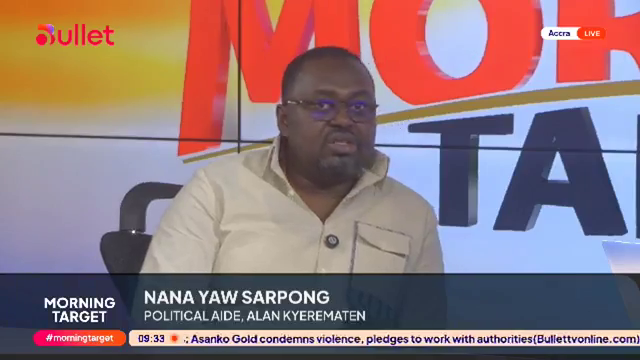
Nana Yaw Sarpong, Political Aide to the leader of the Movement for Change, Alan Kyerematen, has challenged NDC General Secretary Fifi Kwetey to go a step further in the fight against corruption by naming and shaming individuals involved in corrupt practices.
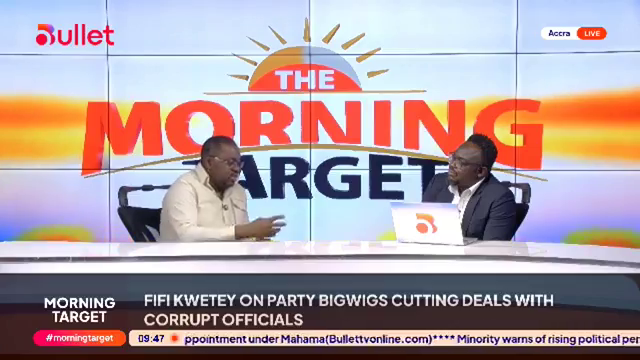
Speaking on Morning Target on Bullet TV, hosted by Nana Kweku Aduah, Sarpong expressed concern over what he described as a potentially worrying trend in Ghana’s anti-corruption approach—plea bargains without consequences.
“Maybe Fifi should have just mentioned two or three names,” Sarpong stated, “for us to shame them. We are talking about millions of Ghana cedis that have gone down the drain into individual pockets. We can’t continue to encourage wrongdoing.”
The aide emphasized that while Ghanaian culture encourages seeking forgiveness through elders or societal figures, such traditions should not be extended to high-level economic crimes and public sector corruption.
“Yes, it’s part of our culture to appeal to elders when someone goes wrong, but when we apply that same logic to public corruption, we’re simply enabling impunity,” – he warned.
‘We Need Our Money – But That’s Not Enough’
Sarpong reiterated that recovering stolen state funds is only one aspect of justice. According to him, Ghana must go beyond reclaiming money and move towards punitive action.
“Number one, we need our money. Number two, let’s name these individuals. Number three, if there’s some level of punishment, we must go ahead and punish them. Any properties acquired with stolen funds must be confiscated and either sold or put to public use,” – he declared.
He also questioned the silence around the interest and profits accrued from stolen funds, pointing out that some individuals profit immensely even before they are caught.
“If someone steals 20 million Ghana cedis and invests it in a call account at 5%, they could be making one million cedis a month. Over four years, that’s 48 million in profit—and we just take the 20 million and let them walk free?” he asked incredulously.
Plea Bargain Without Punishment Is Dangerous
Touching on the concept of plea bargaining, Sarpong noted that while it can be an effective tool in justice systems, its misuse could spell disaster.
“It shouldn’t just be about getting the money back. There has to be punishment. Even if it’s reduced, they should still spend time in jail. Ten or twenty years reduced is better than nothing.”
He warned that without proper deterrents, Ghana risks sending the wrong message: that individuals can loot public funds, negotiate a return, and walk away freely.
“What about the interest made from that money? What message are we sending to the next generation? That you can steal, give it back, and go scot-free? It’s unacceptable,” he said.
A Call for Comprehensive Accountability
Sarpong concluded by asserting that corruption, particularly on the scale Ghana has witnessed in recent years, is rarely the work of a lone actor.
“These crimes aren’t committed by one person. They often involve a network—two or three people at least. If we want to get serious about accountability, we have to uncover the full chain.”
He praised Kwetey for raising the issue but insisted that Ghanaians deserve transparency and full disclosure, particularly as the nation approaches the 2024 elections.
“Fifi Kwetey is looking at the next elections, I understand. But if we are serious about fighting corruption, we must move beyond speeches and rhetoric. Let us start naming names.”
As public pressure mounts on political parties to take definitive action against corruption, Sarpong’s comments reflect growing dissatisfaction among citizens with what many perceive as elite protectionism in Ghana’s political and justice systems.
Ghana|Atinkaonline.com|Ebenezer Madugu