


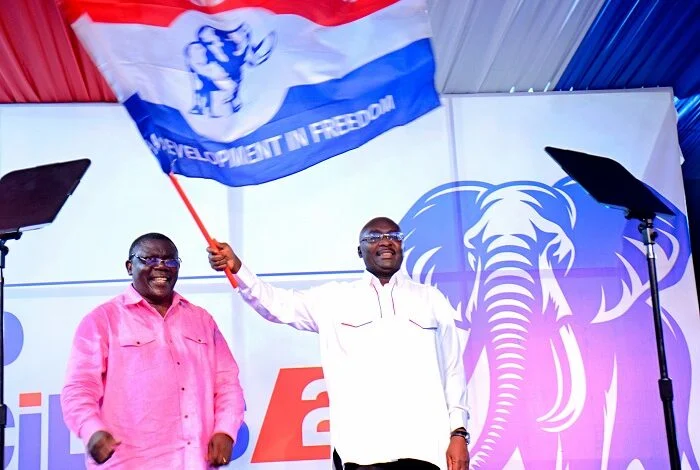
In a move that blurs the traditional line between political party and think tank, the New Patriotic Party has quietly but deliberately launched what senior figures are describing as Ghana’s most ambitious opposition policy infrastructure, a research-driven framework designed to produce credible, technically grounded alternatives to the current government’s programmes.
The engine at the centre of this enterprise is the NPP’s Policy Coordination Office, established under Dr. Bawumia’s direction to oversee and harmonise the work of 30 committees, 23 sector-aligned and seven thematic, each operating with defined research mandates, reporting timelines, and output formats.
The choice of the word “research-driven” is deliberate and significant. Party insiders say Dr. Bawumia was insistent from the outset that the committees not become forums for partisan rhetoric but functioning research bodies capable of producing work that could withstand independent scrutiny.
“The standard we have set internally is this: would this policy paper stand up to peer review?” one senior NPP official told this portal. “If the answer is no, it goes back for more work.”
To achieve that standard, the NPP has recruited a striking array of technical expertise. University faculty, economists, public health specialists, engineers, urban planners, environmental scientists, and former government technocrats are among those serving on the various committees. Several members hold international credentials and bring experience from multilateral institutions including the World Bank, IMF, and African Development Bank.
The committees are also being supported by a network of research partnerships with Ghanaian universities and independent policy institutes, giving the NPP access to primary data, academic literature, and analytical capacity that far exceeds what any Ghanaian political party has previously deployed in opposition.
The output schedule is ambitious. Preliminary sector position papers are expected by Q3 2026, with full policy frameworks completed by mid-2027, giving the NPP a full year to test, refine, and communicate its programme before the 2028 campaign season begins.
For a country that has often struggled with the gap between political promise and governance delivery, the emergence of a genuinely research-based policy process in opposition politics is, experts say, a development with implications beyond any single election cycle.
“What the NPP is building,” said one policy analyst, “is a new standard. And once it exists, all parties will eventually have to meet it.”