


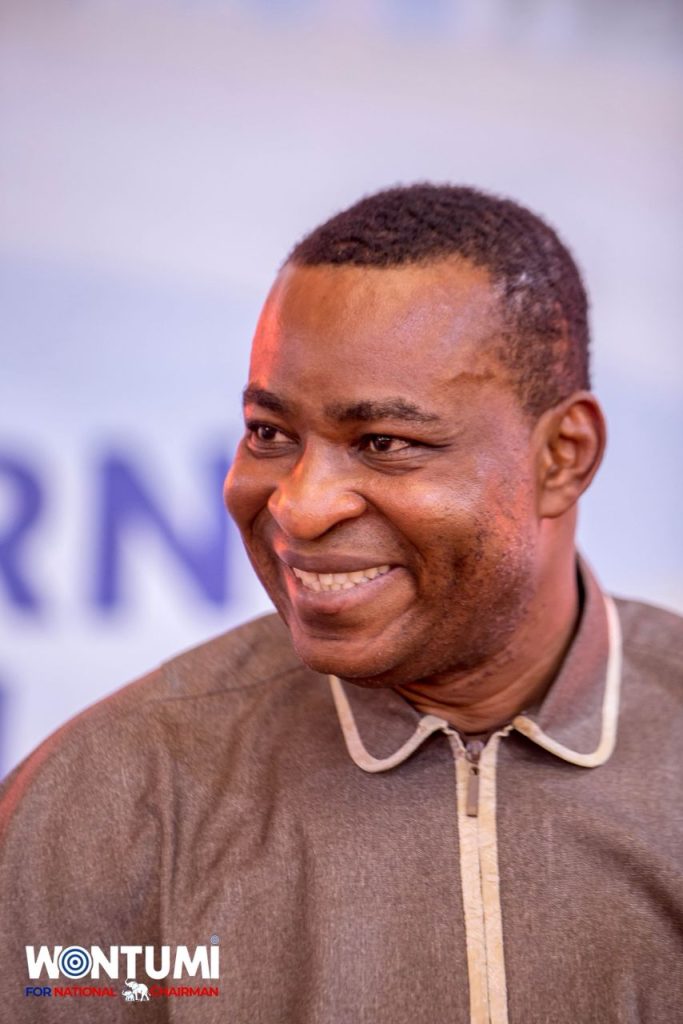
The decision by Ashanti Regional Chairman of the New Patriotic Party (NPP), Bernard Antwi-Boasiako, popularly known as Chairman Wontumi, to enter plea negotiations with the State over the EXIM Bank case has sparked debate across the country.
To many, the move raises questions. To his supporters, however, it reflects a practical decision aimed at resolving a legal and commercial dispute through lawful means rather than prolonged courtroom battles.
Long before the current legal proceedings, Chairman Wontumi had built a reputation as one of Ghana’s most visible large-scale farmers. His agricultural investments, particularly in maize production, earned national recognition in 2018 when he was named Ashanti Regional Best Farmer First Runner-Up during the 34th National Farmers’ Day celebration.
At the heart of that recognition was a 10,000-acre maize farm in the Sekyere Central District. The project was hailed as a major contribution to food production, job creation and agricultural development. It was also evidence of a businessman willing to invest heavily in a sector many consider both critical and risky.
Agriculture, despite its importance, remains one of the most unpredictable sectors of the economy. Farmers often contend with erratic weather conditions, fluctuating market prices, rising production costs and other challenges beyond their control. Even well-planned ventures can struggle to meet financial projections when circumstances change.
Against this backdrop, supporters of Chairman Wontumi argue that the facility obtained from EXIM Bank was intended to support a legitimate farming enterprise and not a speculative undertaking.
Faced with ongoing legal proceedings, Chairman Wontumi has opted for plea negotiations, a process recognized under Ghanaian law. Legal experts note that plea bargaining is designed to allow parties to resolve disputes efficiently and can involve agreements on restitution, settlements or other terms acceptable to both sides.
Importantly, entering plea negotiations does not automatically amount to an admission of guilt. Rather, it is a legal mechanism available to accused persons and prosecutors seeking to avoid lengthy litigation while pursuing an outcome within the framework of the law.
For Chairman Wontumi, the decision appears to be rooted in a desire to address the matter through due process while focusing on his business and public commitments. His supporters maintain that responsible leadership is not measured by the absence of challenges, but by the willingness to confront them openly, lawfully and in good faith.
As the legal process unfolds, the case continues to attract public attention. What remains clear is that the outcome will be determined through the courts and the legal procedures established under Ghanaian law.
Ghana|Atinkaonline.com|Vincent Kwofie