



















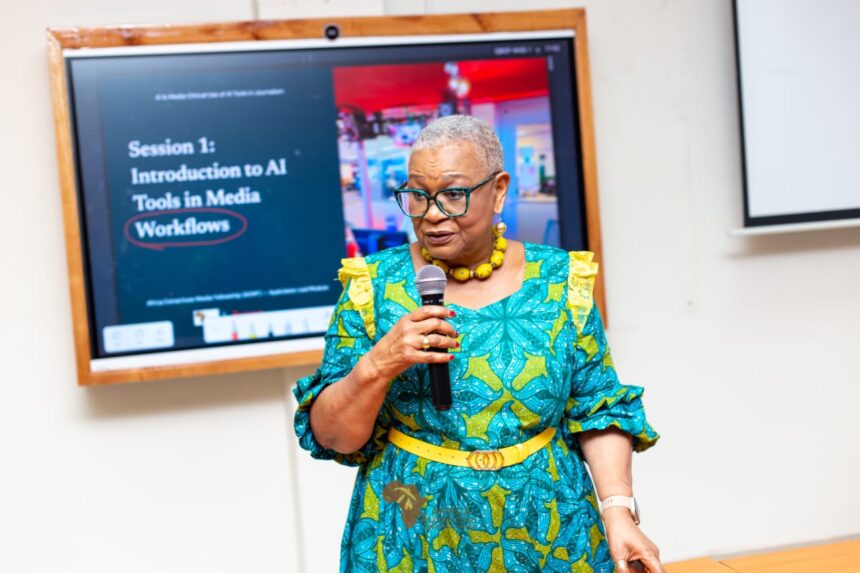
Former CEO of the Ghana Chamber of Mines, Rev. Dr. Joyce Aryee, is calling for a bold rethinking of Ghana’s mining sector — one that puts people, ethical leadership, and community wellbeing at the heart of operations.
Speaking during a mentorship session at the Africa Media Extractives Fellowship in Accra on Wednesday, November 26, Dr. Aryee delivered an inspiring lecture on “The Human Face of Mining: Leadership, Ethics, and Community Relations.”
She told participants that while mining remains a backbone of Ghana’s economy, the industry must move beyond profit-oriented approaches and demonstrate genuine social impact.
“Mining is more than the minerals we take out of the ground,” she said.
“We must balance economic growth with how we care for people and the environment.”
Mining Must Be About People — Not Just Profits
Dr. Aryee urged mining companies to shift from transactional corporate social responsibility to true partnerships with host communities.
She cited the sector’s substantial national contribution — over 8% of GDP and about GH₵6.8 billion generated in the second quarter of 2025 — as evidence that companies must deepen their social commitments.
“With that level of impact, companies must work hand-in-hand with the people who make that possible,” she emphasized.
She also applauded the increasing presence of women in the extractive sector, noting that their leadership has strengthened ethical standards and improved community engagement.
A Legacy That Communities Can Recognize
Drawing on decades of leadership in the industry, Dr. Aryee said mining companies should aim to leave lasting benefits in the communities where they operate.
“When a community can say, ‘If this company hadn’t been here, we wouldn’t have these jobs, these facilities, this education,’ then you know your presence truly mattered,” she said.
She stressed that mining often disrupts land use and livelihoods, making it even more important for companies to invest meaningfully in local people.
“Why Exactly Do We Want to Mine?” — A Challenge to National Leadership
Dr. Aryee urged policymakers to confront a fundamental question: what does Ghana ultimately seek to achieve through mining?
“If it’s only to make money, then we’ve missed the mark,” she warned.
“Mining has consequences. There will always be a hole. But what do we want that hole to represent for us as a country?”
She said Ghana needs a clear, long-term national vision to guide mining laws and policies — one that ensures development without sacrificing environmental integrity or community wellbeing.
“Once a country decides what it wants from mining, the laws we craft will reflect that purpose,” she added.
By Philip Azu