

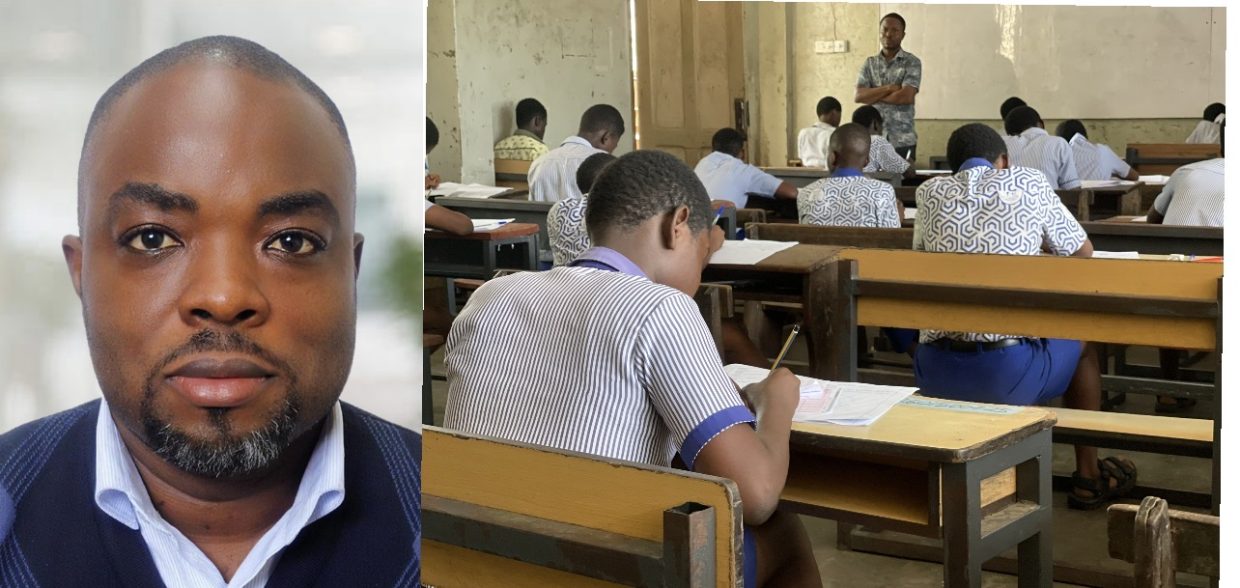
The Executive Director of the Institute for Education Studies (IFEST) Ghana, Dr. Peter Partey Anti, has called for urgent interventions to support students who were not placed into Senior High School following the 2026 Basic Education Certificate Examination (BECE) placement process.
Speaking in an interview with Ebenezer De-Gaulle on Bullet TV’s Morning Target, Dr. Anti said the reported increase in the number of unplaced students from about 13,000 last year to approximately 55,000 this year should prompt a deeper assessment of literacy and numeracy levels within Ghana’s basic education system.
According to him, the placement policy has traditionally required candidates who obtain a grade nine in either English Language or Mathematics not to be placed.
“You cannot be pushing students through the system when they have not obtained the minimum threshold of literacy and numeracy.”
Dr. Anti argued that while the strict application of the policy may have contributed to the sharp increase in the number of students not placed, the development also exposes challenges within basic education that require urgent attention.
He said the situation should lead to further analysis of how English and Mathematics are taught at the basic level.
“The number is very, very alarming. And it calls for further analysis of what we actually do in the classroom when it comes to English and mathematics.”
Dr. Anti proposed two possible approaches to addressing the situation.
He said the Ministry of Education and the Ghana Education Service could find ways to absorb the affected students, including working with private schools or allowing them to prepare for and retake the BECE.
He challenged students who have not attained the minimum threshold in literacy and numeracy to receive remedial support before progressing further.
“Let these kids go back. Let’s design an intervention for them, and then let them sit the BECE again.”
Dr. Partey noted that the objective should not simply be to place every student in a Senior High School, but to ensure that students have the foundational skills required to cope with secondary education while ensuring parents and the public understand the policy
“A child that does not meet a minimum threshold should not be pushed forward.”
He also suggested a state-sponsored remedial programme for affected students, arguing that such an intervention could allow students to continue their academic progression while receiving additional support in English and Mathematics.
“Let’s identify these students, let’s bring them together, and then let the state sponsor a remedial system for them.”
Dr. Anti cautioned that simply placing students without addressing their foundational weaknesses could create further difficulties for teachers and students at the secondary and tertiary levels.
He said the current situation should therefore be viewed as an opportunity to reassess Ghana’s approach to literacy and numeracy and introduce targeted interventions to ensure that students are adequately prepared before progressing through the education system.
Ghana|Atinkaonline.com|Christabel Kissi
[…] IFEST calls for Remedial Support for 55,000 Unplaced BECE Candidates […]