


























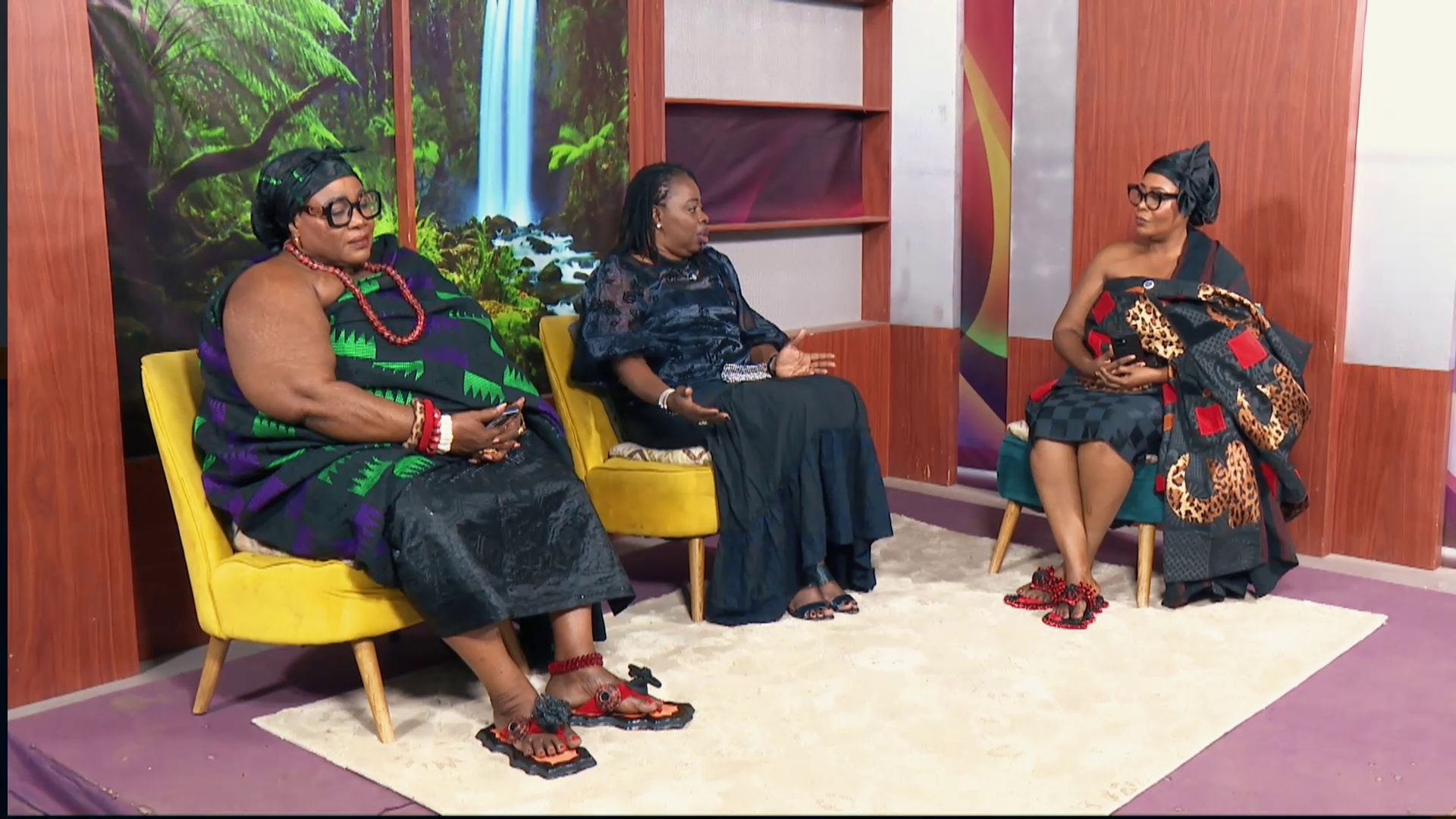
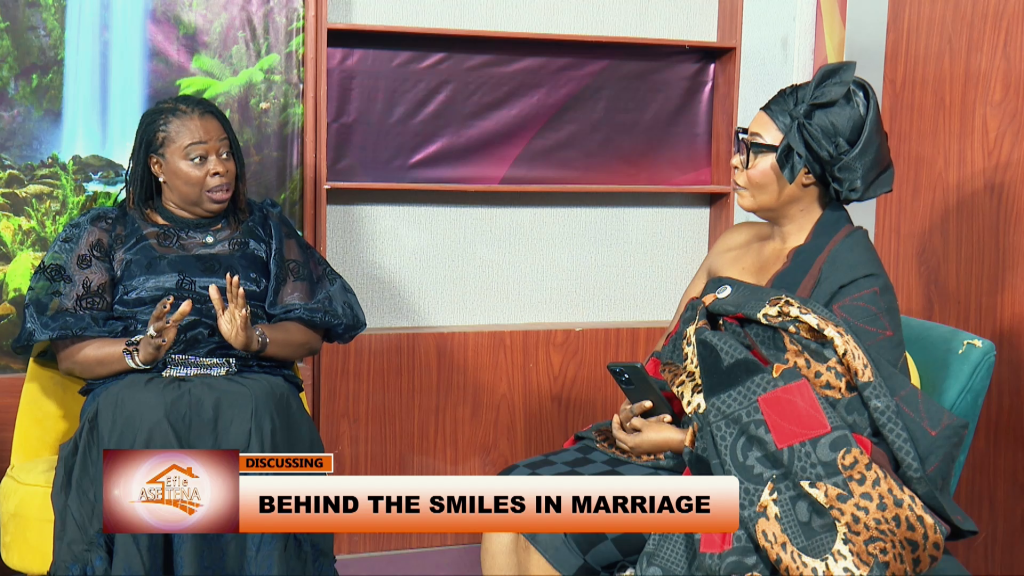
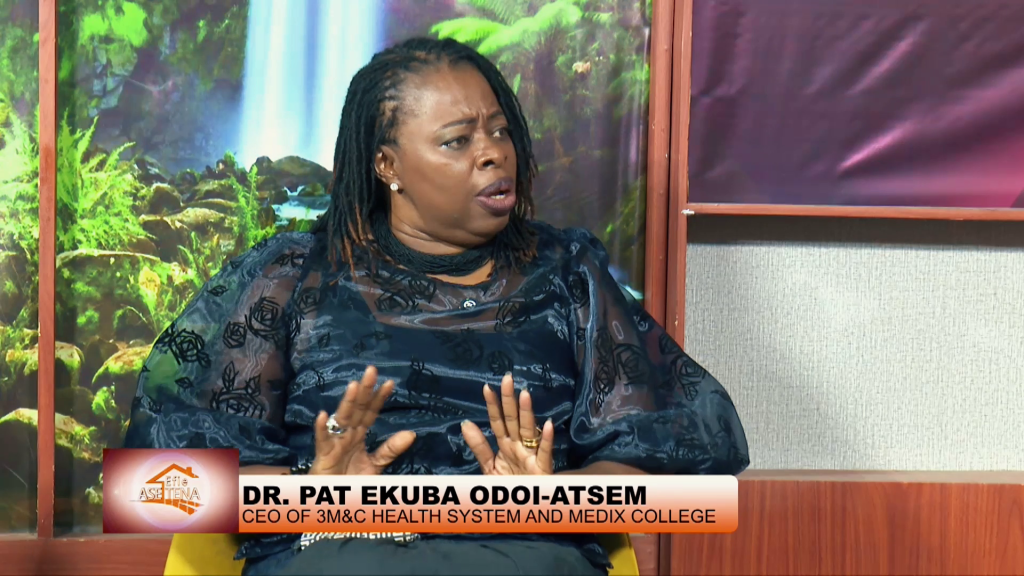
In a hard-hitting conversation on Atinka TV’s popular social dialogue programme Efie Ase Tena, renowned Ghanaian health entrepreneur and educationist, Mrs Patricia Ekuba Odoi-Atsem, CEO of 3M&C Health Systems and Medix College, painted a sobering picture of the hidden struggles women endure in marriage, often masked behind smiles, societal expectations, and silence.
Hosted by the incisive Odeshie Nana, the episode tackled the theme “Behind the Smiles in Marriage”, lifting the veil on deeply rooted cultural, religious, and psychological issues that perpetuate cycles of abuse and dissatisfaction in Ghanaian homes.
Our Mothers Were Abused Too
Mrs Odoi-Atsem did not mince words as she traced the roots of marital endurance culture to earlier generations. “Many of our mothers were abused by our fathers, and they never left,” she said. “Now, when their daughters go through similar or even worse abuse, they advise them to stay, because they too stayed.”
She condemned this cycle of silence and suffering, questioning why some parents would rather protect their reputation than their daughter’s life. “They fear the shame of divorce more than the death of their daughter. The ‘Mrs’ title and the greetings they receive while sitting in front of their son-in-law’s car have become more important than their child’s well-being.”
The Role of Religion and Laziness
Religion, she argued, plays a dual role—offering comfort but also sometimes reinforcing submission and endurance, especially among women. “Some are locked in abusive marriages because they think their suffering is righteous. Others stay because they are lazy,” she said bluntly. “A lazy woman stays because the man provides everything—even her toothpaste and sanitary pads.”
She recounted an incident on another TV station where a man claimed he would pour water on his wife’s hair if she returned from the salon with a style he didn’t like—because he paid for it. “That’s complete control. And the woman accepts it quietly because she’s financially dependent.”
Abuse, Expectations, and Misplaced Priorities
Highlighting distorted priorities in Ghanaian marriages, Mrs Odoi-Atsem shared another example of a woman pressured to change her dressing and behavior just to please a fiancé’s religious parents.
“Six months into the marriage, she was completely broken. She cried like a baby in my office. They took her freedom, but all society saw was her smile.”
According to her, many women ignore red flags in relationships, leading to predictable emotional pain. “Behind every smile, there’s often a storm.”
Solutions: Communication, Respect, and Shared Responsibility
Mrs Odoi-Atsem emphasized that healthy marriages must be built on understanding, trust, communication, respect, and mutual support. “Why should it be the man’s responsibility alone to provide?” she asked. “We must support each other.”
On a more controversial note, she said, “Sex is different for men and women. For men, it’s a need. If he needs it and you don’t want it, sometimes just satisfy him. Feed his stomach and his waist—if you don’t, you’ve lost him.”
Despite the sensitive nature of her remarks, she stressed that she and her husband enjoy a strong friendship and mutual respect. “We are buy one, get one free. We are good friends.”
Traditional Leader Weighs In: Marriage Is Not Kente and Weddings
Also speaking on the programme was Naana Ohui Ametor, Divisional Queen Mother of Big Ada, who added a traditional perspective to the discussion.
She cautioned against marrying under societal or church pressure. “Many people marry to show off. They borrow money just to wear a friend’s kente, forgetting that marriage is not about fashion. Are you ready for the journey?”
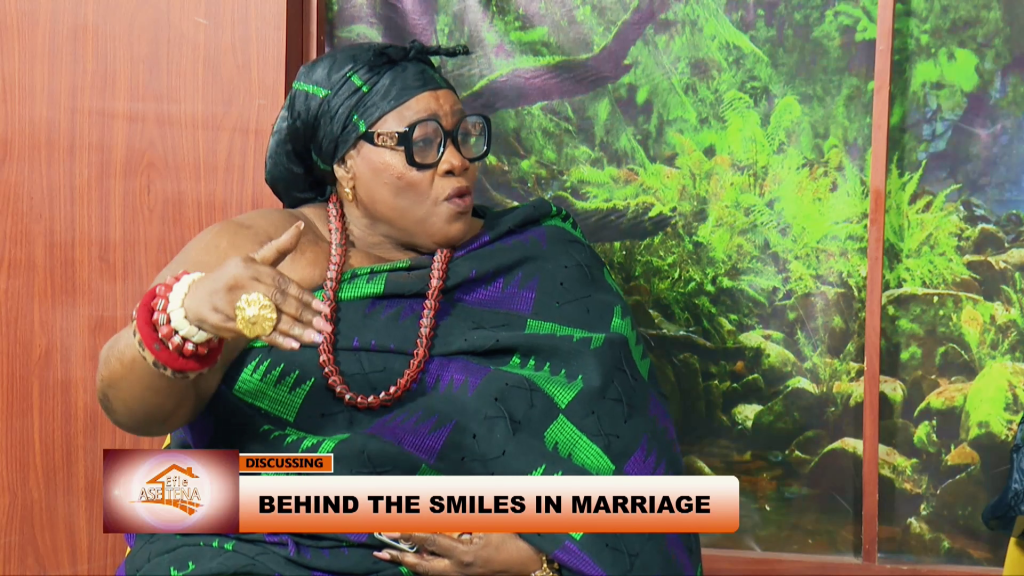
Naana Ohui emphasized friendship, patience, and maturity in marriage. “Be friends first. Don’t rush because of the ‘He has given me victory’ songs playing at weddings. Marriage is a journey of no return.”
She also urged couples to avoid anger in resolving issues, urging flexibility and understanding. “Sometimes overlook small things. It’s not everything you confront, or it can lead to worse.”
In a heartfelt reminder to men, she concluded, “If you love her, you won’t abuse her. We women are not strong—it’s only our mouths. Marriage is good. Let’s make it interesting.”
A Call to Rethink Marriage in Ghana
The candid revelations and solutions offered on Efie Ase Tena reflect growing calls for Ghanaian society to redefine marital success—from endurance and appearances to genuine partnership and well-being.
As the country confronts rising reports of domestic abuse, emotional neglect, and marital dissatisfaction, voices like Mrs Odoi-Atsem’s and Naana Ohui Ametor’s are pushing the national conversation into much-needed territory: behind the smiles, there must be truth, healing, and mutual respect.
Ghana|Atinkaonline.com|Ebenezer Madugu