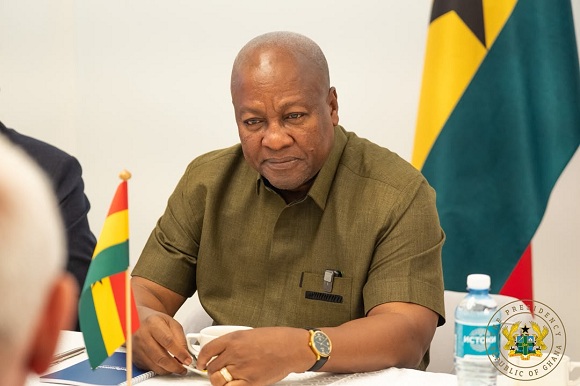
Cabinet is holding its third and final meeting to consider the government’s position paper on proposals to review Ghana’s 1992 Constitution.
Government Spokesperson Felix Kwakye Ofosu announced the development in a social media post on Tuesday, July 14, saying the meeting would conclude Cabinet’s deliberations on the Constitutional Review Committee’s (CRC) recommendations.
The final Cabinet session follows two earlier meetings held to examine proposals submitted by the CRC, chaired by Professor Henry Kwasi Prempeh.
The committee presented its final report to President John Dramani Mahama on December 22, 2025, after extensive nationwide consultations.
It was tasked with reviewing previous constitutional reform proposals and identifying measures to strengthen Ghana’s constitutional framework.
Key Reform Proposals
Among the major recommendations under consideration are:
- Extending the presidential term from four years to five years.
- Ending the practice of appointing Members of Parliament as ministers.
- Establishing an independent Emoluments Commission.
- Reforming the appointment process for Metropolitan, Municipal and District Chief Executives (MMDCEs).
President Mahama has maintained that the proposed reforms are intended to strengthen, not replace the 1992 Constitution.
“The 1992 Constitution has served us well. It has been one of our best constitutions and that is what has been the underpinning of the Fourth Republic,” the President said.
He added that any amendments should ensure the Constitution remains relevant and effective for future generations.
“We believe that any tweaking of the Constitution will only go to strengthen it even more and make it a living document to take us for the next 30 years.”
Government Position Paper
Unlike a commission of inquiry, which requires a White Paper, the constitutional review process calls for the government to prepare a position paper outlining its response to the CRC’s recommendations.
According to Felix Kwakye Ofosu, the government is expected to adopt different approaches to the proposals, with some likely to be accepted, others modified, and some rejected based on practical considerations.
Once Cabinet approves the document, the position paper is expected to be published to inform the public of the government’s official position.
Next Steps
Following Cabinet approval, an implementation committee is expected to be established to oversee the reform process.
The Attorney General and the government’s legal team will harmonise the position paper with the CRC report before forwarding it to the Constitutional Review Implementation Committee.
Majority Leader Mahama Ayariga has indicated that the government has completed the position paper and plans to submit specific constitutional amendment bills to Parliament during the current sitting.
He has cautioned lawmakers to prepare for an intensive legislative agenda, as both entrenched and non-entrenched provisions of the Constitution could be considered for amendment.
Under Ghana’s constitutional framework, amendments to entrenched provisions require review by the Council of State and approval through a national referendum. Amendments to non-entrenched provisions also require Council of State consideration, followed by approval by Parliament with the constitutionally required supermajority.
Civil Society Calls for Timelines
Meanwhile, a coalition of civil society organisations advocating constitutional reform has called on the government to publish a clear implementation roadmap with defined timelines.
The group warned that prolonged delays could undermine the reform process, particularly as Ghana moves closer to future election cycles.
“The window for completing this reform is closing,” the coalition cautioned.
President Mahama has reiterated his commitment to ensuring the review process remains transparent, inclusive and guided by the national interest.
“We are determined that this process will be transparent, inclusive, and guided by the national interest,” he said.
The outcome of Cabinet’s final deliberations is expected to shape the next phase of what could become Ghana’s most significant constitutional reform process since the adoption of the 1992 Constitution.
CREDIT: MAVIS FANTEVI