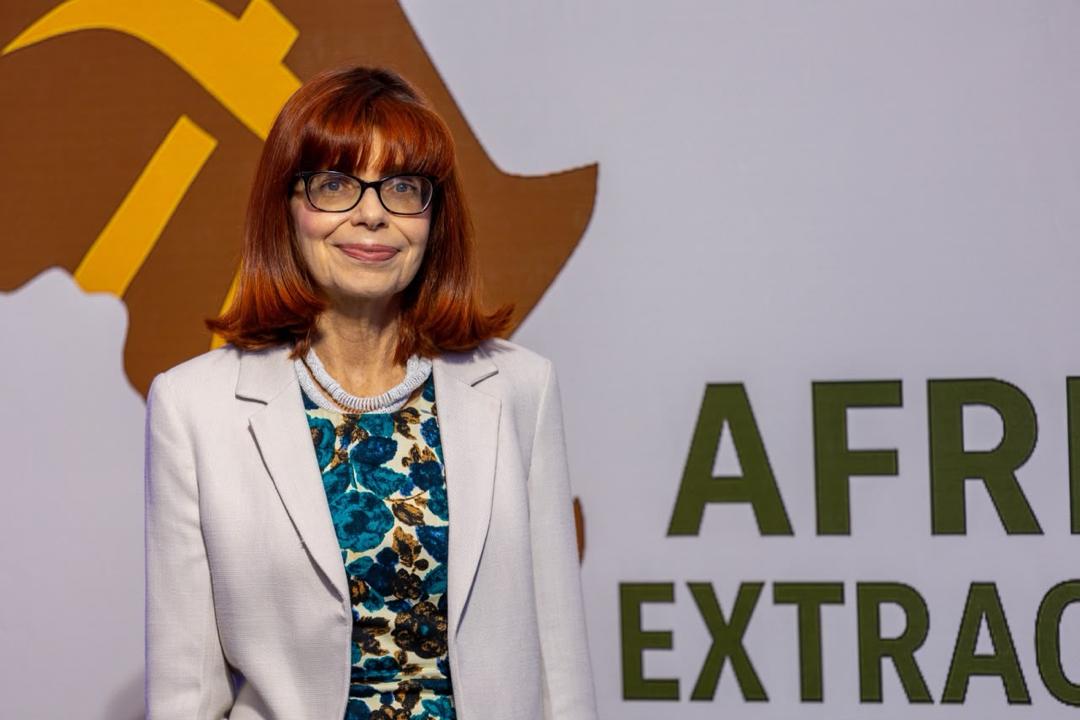
By H.E. Berenice Owen-Jones, Australian High Commissioner to Ghana
Serving as Australia’s High Commissioner to Ghana has been one of the greatest honours of my career. Over the past four years, I have come to know a country of extraordinary richness—not only because of its natural resources, but, above all, because of the strength, creativity and resilience of its people.
I arrived as the world was emerging from the COVID-19 pandemic. Since then, I have watched Ghana navigate significant economic challenges, conduct peaceful elections, and continue to stand as a pillar of stability in a region where several neighbours have faced political upheaval.
Yet what will remain with me long after I leave are not only the milestones, but the people. Ministers and traditional leaders, entrepreneurs and artists, students and academics, market traders and small business owners—every conversation offered insights that no briefing paper ever could.
Arriving during a period of economic strain gave me a front-row seat to something I had never fully appreciated before coming to Ghana: the remarkable determination required to keep a business running, provide for a family and continue building for the future while living costs rise and infrastructure struggles to keep pace.
I do not say this as an outsider passing judgment on Ghana’s economy. I say it because living alongside these realities fundamentally changed my understanding of resilience.
What impressed me even more was that this resilience was never accompanied by resignation. Ghanaians continue to innovate, adapt and aspire. Democratic institutions have endured. The country’s commitment to constitutional governance has remained firm, while Ghana has consistently served as a respected voice for peace and stability across West Africa.
For Australia, Ghana is an increasingly important partner in a region of growing strategic and economic significance. I hope Australia has offered something meaningful in return—not only investment and technical expertise, but also a genuine commitment to partnership based on mutual respect.
After four years here, I am convinced that our relationship rests on strong foundations. It is built less on size than on substance: practical cooperation, shared interests and, above all, enduring people-to-people connections.
Mining remains central to that partnership. Ghana’s position as one of the world’s leading gold producers naturally complements Australia’s globally recognised mining expertise.
Throughout my tenure, I have seen Australian companies operating in Ghana demonstrate a serious commitment to responsible mining by investing not only in production, but also in workplace safety, environmental stewardship and the development of host communities. I believe there remains enormous potential for this partnership to grow.
Equally important are the human connections that continue to strengthen relations between our two countries. Through the Australia Awards programme, Ghanaian professionals have accessed world-class education and training before returning home to contribute across government, business and civil society. Over time, these alumni form a network that will endure long after any individual diplomatic posting.
Australia’s Direct Aid Program has likewise supported locally driven initiatives in education, gender equality and community development. Their success reflects the strength and leadership of Ghanaian organisations themselves.
One visit that particularly stayed with me was to Jamestown earlier this year. There, I witnessed young people learning new skills at the Adanse Stool House, mothers receiving healthcare—including support for postpartum mental health—at the Jamestown Maternity Home, and a community actively preserving its heritage while preparing for its future. It was inspiring to connect the organisers with our Direct Aid Program team and explore how Australia could support such remarkable local initiatives.
I was equally pleased that during my time in Ghana, the Australian Centre for International Agricultural Research (ACIAR) established an office in Accra. Its work to improve agricultural productivity and strengthen climate resilience is especially important in a country where food security and climate change are daily realities rather than distant policy discussions.
Looking ahead, I believe Ghana’s future is exceptionally promising. The country possesses resilient democratic institutions, extraordinary human capital, abundant natural resources and a globally influential diaspora. Transforming these strengths into even greater national prosperity is a story only Ghanaians can write, and I have every confidence they will.
On a personal level, living in Accra challenged me in ways I had not anticipated. The heat, the traffic and the occasional bureaucratic maze tested my patience from time to time. Yet these are not the memories I will carry home.
Instead, I will remember the extraordinary warmth of the Ghanaian people. Throughout my work across nine countries in West Africa, nowhere did I experience the same depth of personal connection. Ghanaian hospitality, music, art and generosity opened doors I never expected and enriched both my professional and personal life.
Some of what I will take home is even more personal.
Many years ago, my own child underwent heart surgery. I never imagined that experience would find its way back to me in Ghana. Yet it did when I had the privilege of helping raise funds through the Melbourne Cup Charity Ball for The Children’s Heart Foundation Ghana. Those efforts helped finance life-saving heart surgery for two children in Accra this year.
It is not something that appears in any diplomatic work plan, but it became one of the most meaningful experiences of my posting.
Diplomatic assignments inevitably come to an end. Relationships, however, endure.
Ghana does not allow you to remain a distant observer. It draws you in. It changes you.
I leave Ghana a better diplomat because of the experiences I have had here. More importantly, I leave a better person because of the generosity, wisdom and friendship of the people who welcomed me into their lives.
For that, I will always be grateful.
Thank you, Ghana.