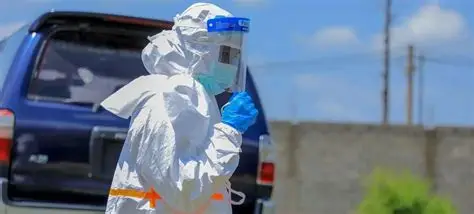
The World Health Organization (WHO) has raised alarm over a major funding gap in its response to the ongoing Ebola outbreak in the eastern Democratic Republic of Congo (DRC), warning that the global health emergency could worsen if additional financial support is not secured.
The UN health agency says it has received only about 40% of the US$115 million it appealed for to tackle the outbreak caused by the Bundibugyo strain of the Ebola virus, for which there is currently no approved vaccine or proven treatment.
According to official figures released by the Congolese government, the outbreak has infected at least 1,926 people and claimed 702 lives.
However, WHO believes the actual number of infections is likely to be much higher due to underreporting and challenges in detecting cases in conflict-affected communities.
Speaking to reporters in Geneva after returning from a visit to Ituri Province, the epicentre of the outbreak—WHO Executive Director of the Health Emergencies Programme, Dr. Chikwe Ihekweazu, stressed that the international community must not allow the response to lose momentum.
“This outbreak requires resources that match the scale of the challenges that we are facing. And this is not a burden DRC can be allowed to carry alone,” he said.
Dr. Ihekweazu explained that the outbreak has entered a critical stage following the detection of new Ebola cases in two additional provinces, a development that has heightened concerns about the virus spreading beyond the current hotspots.
He noted that while significant progress has been made in responding to the outbreak, health authorities now need greater resources to expand surveillance, quickly identify and isolate infected individuals, strengthen laboratory testing, improve contact tracing, and provide adequate care for patients.
Describing the response as a long-term effort, Dr. Ihekweazu compared the fight against Ebola to a marathon rather than a sprint.
“It’s a bit like a marathon. You can’t give up after the first lap or the second. You just have to keep pushing even when you’re getting tired and exhausted,” he said.
He also reiterated WHO’s assessment that the official figures likely underestimate the true scale of the outbreak.
According to the agency, the actual number of Ebola cases could be at least twice the reported total and may even exceed four times the official count because of limited access to some affected communities and delays in identifying infections.
The Bundibugyo strain poses a unique challenge because, unlike the more common Zaire strain of Ebola, it has no licensed vaccine or specific treatment, making early detection, isolation of patients, and supportive medical care the primary tools for controlling its spread.
The WHO is therefore urging governments, international organisations, and development partners to increase financial contributions to sustain the response and prevent the outbreak from escalating further.
Health officials warn that without adequate funding, efforts to contain the virus could be severely hampered, putting more lives at risk and increasing the likelihood of further spread within the DRC and neighbouring regions.
SOURCE: REUTERS