First Lady to partner Volta and Oti Queen Mothers to empower women

0

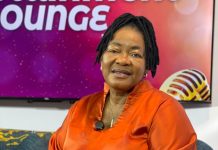
The First Lady of the Republic, Mrs. Rebecca Naa Okaikor Akufo-Addo has called for collaboration between The Rebecca Foundation and Paramount Queen Mothers in the Volta and Oti Regions to empower young women in their communities, as part of a working visit to Ho in the Volta region.

The First Lady acknowledged the immense responsibility placed on Queen mother’s as mothers of their traditional areas and commended them on their contribution to the development of their communities.

She also acknowledged the challenges Queen mother’s face in addressing socio-economic issues like teenage pregnancy, unemployed or under employed young women and promised to provide skills training and business support to young girls and women in their communities.

The First Lady thanked the Queen Mothers for their continuous support for her husband, H.E. President Nana Akufo-Addo, especially in the implementation of various social intervention policies such as the Free SHS.

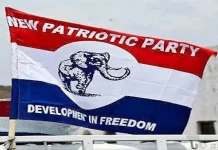
The First Lady urged the Queen mothers to continue to support the vision of H.E. President Nana Akufo-Addo and the NPP party by giving them four more years to do more, pointing out that with the strengthening of already existing social intervention policies like the NHIS , L.E.A.P and a significant increase in Basic school capitation grant, the Planting for food and jobs and the re-introduction of Nursing and Teacher training allowances, the Akufo-Addo led NPP government is poised to realise the vision of Ghana beyond Aid and put money directly into people’s pockets.

On behalf of the Paramount Queen mothers, Nana Otubea II Paramount Queen mother of Nkonya Traditional Area, expressed their profound gratitude to the First Lady and commended her on her many initiatives under The Rebecca Foundation which have positively impacted the lives of women and children in Ghana.

She assured Mrs. Akufo-Addo of their unflinching support in her quest to empower women and girls in both Regions and promised to support President Akufo-Addo to secure four more years to do even more for the people of the Volta and Oti Regions.

Ghana|Atinkaonline.com

NDC manifesto full of unrealistic promises- NPP

The governing New Patriotic Party has described the NDC’s 2020 manifesto as one that is replete with unrealistic promises and plagiarized policies and programmes.

National Youth Organizer of the NPP, Henry Nana Boakye at the 11th edition of the “Youth Must Know Series” opined that the theme of the NDC’s 2020 manifesto,  “Jobs, Prosperity and More” is a contradiction of the kind of governance the NDC offered when they were in government.

He said, the former president and leader of the NDC, John Dramani Mahama at the time of his presidency said he was not a magician to create jobs for the teaming unemployed youths in the country and therefore should not be taken serious with any promise of job creation.

Touching on the NDC’s promise to create 1 million jobs in the next four years if given the nod, the National Youth Organizer of the NPP said, the party that took Ghana to the IMF and the subsequent freeze on all public sector employment has no credibility to be trusted in the arena of job creation.

He urged Ghanaians to take a cue from the failed 10 billion Hope City project which never materialized.

In the area of education, the NPP said NDC can’t expand the free SHS programme to private schools as has been promised in the party’s manifesto. He said, while in opposition, the National Democratic Congress vehemently chastised the free SHS policy as “419” and therefore lacks the basic knowledge on the programme to expand it.

Henry Nana Boakye wondered why a party which could not pay Capitation Grant, teacher and nursing trainee allowances is now promising to pay 50 percent of fees by all tertiary students for the 2020/2021 academic year.

Ghana | Atinkaonline.com | Bernard Luv

Works on $1billion Pwalugu Dam progressing to help halt flooding from Bagre dam spillage-Bawumia

0

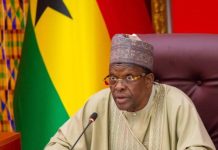
The Vice President, Dr. Mahamudu Bawumia has reiterated the Akufo-Addo government’s commitment to ending the perennial flooding in the Upper East and North East regions.

Many communities in these regions have over the years suffered from devastating flood, as a result of the annual spillage of the Bagre Dam in Burkina Faso, and President Akufo-Addo promised to build a dam in Pawlugu to contain the situation.

This year’s havoc, which hit the regions this week,  has been more devastating as a result of combined factors of the Bagre Dam spillage in Burkina Faso and days of heavy downpour in northern Ghana, resulting in 10 people losing their lives and farmers losing their crops and animals.

Addressing the press during an assessment visits to the Kubore Zebila-Bawku road, which has seen parts washed away by the heavy flood on Thursday, 10th September, 2020, Dr. Bawumia said the flood has been devastating communities for years and there has to be a permanent solution to it, hence the Akufo-Addo’s government’s decision to invest massively in the Pawlugu Dam to help address the problem.

“At the end of the day, this is a problen that we have kept experiencing year after year and the question I am sure is in the minds of every Ghanaian is what are we doing about it?,” Dr. Bawumia said.

“We have basically understood that to deal with this problem fundamentally, we have to have a flood control in the context of the Pawlugu Dam.”

“That is the most important antidote to all of these. That is why we have moved to secure the Pawlugu Dam project, and this project is the biggest dam project we have in the northern region.”

“It is the single biggest investment in northern Ghana since independence; it is about $1 billion dollars and the contractors are on site.”

The Vice President said prior to the flooding, the contractors had already commenced work by clearing the site up to the river.

He added that with the flooding, the contractors would have to wait for the flood to subside and then they will divert the water for work to continue.

“On the washing away of the portion s of the Kubore road making it inaccessible, the Vice President said the Ghana Highway Authority is waiting for the water to subside before contractors move on site to fix the bridge and reconnect the road.”

Government sympathies to victims

Dr. Bawumia expressed the government’s condolences to families of the ten people who perished, and farmers who lost their livestock and crops.

“It is a disaster and a very sad situation. We have unfortunately lost lives, about ten people, I am told, have lost their lives. On behalf of the President, I express the government’s commiseration to families of the victims,” said the Vice President.

Dr. Bawumia added: “Many farmers have lost their livestock and crops. They have lost a lot of their crops and for farmers when you lose your crop, that is a year’s income so we have to find a way of cushioning these farmers. We have to find a way to provide relief for the farmers to help them.”

Dr. Bawumia is on a working tour of the northern regions of Ghana and he has halted his origional programme for his first day in the Upper East Region on Thursday September 10, 2020, to tour affected areas and people for first-hand knowledge on the extent of the disaster.

The Vice President was accompanied by the Upper East Regional Minister, Patience Tangoba Abayege, Minister for Interior Ambrose Derry, Deputy Minister of Roads and Highways Anthony Karbo as well as National and Regional Directors for NADMO.

Ghana | Atinkaonline.com

Bawumia tours flooded communities in Upper East region

0

The Vice President, Dr Mahamudu Bawumia, has visited victims of recent devastating floods in the Upper East region.

The floods, caused by the opening of the Bagre Dam in Burkina Faso and days of torrential rainfall in northern Ghana, has reportedly led to the deaths of 10 persons, destruction of large hectares of farmland and hundreds of livestock, and washed away parts of some major roads, cutting off some communities.

Some of the areas affected include Somaaman, Sakapa, Bluima, Katigri, Pwalugu and Bolga.

Dr. Bawumia, who is on a working tour of the northern regions of Ghana, set aside his original programme for his first day in the Upper East Region on Thursday September 10, 2020, to tour affected areas and people for first-hand knowledge on the extent of the disaster.

Speaking at Anateem, where some families are temporarily accommodated, Dr. Bawumia expressed government’s condolences to the families of the ten people who perished, and farmers who lost their livestock and crops.

“It is a disaster and a very sad situation. We have unfortunately lost lives, about ten people, I am told, have lost their lives. On behalf of the President, I express the government’s commiseration to families of the victims,” said the Vice President.

Dr. Bawumia added: “Many farmers have lost their livestock and crops. They have lost a lot of their crops and for farmers when you lose your crop, that is a year’s income so we have to find a way of cushioning these farmers. We have to find a way to provide relief for the farmers to help them.”

Addressing the press during an assessment visit to the Kubore Zebila-Bawku road, which has seen parts washed away by the heavy flood, Dr. Bawumia said the flood has been devastating communities for years and there has to be a permanent solution to it, hence the Akufo-Addo’s government’s decision to invest massively in the Pwalugu Dam to help address the problem.

“At the end of the day, this is a problen that we have kept experiencing year after year and the question I am sure is in the minds of every Ghanaian is what are we doing about it?,” Dr. Bawumia said.

“We have basically understood that to deal with this problem fundamentally, we have to have a flood control in the context of the Pwalugu Dam.

“That is the most important antidote to all of these. That is why we have moved to secure the Pwalugu Dam project, and this project is the biggest dam project we have in the northern region.

“It is the single biggest investment in northern Ghana since independence; it is about 1 billion dollars and the contractors are on site.”

The Vice President said prior to the flooding, the contractors had already commenced work by clearing the site up to the river.

He added that the contractors would have to wait for the waters  to subside and then divert it for work to continue.

On the washing away of portions of the Kubore road which links Bolga and Bawku, the Vice President said the Ghana Highway Authority is waiting for the water to subside before contractors move on site to fix the bridge and reconnect the road.

The Vice President was accompanied by the Upper East Regional Minister, Patience Tangoba Abayege, Minister for Interior Ambrose Derry, Deputy Minister of Roads and Highways Anthony Abayifa Karbo as well as National and Regional Directors of the National Disaster Management Organisation (NADMO).

Officials of NADMO, led by Director General, Eric Nana Agyeman-Prempeh, handed over relief items to the affected.

Ghana | Atinkaonline.com

'Akyem Sakawa jibe: Mahama will not apologise-Agyenim Boateng

0

The Spokesperson for Flagbearer of opposition National Democratic Congress, John Mahama 2020 Campaign Team, James Agyenim Boateng, has stated that the Former President has not wronged Akyem People and therefore will not apologise over ‘Akyem Sakawa Boys’ comments.

According to him, those comments were not directed to the whole of Akyem and its people but to government officials who were engaged in the Agyapa Royalties deal which has raised many questions.

Mr. Mahama shared on his Facebook an unprovoked blistering attack on President Akufo-Addo and his Vice Dr. Mahamudu Bawumia by Isaac Adongo, Member of Parliament (MP) for Bolgatanga Central, on the Agyapa Royalties deal.

Isaac Adongo had called those working on the Agyapa deal as ‘Akyem Mafia’ and Mr. Mahama amplified the NDC MP’s vitriolic comment on his Facebook page by adding ‘Akyem Sakawa Boys.’

The statements have been condemned by groups including the Peace Council, members of the NPP as a whole, whiles President Akufo-Addo also expressed his disappointment in Mahama over the comments.

In a latest development, three divisions of Akyem – Abuakwa, Bosome, and Kotoku in the Eastern Region hit the streets on Wednesday morning to register their displeasure with John Mahama and the NDC over the comments, demanding an apology and withdrawal of the statement.

But reacting to the issue on Atinka TV’s Morning Show, Ghana Nie, James Agyenim Boateng said those who went on demonstration should come and explain why they are offended, and also prove If they are government officials who are engaged in the Agyapa Royalties deal before John Mahama can apologise.

“You need to apologise to someone you have wronged, and so the people need to show how they have been offended, because the statement is in reference to certain people in government involved in that Agyapa dealings which Isaac Adongo considered to be shady , untidy and problematic.  Are those doing the demonstration in government, do they serve under the Akufo-Addo administration? Because they need to come within the allegation of the scandal,” he said.

He added that, “They need to prove that they are the persons being referred to and in fairness to the issues, it is a matter of fact that they do not serve in the government even though they are Akyem people. It is a matter of fact that they are not behind any of those business dealings that Isaac Adongo referred to so on what basis are they offended? They need to prove these things and then we can move on from there.”

James Agyenim Boateng said John Mahama is the most abused President when it comes ethnocentric and tribal attacks , alleging that President Akufo-Addo does tribal politics.

“John Mahama does not do tribal politics.  He is above that. President Akufo-Addo has said worse things to Mahama, he called Mahama President ‘Do Little’, he said Voltarians are Togolese. He said Ghanaian elections is not a West African Elections and he was referring to the people of Volta,” he said.

James Agyenim Boateng also tagged President Akufo-Addo as the most intolerant President under the Fourth Republic for sharing his anger in public, stating that, “The President must have the heart and tolerance to accept some of these things.”

He urged the Peace Council to condemn and advise the NPP as it advises and condemns the NDC on such issues.

James Agyenim Boateng also said John Mahama will go to all the regions and towns including Akyem when its time to do their campaign although the three states of Akyem have warned him not to come there to do any campaigns.

“I take no objection or rejection of anybody going on demonstration, because this is a constitutional democracy, people have the right to go on demonstration an express their concerns, in any case, the same government said due to covid-19, nobody can go on demonstration, so who sanctioned this demonstration in Akyem land? What is going on is nothing more than politics,” he opined.

Ghana| Atinkaonline.com| Porcia Oforiwaa Ofori

Video: Beer party hits Tema motorway after trailer transporting beer crashes

0

It was more of a “beer party” on the Accra-Tema Motorway after an Accra Brewery Limited Trailer got involved in an accident that left one dead on the spot.

The squatters leaving around the scene who came to calm the situation and ensure the safety of the bottles, were allowed to drink liquor .  

The Squatters were happy with the Accra Brewery Driver’s role in saving many lives by applying a sharp break to U-turn, a scenario they described as “wonderful.”.

They, therefore, protected the driver and the products till the arrival of the Airport Police.

Watch the “Party” here: 

Ghana | Atinkaonline.com | Madugu Ebenezer

Lack of resources to withstand situations cause of suicides – Psychologist

0

Psychologist and lecturer at the University of Ghana, Emanuel Assampong, has attributed suicides to lack of resources to withstand situations.

This statement is in line with the commemoration of World Suicide Prevention Day.

The 2020 theme for the commemoration “Working Together to Prevent Suicide” seeks to call the attention of stakeholders to the urgent need to contribute to the decriminalization of the prevention of suicides.

According to available statistics at the World Health Organization (WHO) over 800,000 people take their lives annually.

Commenting on issues surrounding suicides, Emanuel Assampong, explained that individuals have different ways of reacting to dire situations.

“Usually, suicide victims continue with the act after they had fought and believe that they have exhausted all problem solving angles and avenues in their situations. The victim is broken to the extent that suicide is the only available option”, he explained.

Emanuel Assampong also called for the decriminalization of suicide arguing that disorder is just like any other disease treated at the hospital.

“When people have Malaria, we take them to the hospital and not the  police station. I strongly believe that laws on suicide should not be criminalized, but persons who come out of suicidal thoughts should be taken through some social interventions to make prevent them from going through a similar phase in the future”, he added.

Ghana | Atinkaonline.com | Vivian Adu Boatemaa

World Suicide Prevention Day marked today

0

Today, September 10, 2020 marks the World Suicide Prevention Day (WSPD) dubbed,“working together to prevent suicide”.

The WSPD is an opportunity for raising critical awareness on the reality of suicides and the attendant devastations it leaves for all.

WSPD is a special day for calling attention of national governments, organizations, and individuals to the urgent need to contribute meaningfully towards prevention of suicides.

Seen usually as an individual problem, suicide has wider consequences for the whole family, friends and colleagues, employers and employees, communities and the country in general.

On this day, the Ghana Psychological Association (GPA) in partnership with Center for Suicide and Violence Prevention (CSVR) stated that it is important that as a country, we scale up our efforts towards preventing incidences of suicides.

“One key way of doing so is by first seeking to understand the stories surrounding each suicide case to know what we can do as individuals or groups to help. However, the current practice of stigmatization, social taunts, and criminalization of suicide attempt militate against genuine efforts towards getting people to share their problems to attain the needed help,” the organisations stated.

Below is a statement:

September 9, 2020

Press Release: All Media Houses

World Suicide Prevention Day (WSPD)

The World Suicide Prevention Day (WSPD), which falls on the 10th September of every year is an opportunity for raising critical awareness on the reality of suicides and the attendant devastations it leaves for all. This day is a special day for calling attention of national governments, organizations, and individuals to the urgent need to contribute meaningfully towards prevention of suicides. Seen usually as an individual problem, suicide has wider consequences for the whole family, friends and colleagues, employers and employees, communities and the country in general. Suicide occurs at the intersection of biology, psychology, psychiatric, cultural, existential, and a host of factors. It is best conceived as a multicausal problem that requires multiple expertise and multi-sectorial approaches for addressing it.

Available statistics from the World Health Organization in 2012 has it that globally, more than 800,000 people take their lives annually, which equate to 1 suicide nearly every 40 seconds. For each suicide, more than 20 people attempt suicides. The single most important risk factor for suicide across the general population is a previous suicide attempt.

Recent research evidence shows that in Ghana today:

  • 1 in 10 adults in rural communities think about taking their own lives
  • Similarly, nearly 3 in 10 junior high school students in Ghana report attempting suicide in the past 12 months, while 2 out of 10 senior high school students report attempting suicide during the past 12 months.
  • Among school-going deaf adolescents, 1 in 10 students reports attempting suicide in the past 12 months.
  • Across second cycle schools, about 2 in 10 students report intentional selfinjury or self-poisoning in their lifetime.
  • 2 out of 5 adolescents who identify as LGBT engage in self-poisoning or selfinjurious behaviours.
  • Nearly 3 in 10 police officers in urban Ghana report having had thoughts about taking their own lives during the previous 12 months
  • Ongoing research indicates that some displaced staff and survivors of the recent banking sector clean-up have contemplated and attempted suicide.

The theme for this year’s WSPD working together to prevent suicide” is a clarion call for a collective efforts towards suicide prevention because suicide prevention is everyone’s business.  A call for a concerted efforts is in the right direction since each and every one of us has a role to play.

The multifaceted nature of the problem requires that we go beyond one-size-fit-all prevention frameworks which are not achieving the much needed results.  This is because interventions from such frameworks are usually singular, universalized, and acontextual, and often inform a conceptualization of suicide as an individual problem requiring solutions at the individual level. Many countries are instead embracing frameworks that situates suicides within particular social and cultural contexts towards context relevant solutions. A context-based understanding is useful because evidence shows that not all who bear suicide risks go ahead to kill themselves.

In Ghana, evidence shows age-related suicide risks factors that intersect with other factors including gender, familial, cultural and social and economic. School and family related factors such as bullying, poor academic performance, substance use, parental neglect, physical and sexual abuse, and financial constraints have been implicated in many adolescent suicides, alongside (cyber) bullying, romantic relationship crisis, and issues related to shame and dishonour. For such adolescents, lack of safe outlets for ventilating their concerns lead them to risky behaviours such as unsafe sexual choices, substance use,  self-cutting, self-poisoning, which all pose grave risks to their lives.  A recent study, however, shows that parental warmth and understanding and familial social support act as key protective factors against the onset of suicidal behavious among adolescents and young people.

Among adults, the evidence in Ghana has revealed the gendered nature of suicides, where some men use suicides as means for escaping loss of face due mostly to inability to fulfil what is considered the three P masculinity norms in Ghana, i.e. ability to provide materially for one’s nuclear and extended family, ability to perform sexually, and ability to produce children.  A recent study into suicides among men in Ghana showed that for some men, strict adherence to traditional masculine norms hinder their ability to disclose their psychosocial troubles due mainly to fear of stigma and name calling. The use of substances such as alcohol and marijuana present as self-medication strategies, which in turn aggravate the situation of some men, and subsequently elevates the risk for suicides.

Although female suicides are grossly under-reported among some groups in Ghana, available evidence shows that most women who live under oppressive marital, family and community contexts kill themselves when they have no option for seeking redress. Studies have also shown how some of the aged in Ghana take their lives due to feelings of being a burden to their relatively young benefactors. For a majority of these older persons, chronic illnesses combined with conflictual relationship with spouses and children, as well as indebtedness remain serious push factors for their suicides. Suicide research evidence in Ghana has also shown that the labelling of older women as witches is a risk for suicide among aged women.  More worryingly, recent evidence from Ghana suggests that ALL media houses in Ghana have failed in their reportage of suicide in line with WHO standards for suicide reporting. Besides the problems of sensationalism and needless glamourisation, our media houses continue to give detailed account of suicide methods, post images of suicidal persons, and fail to provide the public with suicide prevention education and professional contacts for suicide support services. Failure to adhere to prescribed suicide reporting standards is a great risk for copycat suicide in vulnerable persons.

It is important that as a country, we scale up our efforts towards preventing incidences of suicides. One key way of doing so is by first seeking to understand the stories surrounding each suicide case to know what we can do as individuals or groups to help. However, the current practice of stigmatization, social taunts, and criminalization of suicide attempt militate against genuine efforts towards getting people to share their problems to attain the needed help.

Persons in suicidal crises fall into a heterogeneous population. Data continue to show that the rich and the poor, males and females, clergymen and congregants, the famous and the unknown, etc. have been victims. Persons who undergo suicide crises are experiencing one form of mental anguish or the other, due to frustration of some psychological needs. As a people, we may not know whatever needs may have frustrated others but we can offer the needed help if we remain trustworthy and empathetic around our compatriots who experience psychosocial crises.

In light of the WSPD 2020 theme “working together to prevent suicides’, we must constantly remember that each and every one of us may be the lifeline to others in crisis if we keenly look out for some unusual signs including unusual isolation of self, persistent loss of appetite, risky behaviours, giving out of precious belongings, substance use and abuse, among others. Let us also listen attentively to words and sayings that are very suggestive of suicidal intentions and provide the needed help if we can or link up such persons to professionals around if the issues are beyond us. Scientific and anecdotal evidence shows that, with a timely help both in material and emotional terms, individuals who once underwent suicidal crisis can go on to live prosperous lives. Let us stop stigmatizing people in crises, and work together to prevent suicides.

The fight to prevent suicide critically requires leadership at the governmental and political levels to show commitment towards prioritizing and investing in improving mental health of citizens. One such commitment is to expunge the code that criminalizes suicide attempt survivors from our law books and rather put in place safety nets to support vulnerable populations. This year, we once again call on the Government to demonstrate this commitment.

The leadership of the Ghana Psychological Association and partners wishes to encourage every Ghanaian to support the GPA’s 10Ps Campaign (Assure and encourage at least 10 Persons in distress to seek help) and remember Psychology is Life.

……………………………………………………………………………………………………………

Released by

Ghana Psychological Association (GPA) in partnership with;

Center for Suicide and Violence Prevention (CSVR)

Signed

Mrs Joy Anima Debrah

National Public Relations Officer

Contact: 0244296435/0244786241/ 0244023880/0541809673

Ghana| Atinkaonline.com

Eastern part of Greater Accra to experience interruption of water supply

0

The Management of Ghana Water Company limited (GWCL), has informed the general Public, that there will be an interruption of water supply to the eastern part of the Greater Accra Region from Monday 14th to Saturday the 20th of September, 2020.

According the the company, GWCL engineers will be replacing close to 2 kilometers of a weak session of the main 42-inch diameter transmission pipe-line from Kpong to Tema, which is causing GWCL to lose several volumes of water on daily basis and consequently having a serious impact on the volumes available for consumption.

“Management is as a result entreating consumers in Accra, especially consumers in the eastern part of the metropolis to store enough water for consumption during the period of the shut-down,” the GWCL stated.

AFFECTED AREAS

The areas envisaged to be hard hit include; Afienya, Apallonia, Gbetsele, Ashaiman, Katamanso, Kakasunanka, Adjei Kojo, East Legon Trasaco, All the communities in Tema (Community 1 to 25), Free Zones enclave, Tema Industrial Area, Dawhenya, Prampram,  Spintex Road, Batsonaa, Coca Cola, Kasapreko,Manet, Lashibi, Klagon, Sakumono,  and surrounding communities… 

“Management of Ghana Water Company Limited, wishes to assure the general public, that the necessary equipment, logistics and personnel required to execute the project have been secured and as a result can assure our cherished consumers that, barring any technical hitch, the project must be completed on schedule. The public is also assured, that supply will resume immediately the project is completed,” GWCL noted.

Meanwhile, the company stated that it has put in place measures to serve the affected areas so the impact will not be adverse.

Hence, it said the Government’s covid-19 free water reservoirs will still be filled with water tankers to enable consumers fetch for free.

It added that essential service providers like the hospitals and schools will also be served with water tankers.

GWCL has also urged consumers to store water ahead of the shutdown to reduce the impact of the shutdown.

“Management of the GWCL deeply regrets the inconvenience that the interruption will cause but pleads with consumers to bear with the situation since the project is meant at improving on services to the public,” the GWCL stated.

It added that,”The general public and essential service providers are entreated to contact the following numbers in times of need: 0800 40000 (Toll free on Vodafone lines), 0302 2218240, 0207385088, 0207385089, 0207385090 and via GWCL WhatsApp lines (0555123393, 0555155524)

Ghana| Atinkaonline.com | Porcia Oforiwaa Ofori

"I almost committed suicide after my wife denied me sex for one year"- Husband recounts

0

A farmer has recounted how he had suicidal thoughts and almost ended his life after his wife denied him sex for close to a year.

The man, who spoke to host of Atinka FM’s AM Drive, Ekourba Gyasi, under anonymity, said the urge to end his life was very strong and that he believes he was saved by God.

The revelation was made after Atinka FM’s AM Drive dedicated Thursday’s show to mark World Suicide Prevention Day on the theme: “Working Together to Prevent Suicide”.

The 2020 theme seeks to call the attention of stakeholders to the urgent need to contribute to the decriminalization for the  prevention of suicides.

According to available statistics at the World Health Organization (WHO) over 800,000 people take their lives annually.

” My wife of over 9 years suddenly started denying me sex and this continued for more than a year. I resorted to finding comfort outside my marriage. This also could not hold as my wife will hoot at me and call me all sorts of names in public. I couldn’t stand the denial of sex at home and the disgrace my wife was putting me through and I almost ended my life. It took the the intervention of God. I am happily married to a new woman and I am very happy,”,he recounted.

Asked what could have been the reason for his wife’s attitude, he noted that he strongly believed that his wife was having extramarital affairs.

Meanwhile, Psychologist and lecturer at the University of Ghana, Emanuel Assampong, has attributed suicides to lack of resources to withstand situations.

He explained that individuals have different ways of reacting to dire situations.

Ghana | Atinkaonline.com | Vivian Adu Boatemaa