















Three Years On, Tongu Flood Victims Still Wait as Chief Pleads for Help

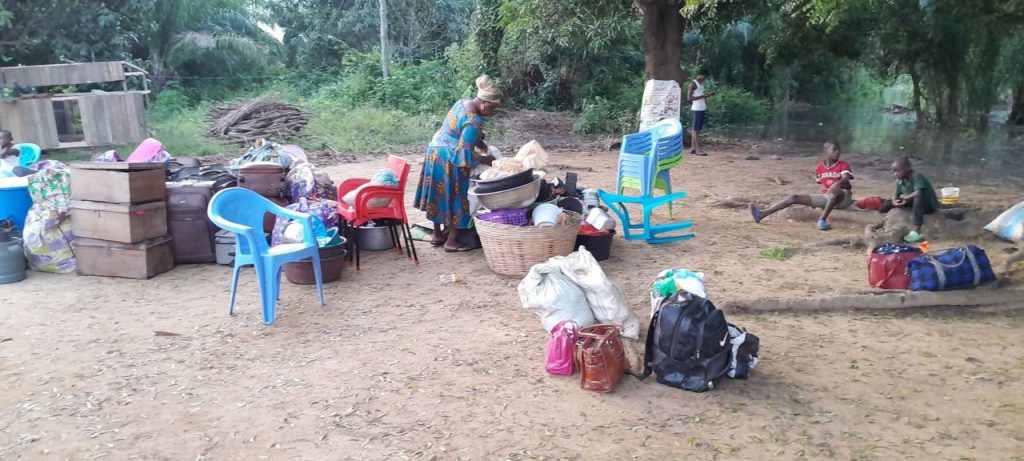
Togbe Komla Sakpiti V rarely raises his voice in public, but these days the weight pressing on the Bakpa Awadiwoekome stool is hard to hide. Since the Akosombo Dam spillage of September–October 2023 swamped communities across the Tongu enclave, families in his jurisdiction have been living in tents or squatting with relatives, waiting for a resettlement promise that has yet to materialise.

The disaster displaced tens of thousands in North, Central and South Tongu, submerging homes, farms and clinics. In the months that followed, governments announced committees and funds — a panel was set up under the previous administration, dissolved after the 2024 transition, then revived by the new NDC government. But nearly three years later, residents say they have heard nothing concrete.

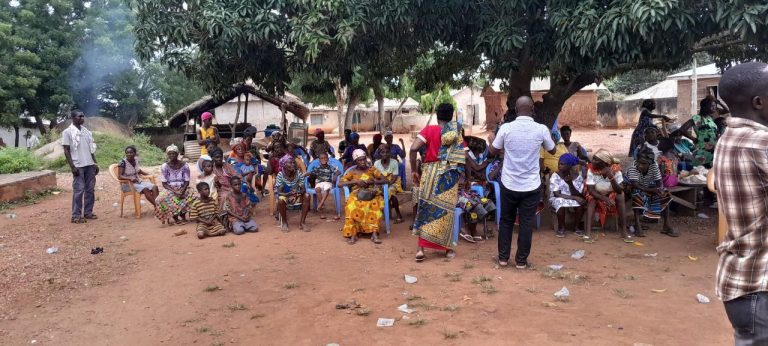
“We don’t know whether to rebuild or keep waiting,” one elder in Awadiwoekome told neighbours at a recent community meeting. Togbe Sakpiti V, whose people still fetch water from unsafe sources and sleep under leaking tarpaulins, is now fielding daily pressure from youth groups and mothers who want answers.
Three Years On Tongu Flood Victims Still Wait as Chief Pleads for Help

Official records show that a resettlement plan was launched in 2024 with GH¢200 million committed for 2,803 houses in Tongu, and officials spoke of 115 units being built and later of 2,225 homes in phases. Yet visits to Degorme, Aveyime and nearby islands find hundreds — pregnant women, children, fishermen who lost nets and canoes — still in classroom shelters and tents, without clinics or livelihood support. Absence of a clear timetable and transparent register of beneficiaries has deepened frustration.

For Togbe Sakpiti V, the human toll is what matters: a community reluctant to trust official calendars, families divided between camps and host households, and young people drifting away. “The chief is not against government,” a local teacher explained, “but he is asked every week: what do we tell our children?”

As rainy seasons return and VRA warns of future controlled spills, Togbe Sakpiti V is appealing for one thing he says would calm tempers — a public update, names on a list, and work crews on actual sites in Bakpa Awadiwoekome, not just press statements. For now, life remains in limbo: nights under canvas, days borrowing cooking space from relatives, and a chief balancing custom with a growing demand for action.

Ghana|Atinkaonline.com|Christopher Pappoe

Start Your Nursing Journey with Confidence at EUHS School of Nursing

Are you passionate about a healthcare career? The Entrance University of Health Sciences (EUHS) is offering a unique opportunity to take your first step into the nursing profession through its School of Nursing – 6 Weeks Access Course.

Designed for aspiring healthcare professionals, this intensive program runs from May 1st to June 13th, 2026, providing a fast-track pathway into a three-year BSc in Nursing.

Why Choose the EUHS Access Course?

This six-week programme is carefully structured to equip students with the foundational knowledge and preparation to transition into professional nursing education successfully.

Participants will benefit from:

Focused, intensive training
A clear pathway into a full nursing degree
Guidance from experienced health science educators
Who Can Apply?

The programme is open to individuals with the following backgrounds:

Nurse Assistant Clinical (NAC)
Nurse Assistant Preventive (NAP)
Admission Requirements

To enrol, applicants must meet the following criteria:

A Nurse/Health Assistant Clinical Certificate
A Nurse/Health Assistant Preventive Certificate
Transcript from a recognised institution
WASSCE/SSCE results or certificate
Valid Auxiliary Identification Number (AIN)
Take the Next Step in Your Career

This access course is more than just a short programme—it’s a gateway to a rewarding and impactful career in healthcare. With the growing demand for skilled nurses, there has never been a better time to advance your qualifications.

Apply Today

Application forms are available at the School of Nursing. For more information, prospective students can reach out via the contact numbers provided.

EUHS – Training the Next Generation of Health Professionals

Hans Sarpei Urges Patience Amid Otto Addo Exit; Says World Cup Qualification Should Take Priority

Former Ghana international Hans Sarpei has weighed in on the ongoing debate surrounding the future of Black Stars head coach Otto Addo, urging patience despite recent disappointment at the Africa Cup of Nations.

Speaking on the matter, Sarpei acknowledged the team’s underwhelming AFCON campaign but emphasized that Ghana’s World Cup qualification ambitions should take priority.

“AFCON was disappointing, yes, but World Cup qualification is what truly matters at this stage. He should be allowed to finish what he started,” Sarpei stated.

The former defender also drew comparisons with Ghana’s memorable 2010 World Cup squad, highlighting key differences between that era and the current team.

“The success in 2010 was built on chemistry, confidence, and experience. This is a completely different era with its own challenges,” he added.

Sarpei’s comments come amid growing calls for the dismissal of Otto Addo, as pressure mounts on the Ghana Football Association to make a decision on the coach’s future.

Mahama Hosts Mnangagwa at State Banquet, Celebrates Ghana–Zimbabwe Ties

Source: Mavis Fantevi

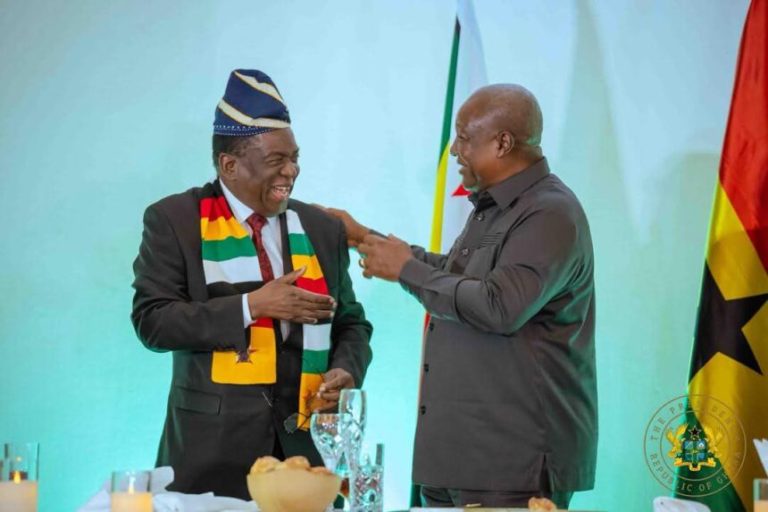
President John Dramani Mahama has hosted Zimbabwean President Emmerson Mnangagwa at a State Banquet held in his honour as part of the ongoing three-day State Visit to Ghana.

The event which took place on Wednesday April 1, 2026, marked by displays of cultural exchange and diplomatic goodwill, highlighted the deep historical and political ties between the two nations.

Addressing guests at the banquet, President Mahama underscored the long-standing relationship between Ghana and Zimbabwe, tracing it back to the era of Africa’s liberation struggles.

He noted that the bond between the two countries “predates formal diplomacy” and was shaped by the vision and leadership of pan-African icons such as Kwame Nkrumah and the late Robert Mugabe.

He emphasized that the shared ideals of freedom, dignity, and unity remain central to both nations, describing the occasion as “not merely ceremonial; it is a celebration of a relationship shaped by history, enriched by shared experiences, and sustained by genuine human connections.”

President Mnangagwa, in his remarks, reflected on Ghana’s pivotal role in Zimbabwe’s liberation struggle, expressing deep appreciation for the support received during that period.

“Most of my colleagues received training here in Ghana for the armed liberation of Zimbabwe. We are forever grateful to Ghana,” he said.

He added that the visit offers renewed prospects for strengthening economic collaboration, particularly through business-to-business engagements, noting that the State Visit reaffirms the enduring partnership between the two countries.

The banquet also featured an exchange of symbolic gifts.

President Mnangagwa was presented with traditional Ghanaian textiles, including fugu and kente, while he in turn gifted President Mahama a crocodile skin bag and a unique artefact, signifying the cultural richness and mutual respect shared by both nations.

The State Banquet concluded with a renewed commitment by Ghana and Zimbabwe to deepen cooperation in areas such as trade, investment, and sustainable development, reinforcing a partnership rooted in history, trust, and shared aspirations.

Kasoa to Host Maiden Traditional Leaders and Stakeholders Forum

0

Source: Samuel Nyamekye Jnr.

Kasoa is set to host the maiden edition of a Traditional Leaders and Stakeholders Forum on April 11, 2026, aimed at strengthening collaboration between Parliament, traditional authorities, and local development actors.

The initiative is being spearheaded by the Member of Parliament for Awutu Senya East, Phillis Naa Koryoo Okunor, as part of efforts to promote inclusive governance and community-driven development.

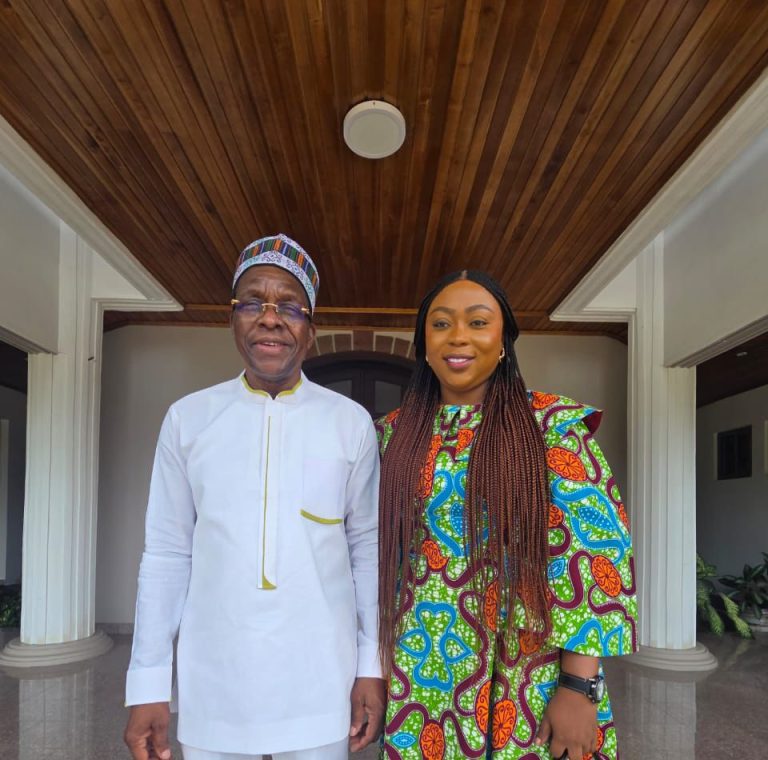
Ahead of the event, Hon. Okunor engaged the Speaker of Parliament, Alban Sumana Bagbin, at his official residence in Accra to seek guidance and support.

The engagement forms part of preparations to ensure the forum delivers meaningful outcomes, particularly in aligning national policy discussions with the needs of local communities.

Speaking after the meeting, Hon. Okunor underscored the importance of structured platforms that bring together traditional leaders, policymakers, and other stakeholders to contribute to governance and development.

The forum is expected to focus on defining the role of traditional authorities in governance, aligning stakeholder contributions with parliamentary priorities, and fostering partnerships between the public and private sectors to drive development in Kasoa and its surrounding areas.

She noted that the initiative goes beyond dialogue, aiming to establish a system where traditional leadership and local knowledge can meaningfully inform legislative processes.

Hon. Okunor added that her efforts are geared toward ensuring that residents of Awutu Senya East actively participate in shaping decisions that affect their lives.

The April 11 forum is expected to bring together traditional leaders, government officials, private sector actors, and civil society representatives, marking a significant step toward coordinated local development in the area.

World Autism Day in Ghana: Beyond Awareness to Meaningful Inclusion

Source: Ebenezer De-Gaulle

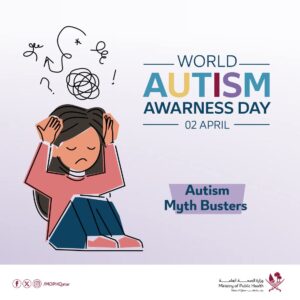
Every year on April 2, the world pauses to observe World Autism Awareness Day, a moment dedicated not just to raising awareness about autism, but to pushing for real change in how societies understand and support individuals on the autism spectrum.

World Autism Day
World Autism Day

In Ghana, the day is steadily gaining prominence, but it also exposes a deeper reality: awareness is growing, yet inclusion remains a work in progress.

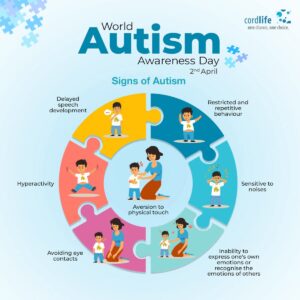
Autism spectrum disorder (ASD) is a neurodevelopmental condition that affects communication, behavior, and social interaction.

signs of Autism
signs of Autism

While global conversations around autism have evolved significantly, in Ghana, many families are still navigating a system that offers limited support and understanding.

Misconceptions persist, with some communities attributing autism to spiritual causes or poor parenting, rather than recognizing it as a medical and developmental condition.

The observance, established by the United Nations, is meant to promote acceptance and inclusion. But for many Ghanaian families, the journey begins with a struggle to even get a diagnosis.

Specialists trained in autism assessment are few, and early detection, widely known to improve outcomes are often delayed. As a result, children miss critical intervention windows that could significantly enhance their development.

In urban centres like Accra and Kumasi, a handful of private institutions and advocacy groups are stepping in to fill the gap.

Organizations such as the Autism Awareness Care and Training Centre have become lifelines for families, offering therapy, training, and educational support.

Autism advocacy
Autism advocacy

Yet these services are often expensive and out of reach for many households, especially in rural areas where access is even more limited.

Education remains one of the biggest challenges.Although Ghana has made policy commitments toward inclusive education, implementation is uneven.

Many mainstream schools lack the trained personnel, learning materials, and infrastructure needed to accommodate children with autism. In some cases, children are turned away entirely; in others, they are enrolled but receive little to no specialized support.

Parents often bear the emotional and financial burden. Beyond the cost of therapy and specialized schooling, there is the weight of social stigma. Some families report isolation, judgment, or pressure to hide their children from public view.

These experiences highlight a crucial point: awareness campaigns must go beyond information—they must challenge attitudes and reshape cultural perceptions.

Still, there are signs of progress. Public conversations about autism are becoming more visible, driven by media, advocacy campaigns, and the voices of parents and self-advocates.

Together for Autism
Together for Autism

Schools are slowly beginning to adopt inclusive practices, and some health professionals are receiving specialized training. Each step, however small, signals a shift toward a more supportive environment.

This year’s World Autism Day theme emphasizes moving from awareness to acceptance and inclusion.

For Ghana, this means investing in early diagnosis systems, expanding access to affordable therapy, training teachers, and enforcing inclusive education policies.

It also means listening to individuals with autism and their families—understanding their needs, respecting their experiences, and ensuring they are part of decision-making processes.

Ultimately, the measure of progress will not be how loudly autism is talked about, but how well individuals on the spectrum are able to live, learn, and thrive within society.

As Ghana marks the day, the challenge is clear: to build a future where autism is not just acknowledged, but accommodated and where every individual, regardless of ability, is given the opportunity to reach their full potential.

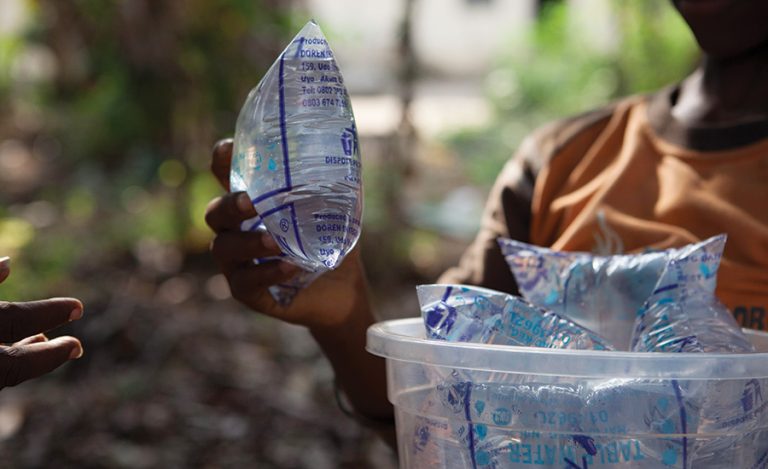
Sachet Water to sell at GH¢15 per bag from April 6

The National Association of Sachet and Packaged Water Producers (NASPAWAP) has announced an upward revision of sachet water prices, effective Monday, April 6, 2026.

In a statement issued on Thursday, April 2, 2026, NASPAWAP attributed the increase to the global shortage of polymers and rising costs driven by the ongoing conflict in Iran, which has significantly affected production.

“The rising costs have made it challenging for manufacturers to maintain current prices,” the group said.

The new recommended prices are:

  • Ex-factory: GH¢8 per bag of 30 sachets of 500ml
  • Ex-truck: GH¢10 per bag of 30 sachets of 500ml
  • Maximum retail: GH¢15 per bag of 30 sachets of 500ml

NASPAWAP urged retailers and consumers to adhere to the new prices to ensure fair trade practices.

“This adjustment is necessary to sustain production and ensure the continuous supply of safe drinking water,” the association added.

PAC Probes Lands Ministry Over GH¢80 Million Duplicate Claims and Weak Financial Controls

0

Source: Samuel Nyamekye Jnr.

The Public Accounts Committee (PAC) has intensified scrutiny of the Ministry of Lands and Natural Resources following revelations of major financial irregularities, including duplicate claims estimated at over GH¢80 million.

At a hearing in Accra, auditors’ findings exposed widespread discrepancies in the Ministry’s financial records, raising concerns about weak internal controls and accountability.

Member of Parliament for Awutu Senya East and PAC member, Phillis Naa Koryoo Okunor, described the situation as deeply troubling, as she questioned officials over anomalies captured in the audit report.

The report revealed that claims exceeding GH¢1.1 million were disallowed due to administrative lapses, including duplicate entries and payment requests for expenses already settled. Additionally, about GH¢3.7 million remains unaccounted for, with auditors citing missing documentation, lack of third-party verification, and poor record-keeping.

A key concern during the session was the disclosure of duplicate claims amounting to more than GH¢80 million. Committee members described the figure as alarming, suggesting it could indicate either serious inefficiencies or potential fraud within the system.

Hon. Okunor pressed officials on how such claims bypassed internal audit and financial control mechanisms before reaching the Ministry of Finance, and whether any investigations had been initiated to establish accountability.

In response, the Deputy Minister for Lands and Natural Resources, Yussif Sulemana, acknowledged the irregularities but attributed them partly to the complex structure of compensation payments in the sector.

He explained that such payments often involve multiple institutions, including the Lands Commission, and may be processed through different channels, which can lead to inconsistencies when coordination is weak.

However, PAC members demanded clearer accountability, urging technical officers within the Ministry to provide detailed explanations and take responsibility for the discrepancies.

“This report concerns your ministry, and accountability must be ensured,” the Committee stressed.

The probe highlights growing concerns over public financial management and reinforces calls for stronger oversight to safeguard public funds.

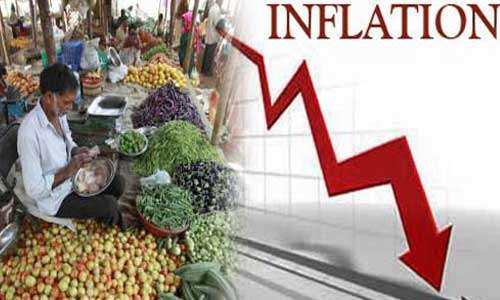
Ghana’s Inflation Slows for 15th Straight Month in March

Source: Ebenezer De-Gaulle

Ghana’s inflation eased further in March, reinforcing signs of macroeconomic stabilization after years of elevated price pressures.

Annual consumer inflation slowed to 3.2%, down slightly from 3.3% in February, according to data released Wednesday by the Ghana Statistical Service. That marks the 15th straight month of declines and a sharp drop from 22.4% a year earlier, underscoring the country’s steady disinflation path.

“This is the lowest inflation recorded since the rebasing of the CPI in 2021,” Government Statistician Alhassan Iddrisu said, citing food-price moderation as the main driver.

On a monthly basis, prices edged up 0.1%, suggesting underlying pressures remain. Food inflation fell to 2.3% from 2.4%, with prices down 0.3% month-on-month. Non-food inflation eased to 3.9%, though prices in that category rose 0.3%.

Goods inflation dropped sharply to 1.7% from 3.2%, with goods prices down 1% month-on-month. Services inflation, however, surged to 7.2% from 3.7%, highlighting cost pressures in that segment.

Imported inflation slipped into negative territory at -0.6%, reflecting easing external price pressures and possible exchange-rate gains. Locally produced items rose to 4.9% from 4.5%, pointing to divergent trends between domestic and foreign-sourced goods.

Regional disparities remain stark: the North East Region posted the highest inflation, while the Savannah Region recorded deflation of -4.6%, underscoring differences in supply chains and market access.

The sustained slowdown signals Ghana’s gradual recovery from its worst economic crisis in decades. Lower inflation is expected to bolster consumer purchasing power and improve business confidence, strengthening the case for continued stabilization.

GH¢154,000 Gender Ministry Claims Delayed by Audit Requirement

0

Source: Mavis Fantevi

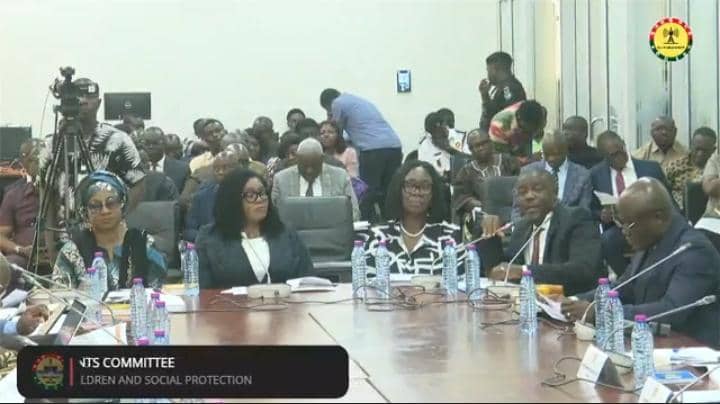
The Public Accounts Committee (PAC) has been told that a change in audit requirements has delayed the clearance of several small claims totaling GH¢154,000 at the Ministry of Gender, Children and Social Protection.

Appearing before the committee on Tuesday, April 1, 2026, Acting Head of Finance at the ministry, Kenneth Kyei Boateng, explained that all standard documentation requested by auditors had been duly submitted.

However, he said the auditors later introduced an additional requirement for suppliers to provide tax credit certificates from the Ghana Revenue Authority, a condition that was not part of the initial procurement and payment process.

According to him, this unexpected demand created a bottleneck, as suppliers were unable to produce the documents retroactively.

“The documentation required from us was provided to the auditors, except that they introduced a new requirement for suppliers’ tax credit from GRA, which was not part of the original process,” he told the committee.

He further noted that the ministry had already received goods and services from the suppliers under the agreed terms, making it difficult to go back and obtain the newly requested tax documentation.

“Because of that, the suppliers could not get it for us to forward to the auditors to enable the clearing of the claims,” he added.

The development has stalled the validation and payment of the claims, raising concerns within the committee about consistency in audit procedures and the impact of evolving requirements on public financial management.

Members of the Public Accounts Committee are expected to further examine the issue as part of ongoing efforts to ensure transparency and accountability in the use of public funds.