




















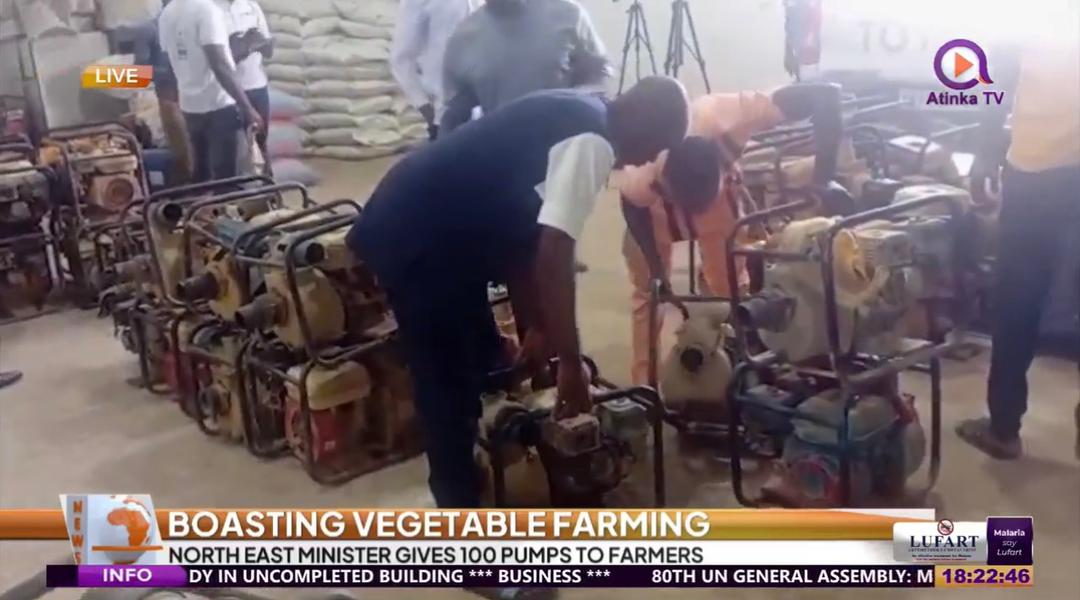
In a bold step to promote food security and sustainable agriculture, the North East Regional Minister, Hon. Tia Ibrahim, has distributed 100 water pumping machines to vegetable farmers across the region under the government’s Feed Ghana initiative.
The official handing-over ceremony, held in Gambaga, brought together stakeholders including the Regional Director of Agriculture, Mr. Nasara Edward, as well as Municipal and District Chief Executives (MDCEs) from all participating districts.
Hon. Tia Ibrahim described the intervention as timely, noting that the provision of the irrigation equipment coincides with the onset of the dry season — a critical period for vegetable farming in the region.
The pumping machines are expected to support the cultivation of crops such as tomatoes, peppers, okra, and leafy greens. Beneficiary communities include Yagaba, Karimenga, Langbinsi, Banawa, and Nagboo, which have also received improved hybrid tomato seeds known for their drought tolerance and high yield.
Mr. Nasara Edward, Regional Director of Agriculture, emphasized the initiative’s role in attracting more youth into dry-season farming, helping reduce rural unemployment while enhancing agricultural productivity.
Some beneficiaries who spoke to the media expressed gratitude to the government, describing the support as a “game changer” that would significantly reduce the burden of manual irrigation and increase yields.
Meanwhile, authorities have assured residents that the East Mamprusi Municipality will soon be connected to the Pwalugu NEDCO substation to resolve recurring power supply issues — a key factor in sustaining irrigation activities.
The Feed Ghana initiative is part of the government’s broader strategy to modernize agriculture, improve rural livelihoods, and ensure national food sufficiency. Alongside the pumping machines, the region has also received certified maize seeds and fertilizer to boost cereal production.
Farmers have been urged to maintain the equipment properly to ensure its long-term use and sustainability of the intervention.
With improved access to water, better seeds, and continued government support, stakeholders believe the North East Region is poised to become a hub for dry-season vegetable production, strengthening local economies and improving nutrition across households.
Ghana|Atinkaonline.com| Tahiru Apiliye Ibrahim