
























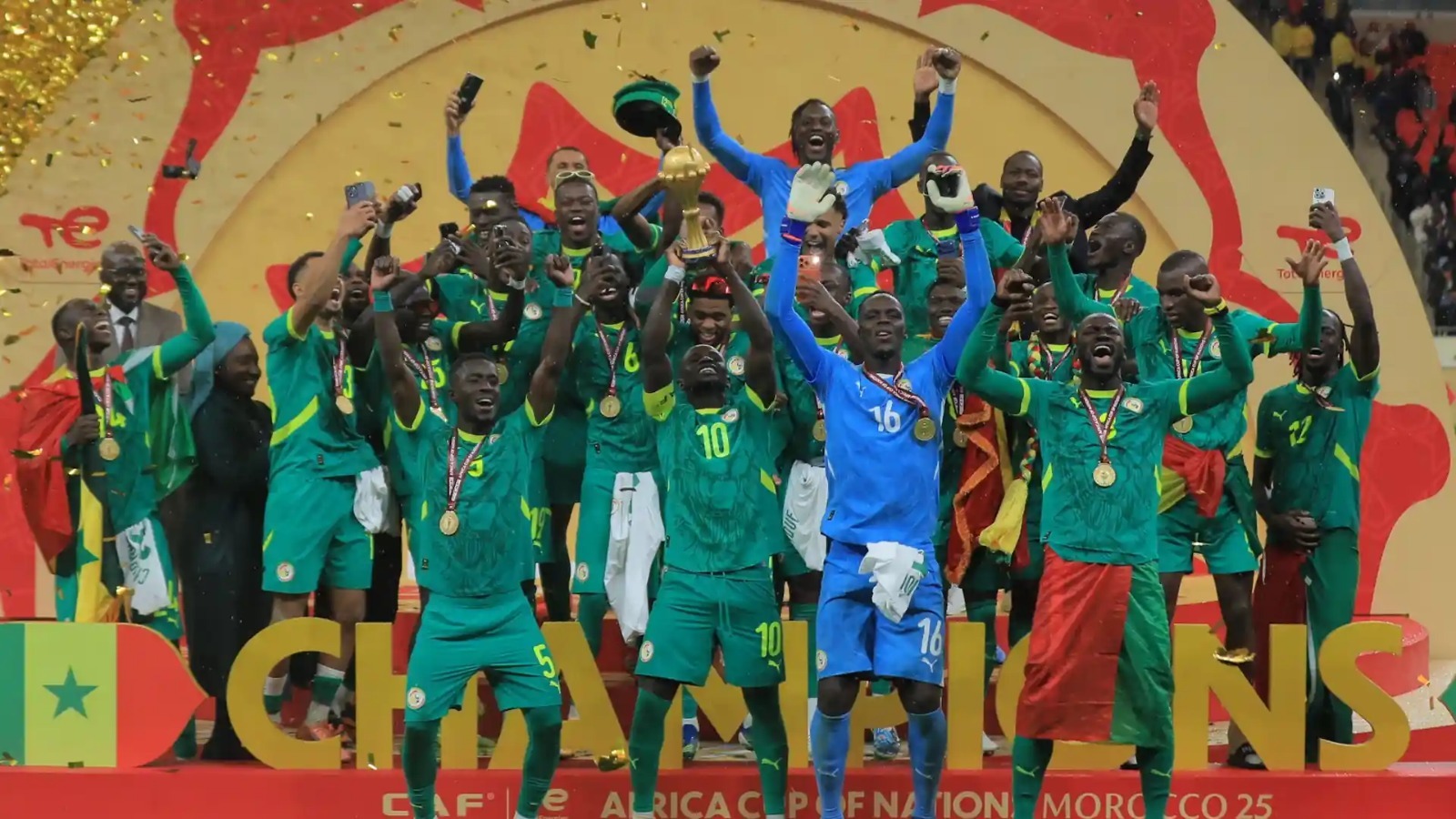
Senegal are the new kings of African football after defeating host nation Morocco 1–0 in a dramatic, controversy-laden Africa Cup of Nations final in Rabat.
The tightly fought contest was settled in extra time when Pape Gueye produced a moment of magic, firing a thunderous strike into the top corner to finally break Moroccan resistance and spark wild celebrations on the Senegalese bench.
While Gueye’s goal decided the final, the match will be remembered as much for its extraordinary drama as for the football itself.
Controversy and Chaos in Regulation Time
The closing stages of regulation time were dominated by controversy. Senegal thought they had taken the lead when Ismaïla Sarr found the net, but play was stopped prematurely for an earlier decision, eliminating any possibility of a VAR review. The ruling sparked fury among Senegalese players and officials, who felt a legitimate goal had been unfairly denied.
Moments later, the drama swung the other way. Morocco were awarded a late penalty after a VAR review ruled that El Hadji Malick Diouf had fouled Brahim Díaz in the box. The decision further inflamed tensions, prompting Senegalese players to briefly walk off the pitch in protest.
When order was restored, Díaz stepped up amid deafening noise inside the stadium, but his penalty was brilliantly saved, keeping Senegal level and alive. Emotions boiled over in the ninth minute of stoppage time as fans breached hoardings in the stands, forcing further delays.
Gueye Delivers in Extra Time
Extra time was played in a charged atmosphere, but Senegal showed greater composure and resilience. Gueye’s stunning strike finally separated the two sides, allowing the West Africans to manage the remainder of the match and seal a hard-fought AFCON triumph.
As Senegal celebrated a memorable title victory, Morocco were left to reflect on missed opportunities and contentious decisions in a final that will be debated for years to come.
The night in Rabat will go down as one of the most dramatic and chaotic AFCON finals in the tournament’s history.
By Prince Tuffuor