
















 has justified the recent move to increase in transport fares, stating that while they genuinely care)
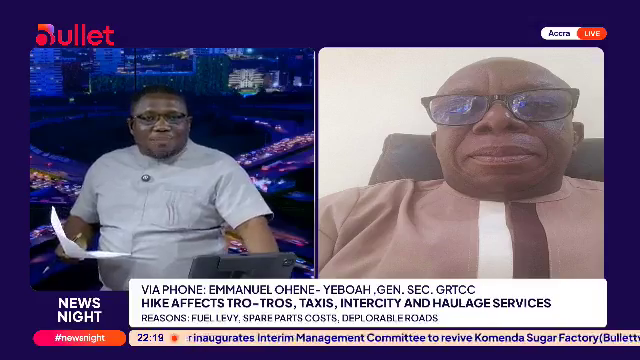
The Ghana Road Transport Coordinating Council (GRTCC) has justified the recent move to increase in transport fares, stating that while they genuinely care about the welfare of Ghanaians, the financial pressures facing transport operators have made the fare hike unavoidable.
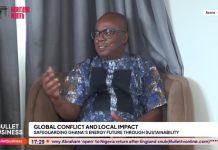
Speaking on News Night on Bullet TV, hosted by Nana Yaw Fianko (The Speaker), General Secretary of the GRTCC, Emmanuel Ohene Yeboah, defended the Council’s decision, emphasizing that the cost burden on commercial transport operators had reached unsustainable levels.
“It’s not that we don’t care – we care deeply. But we can’t continue to absorb these rising costs alone,” Yeboah explained. “We’ve done our part. We even reduced fares a few months ago hoping it would ease the pressure on Ghanaians. Unfortunately, prices on the market didn’t drop as expected – not even spare parts or other operational expenses.”
Yeboah recalled that in May, the GRTCC voluntarily reduced fares in response to public concerns and a slight drop in fuel prices. The Council had hoped that this gesture would contribute to reducing the overall cost of living.
“We acted in good faith,” he said. “We reduced fares to see if it would drive prices down in the markets. But that didn’t happen. Meanwhile, our own costs kept rising.”
Adding to their frustrations, he cited the recent introduction of a new one-cedi fuel levy by the government, which has further compounded their operational expenses.
According to Yeboah, the impact of this levy, especially on high-consuming vehicles like intercity buses, is significant – sometimes amounting to an additional GH₵250 per trip.
“This is not a token cost. It’s substantial. We can’t carry all these burdens and still be expected to maintain the same fares,” he stressed.
The GRTCC said it had expected some level of consultation before new taxes were introduced, especially given ongoing discussions with the government around easing the pressures on transport service providers. However, Yeboah revealed that those discussions were bypassed.
“They came, listened, left – and returned with decisions already made, without our input. That’s not how you treat stakeholders.”
In response to criticism that passengers are not getting a fair deal, Yeboah maintained that the Council had been more than reasonable and responsive.
“If we didn’t care, we wouldn’t have reduced fares in the first place. But after realizing that gesture did not lead to any relief on the market – and with new taxes imposed – we had no choice but to reverse the reduction and adjust by a small margin to stay afloat.”
He indicated that the fare adjustment is a 5% increase, specifically introduced to absorb the impact of the new fuel levy and other cost components.
Ghana|Atinkaonline.com|Ebenezer Madugu