We Will Meet Them in Court Again with the Same Facts – Lumba Family Lawyer Dares Opponents

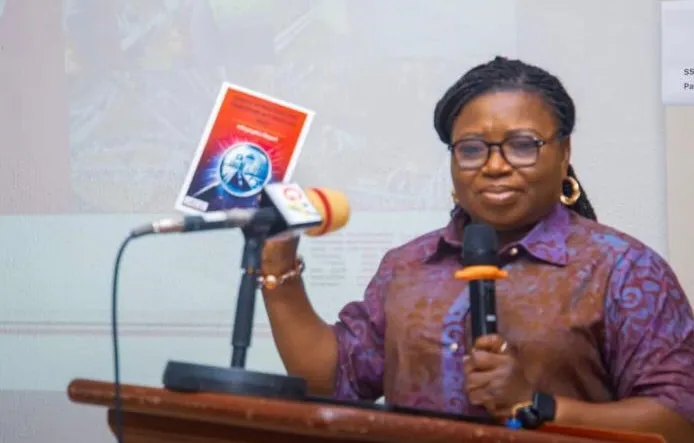
Daddy Lumba’s Lawyer, who doubles as the Lawyer for the Abusua Panyin of the Fosu family, Fati Ali-Yallah Esq., has issued a firm response to news that Akosua Serwaa may appeal the Kumasi High Court ruling recognizing both her and Priscilla Ofori Atta (Odo Broni) as surviving spouses of the late highlife icon Daddy Lumba.

Speaking on Atinka TV’s Entertainment Lounge with Afia Adepa, Lawyer Fati Ali-Yallah stated that the family is fully prepared for any legal challenge.

“She can go for an appeal—she has the right. But we will meet them in court again with the same facts that defeated them,” she stressed.

He argued that the evidence presented by Akosua Serwaa during the initial trial was fundamentally weak, especially her inability to provide a properly certified marriage certificate. He noted that the family is confident because the key issues—flawed documentation and an incomplete traditional divorce process—remain unchanged.

“We didn’t start this; we only replied to what she wrote to us,” he added, emphasizing that the family remains calm and professional despite the ongoing tensions.

Ali-Yallah reiterated that the court has affirmed both women as wives, and any attempt to overturn that ruling will face strong resistance backed by the same legal grounds that won the initial case.

Ghana|Atinkaonline.com

Akosua Serwaa Failed to Prove Marriage Certificate — Lumba Family Lawyer

Daddy Lumba’s Lawyer, who doubles as the Lawyer for the Abusua Panyin of the Fosu family, Fati Ali-Yallah Esq., has revealed that Akosua Serwaa Fosu failed to meet the legal requirements to prove she was civilly married to the late highlife legend Charles Kwadwo Fosu, popularly known as Daddy Lumba.

 She made the disclosure during an interview with Afi Adepa on Atinka TV’s Entertainment Lounge following the Kumasi High Court’s landmark decision recognizing both Akosua Serwaa and Priscilla Ofori Atta (Odo Broni) as surviving spouses.

According to Lawyer Fati Ali-Yallah of the Baba Jamal and Associate, the court relied heavily on Ghana’s Evidence Act, particularly Sections 161 and 143, which outline strict standards for foreign translations and certified documents.

“She didn’t bring a marriage certificate. They brought a family book. The first one was rejected, and another certificate came with three copies in English and German, none certified or notarized,”- she explained.

With her civil marriage claim weakened, the family called an expert witness to explain Akan customary marriage. The expert clarified that without completing the traditional divorce process—which must be initiated through the man family representative—Akosua Serwaa remained a wife under customary law. This guided the court’s decision to recognize both women.

Ali-Yallah added that the court encouraged Akosua Serwaa to apologize to the family so arrangements can be made regarding widowhood rites. “The family head will decide. Her claim that Odo Broni is not a wife was flawed. This is a victory for us,”- she said.

Ghana|Atinkaonline.com

Samson Deen Ignites a New Continental Movement as West Africa Para Games Open In Nigeria

0

“Africa rises when every African rises.” — Samson Deen

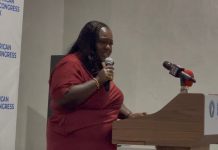
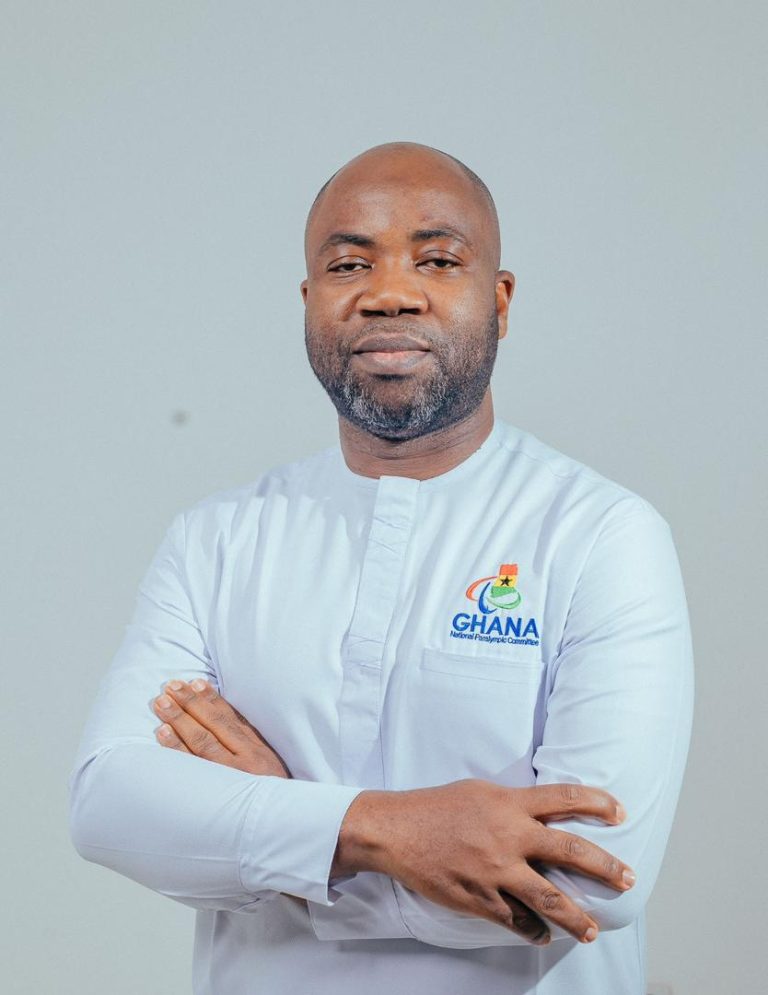
The West African Paralympic Movement witnessed a defining moment on Friday night as Mr. Samson Deen, President of the African Paralympic Committee (AfPC), delivered a powerful keynote address to officially open the 1st West Africa Para Games in Abeokuta, Ogun State.

Speaking before the Governor of Ogun State, ministers of sports, traditional rulers, regional sports leaders, and hundreds of para-athletes, Deen declared that the Games represent “not merely a sporting event but the ignition of a continental movement of dignity, equality, and human possibility.”

In his address, Deen drew a historic parallel between the Games and the inaugural Africa Cup of Nations (AFCON) held in 1957, emphasizing that Africa’s most transformative institutions were born from courage, vision, and unity.

“What AFCON became to football, Para Sports must now become to Africa,” he stated, describing the West Africa Para Games as a foundational pillar for a new era of inclusion—an era where athletes with disabilities are recognized not for their limitations but for their limitless potential.

Deen emphasized that the Games are more than competition; they are a declaration that Africa will no longer leave behind millions of its citizens with disabilities. He called on governments, private sector partners, and regional bodies to invest boldly in Para Sports, noting that sport remains one of the most powerful tools for social transformation.

He added: “When a para-athlete receives a medal, Africa receives a message.

When a nation invests in para-sport, Africa invests in human dignity.
And when we gather like this, united across borders, Africa rises.”

The ceremony, filled with cultural displays, athlete parades, and an atmosphere of continental pride, marked the beginning of what organizers hope will become a permanent fixture on the African sporting calendar.

With 15 West African countries participating, the 1st West Africa Para Games signal a new chapter one in which Para Sports take their rightful place at the center of Africa’s development agenda.

As Deen concluded:

“This is not just a Games. This is a movement.

A movement for equality.
A movement for opportunity.
A movement for Africa.”

And on Friday night in Abeokuta, that movement officially took flight.

By Justice Adusi-Poku

Infrastructure Transparency: Ghana Posts 85.76% in Debut National Index

0

Ghana’s inaugural National Infrastructure Transparency Index (ITI) Survey Report shows progress in transparency across the infrastructure sector but also identifies key weaknesses that need urgent fixes to strengthen project delivery and public trust.

The ITI is the nation’s first national evaluation of transparency and efficiency in public infrastructure systems, according to Minister of State for Public Sector Reforms Lydia Lamisi Akanvariba, who introduced the report in Accra and referred to the results as a “turning point.”

To address the shortcomings uncovered in the survey, the Minister revealed that government will establish a Value for Money Office in the coming year. The office will be tasked with enforcing cost standards, tightening oversight mechanisms, and improving accountability in infrastructure expenditure.

The ITI is a worldwide tool that measures transparency, participation, and accountability in public infrastructure delivery. It evaluates how effectively governments release and use infrastructure data throughout project planning and execution. Ghana scored 85.76 percent—over 14 points higher than its previous sub-national score—placing it ahead of several countries with more established infrastructure reform histories.

Madam Akanvariba said the ITI is crucial because it helps reduce corruption, prevents mismanagement, and boosts public trust in government spending. “Reliable and timely infrastructure data empowers oversight bodies and citizens to demand accountability,” she stated. She urged stakeholders to use the report as a “working tool” to drive reforms and improve public services.

In her remarks, Samina Bhatia, Deputy Development Director at the British High Commission, described the unveiling of Ghana’s inaugural ITI as an important step forward—one that reinforces the UK–Ghana development relationship and supports improved governance in infrastructure delivery. She added that the UK is pleased that infrastructure continues to feature prominently in Ghana’s national priorities, especially with the major investments projected under the “Big Push” initiative.

“If significant public funds and public–private partnerships are going into infrastructure, we must ensure that every penny delivers real impact for Ghanaian citizens. The UK is a long-standing partner of Ghana, and we are keen to see the country make leaps and bounds in its progress. Infrastructure will be key to delivering that,” She emphasised.

According to Ms. Bhatia, the UK and Ghana are united by a common vision of economic progress and broader prosperity, a vision that relies heavily on strong infrastructure systems, including transport networks, water supply, education, and health facilities.

Through initiatives like the Open Government Partnership, the Ghana Governance Programme, and the Green Cities Infrastructure Programme, she emphasized the UK’s ongoing support for accountability and good governance.

In order to maintain the momentum generated by the ITI and further Ghana’s shift toward transparent, data-driven, and citizen-centered infrastructure governance, the event ended with a fresh appeal to the public, corporate, and civil society sectors.

Source: GBC News

“When Staying Becomes Dangerous” – Inspired by Nana Kweku Duah on Kisses and Roses

0

On Kisses and Roses, relationship coach and entertainment pundit Nana Kweku Duah made a statement that shook the room and struck a chord with many listeners.

He said:

“It is better for a married woman to step away from a toxic situation than to lose her mental and emotional stability because of the treatment she receives at home.”

His message was not an endorsement of infidelity —
but a bold reminder of a truth society often refuses to confront.

Too many women remain in marriages that drain them emotionally, mentally, and spiritually.
They cling to hope that someday things will change…
They pray their husbands will treat them better…
And they endure in silence because society demands:

“Stay. Endure. Don’t speak.”

But Nana Kweku Duah highlighted a reality we cannot ignore:

A marriage should never feel like a battlefield.
It should never destroy a woman’s confidence, joy, or sense of self.

When a woman loses herself trying to save a home alone,
that home is already broken.

His message was simple yet powerful:

If the treatment in your marriage is destroying your wellbeing, do not sacrifice yourself.
Protect your mind. Protect your peace. Protect your future.

Stepping away —
to seek help, counseling, space, or even separation —
is not weakness.

It is survival.
It is wisdom.
It is strength.

Because a healthy marriage allows both people to breathe —
not crumble.

The Truth Society Avoids

Many women stay because of their children.
Many stay because of pressure.
Many stay because they fear judgment or loneliness.

But as Nana Kweku Duah reminded us:
“Your wellbeing matters. Your life matters. Your peace matters.”

A marriage that harms you is not a blessing —
it is a burden you were never meant to carry alone.

No woman deserves to lose herself while trying to love someone else.
Your happiness is not a luxury —
it is a necessity.

And above all,
your mental and emotional safety must always come first.

By Jessie Adubea

State Funeral of Nana Konadu Agyeman-Rawlings Held Today – Children Pay Heartfelt Tributes

0

Ghana today held a solemn state funeral for Nana Konadu Agyeman-Rawlings, the country’s longest-serving First Lady and wife of the late President Jerry John Rawlings. The ceremony took place at Black Star Square, drawing dignitaries, traditional leaders, clergy, and citizens from across the nation.

Her children paid heartfelt tributes, remembering her as a woman of principle, action, and unwavering commitment to public service.

“Mum, you were never just advocating—you were doing. You will be remembered as a woman of action,” Kimathi Rawlings said.

“You lived your values without reservation, believing that actions were either right or wrong and never settling for the uncommitted grey space in between.”

“You were far more than a right hand. You were strategic, clear-minded, and unwavering. You and Dad were, in truth, one another’s partners.”

The funeral ceremony highlighted Nana Konadu’s enduring legacy of leadership and service to the nation, with attendees reflecting on her contributions to social causes, women’s empowerment, and Ghana’s political life.

As Ghana mourns, her life and work continue to inspire generations, leaving a mark on the country’s history as a First Lady who combined advocacy with decisive action.

Economic Witch-Hunting and the Price of Progress: Ghana’s Silent Betrayal of Its Builders The Story of Alex Apau Dadey—The Visionary Who Dared to Build Beyond Politics

0

In an age when nations rise on the backs of visionaries, Ghana seems caught in a paradox: the celebration of mediocrity has become a value. While that is not enough, we are silently dismantling its makers.

Few stories capture this paradox better than that of Alex Apau Dadey, the Executive Chairman of KGL Group, a man whose vision, enterprise, and philanthropic spirit have reshaped parts of Ghana’s economic and social landscape, yet whose journey mirrors the silent betrayal of the very builders driving the nation forward.

“In Ghana, the cost of building often exceeds the profit of dreaming.”

The Story—The Man Behind the Vision

Alex Apau Dadey is not your conventional tycoon. His story is not written in political privilege but in persistence, purpose, and patriotism. As the Executive Chairman of KGL Group, he has built one of Ghana’s most dynamic technology-driven conglomerates, touching sectors from fintech and gaming to logistics, e-commerce, and social development.

It is not his business acumen that sets him apart, but his belief that Ghana can progress on the strength of its own innovation. Under his stewardship, KGL Group has become a central player in Ghana’s digitalized economy, revolutionizing systems that have enhanced transparency, accountability, and financial inclusion.

Those who know him speak of a man both visionary and vulnerable, human in his flaws, yet unwavering in his pursuit of progress. One can only say that his quiet strength lies in seeing opportunity where others see obstacles and in building solutions that serve both profit and purpose.

“For Alex Apau Dadey, enterprise is not about power; it’s about people. Not about profit, but progress.”

The Impact—Transforming Vision into Tangible Change

Under Dadey’s leadership, KGL Group has transformed itself into more than a business; it has become a national development engine.

Technology & Economic Transformation

The Group’s KGL Technology Limited has digitized key activities within the National Lottery Authority (NLA), resulting in increased efficiency, accountability, and state revenue collection. The company’s digital technologies have greatly increased government revenue from gaming operations, directing hundreds of millions of cedis into the Consolidated Fund to support public initiatives.

Beyond gaming, KGL’s investments in fintech, mobile payments, and digital distribution, through businesses such as KGL Payments and Digital Distribution Hub, have increased thousands of Ghanaians’ access to financial services. The company’s position in modernizing payment systems directly helps Ghana’s digital economy strategy, which is championed by initiatives such as Digital Ghana.

Corporate Social Responsibility & Human Development

But Mr. Dadey’s vision stretches far beyond boardrooms and servers. Through the KGL Foundation, he has redefined corporate social responsibility as a moral and national duty.

In education, KGL funds scholarships for brilliant but underprivileged students, builds ICT centers, and supports school feeding initiatives while partnering with hospitals and NGOs to improve maternal and child healthcare through the group’s foundation, especially in rural communities in health. In sports, KGL is a major sponsor of the Ghana Football Association (GFA) and grassroots sporting activities, ensuring the next generation of athletes have both opportunity and hope.

These interventions align directly with the UN Sustainable Development Goals (SDGs), promoting education, health, employment, and innovation. Under Dadey’s leadership, KGL is not only generating revenue but also building social infrastructure for Ghana’s future.

“He builds in silence, gives without cameras, and transforms without applause.”

The Challenges—When Vision Meets Resistance

Yet behind the glow of progress lies a darker truth: vision in Ghana often attracts suspicion. Despite KGL Group’s undeniable contributions to revenue mobilization and social development, the company has not been spared the murky undercurrents of politics and institutional hostility.

In recent years, the Group has found itself navigating a maze of regulatory hurdles, delayed approvals, and bureaucratic resistance from state agencies that once praised its work. What should be partnerships for progress have too often become contests of power and perception. Within business circles, this phenomenon has earned a name, “Economic Witch-Hunting.” It

is a quiet but corrosive culture where successful enterprises are viewed not as allies in development but as rivals in influence.

From stalled policy approvals to strategic attempts to curtail KGL’s dominance in digital operations, it is seen by industry players and many others as evidence of a broader pattern, what some call “Strategic Crippling.” In such an environment, success becomes a liability.

The irony is glaring. The same digital initiatives that improved government revenue and employment opportunities are now being met with skepticism, fueled by political insecurities rather than economic logic. Instead of applauding homegrown innovation, certain public actors have chosen to distrust and dismantle it, all in the name of “regulation.”

For Alex Apau Daddy, these challenges have been both personal and institutional. Navigating through the maze of unspoken political allegiances and administrative sabotage, he has had to balance corporate diplomacy with moral conviction. Yet, through it all, he remains steadfast, believing that time, truth, and tangible impact will outlive propaganda.

The implications for Ghana’s economy are chilling. When institutions turn innovation into intimidation, investors, both local and foreign, lose confidence, and progress grinds to a halt. It is a self-inflicted wound, a betrayal not of one man or company, but of Ghana’s own development aspirations.

The greater tragedy, however, lies not in his trials but in what they say about Ghana’s development climate. How can a nation claim to seek economic transformation while sabotaging the very visionaries driving it?

“We cannot build a digital nation while digitally disabling our visionaries.”

Reflective Thoughts—When Greatness Goes Uncelebrated

At its core, the story of Alex Apau Dadey is not just about business; it is a mirror reflecting Ghana’s uneasy relationship with success. We praise visionaries until their light shines too brightly. We celebrate entrepreneurs until they start changing systems. Then we see them as a threat and call them dangerous. His journey mirrors this national paradox.

We glorify politics and ignore production; we exalt rhetoric and silence results. And yet, Mr. Dadey’s journey stands as a reminder that true patriotism is not spoken; it is built. He continues to invest, to employ, to empower, and to believe in a Ghana that sometimes fails to believe in him. Here is a man who has generated employment, supported national revenue, and contributed to social development, yet remains more scrutinized than celebrated.

His story raises uncomfortable questions about Ghana’s relationship with success: Why do we treat excellence as suspicion? Why do we measure patriotism by politics, not productivity? And why do we allow institutional pettiness to cripple innovation?

If Ghana truly wants sustainable development, it must start by protecting, not persecuting, its visionaries. Because nations don’t rise by accident. They rise because men and women like Alex Apau Dadey dare to build when others are busy tearing down.

“When history is written, it will not remember those who spoke the loudest; it will remember those who built the longest.”

Sidebar: The KGL Footprint in National Development

  • Revenue Mobilization: Digitization partnership with NLA generating hundreds of millions in state revenue.
  • Employment Creation: Thousands of direct and indirect jobs across technology, finance, logistics, and customer support sectors.
  • Education Support: Scholarships and ICT training through KGL Foundation.
  • Sports Development: Key sponsor of GFA and youth football programs.
  • Health Initiatives: Rural clinic support and health campaigns under SDG alignment.

Final Reflection

So here lies the irony: A man whose vision modernized systems, funded education, and supported communities is still viewed with suspicion by the very state that benefits from his success. How many more visionaries like Alex Apau Dadey must Ghana quietly crucify before realizing they are its greatest national treasures?

By Nana Kofi Barfour

Contact: [email protected]
IMANI Urges Parliament to Reject Revised Ewoyaa Lithium Lease

0

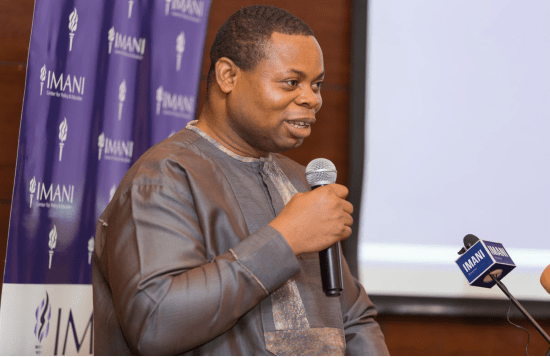
Policy think tank IMANI Africa is calling on Parliament to reject the revised Ewoyaa lithium mining lease between the Government of Ghana and Barari DV Ghana Ltd, a subsidiary of Atlantic Lithium.

In a public statement, IMANI said its position is based on a detailed review of the original 2023 lease, the newly revised 2025 version currently before Parliament, financial modelling by the Natural Resource Governance Institute (NRGI), and analyses by civil society groups.

According to IMANI, the new agreement weakens Ghana’s fiscal benefits, exposes the country to unfair commercial risks, and does not guarantee meaningful local value addition.

The group also says government’s explanations—such as claims that the law limits royalties to 5%, that the deal remains one of Africa’s best, and that falling lithium prices justify concessions—are misleading.

IMANI argues that the revised terms amount to a major giveaway of national value and are based on a flawed interpretation of Ghana’s mining laws.

The think tank is therefore urging Parliament to withhold ratification and demand a fresh negotiation that restores stronger royalty provisions, fixes gaps in pricing and off-take arrangements, ensures firm local content commitments, and is backed by transparent, independently verified fiscal analysis.

Ghana|Atinkaonline.com

“The Side Hospital” – A Story Inspired by Ohemaa Tina on Kisses and Roses

0

Yesterday on Kisses and Roses, musician Ohemaa Tina said something that lingered long after the show ended:

“Every man should understand that side chicks are like a hospital — you go there for treatment and return home. You don’t stay there. And sometimes, the wrong medication can destroy you.”

Kwame thought he had life under control.
A family man.
A respected man.
A man who believed he could balance everything — even a little “escape” on the side.

To him, it was simple: just a place he visited when life felt overwhelming. Like going to a hospital for quick relief.

But as Ohemaa Tina wisely said,
you don’t relocate to the hospital.
Temporary comfort is not a permanent home.

Slowly, the escape became a trap.
Admiration turned into expectation.
And the “treatment” he sought began bringing side effects he never anticipated.

One wrong conversation…
One wrong influence…
One wrong “medication”…

And suddenly, the marriage he built with years of sacrifice began to tremble.

He realized too late:

– Side hospitals don’t heal homes.
– Distractions don’t fix real issues.
– Not every place that feels soothing is safe.

Sometimes, the very place you run to for comfort
is the same place that can destroy everything you value.

By Jessie Adubea

Portugal Clinches First FIFA U-17 World Cup Title with 1–0 Win Over Austria

0

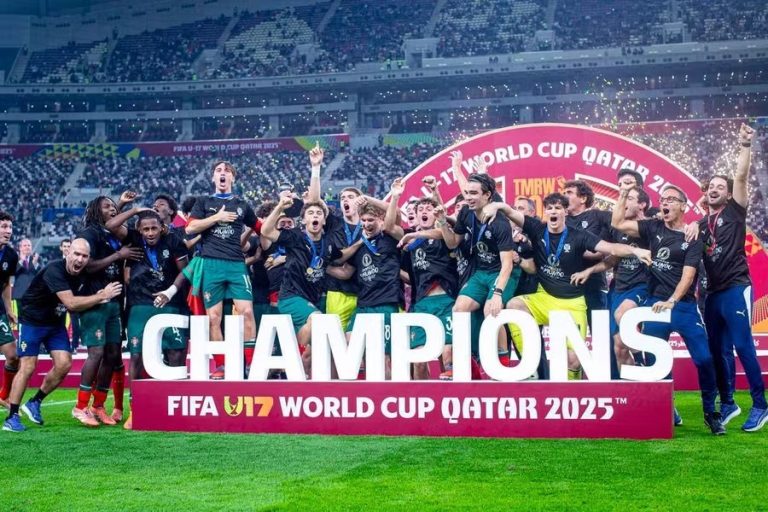
Portugal has won their maiden FIFA U-17 World Cup, defeating Austria 1–0 in a thrilling final at Doha’s Khalifa International Stadium.

Anisio Cabral scored the decisive first-half goal, securing a dream 2025 double for Portugal after their U-17 European Championship triumph earlier this year.

Austria, appearing in their first-ever World Cup final at any age group, pressed for an equalizer late in the game, with Daniel Frauscher’s effort striking the post in a tense moment. Despite Austria’s relentless attacks, Portugal’s goalkeeper Cunha made key saves to maintain the lead.

Cabral finished the tournament with seven goals, showcasing Portugal’s fluid attacking style, while Austria’s Johannes Moser claimed the Golden Boot with the highest overall tally in the competition.

Portugal’s victory marks a historic milestone for the nation, sparking jubilant celebrations as they lift their first U-17 World Cup trophy.

By Prince Tuffour