





















Source: Ebenezer Madugu
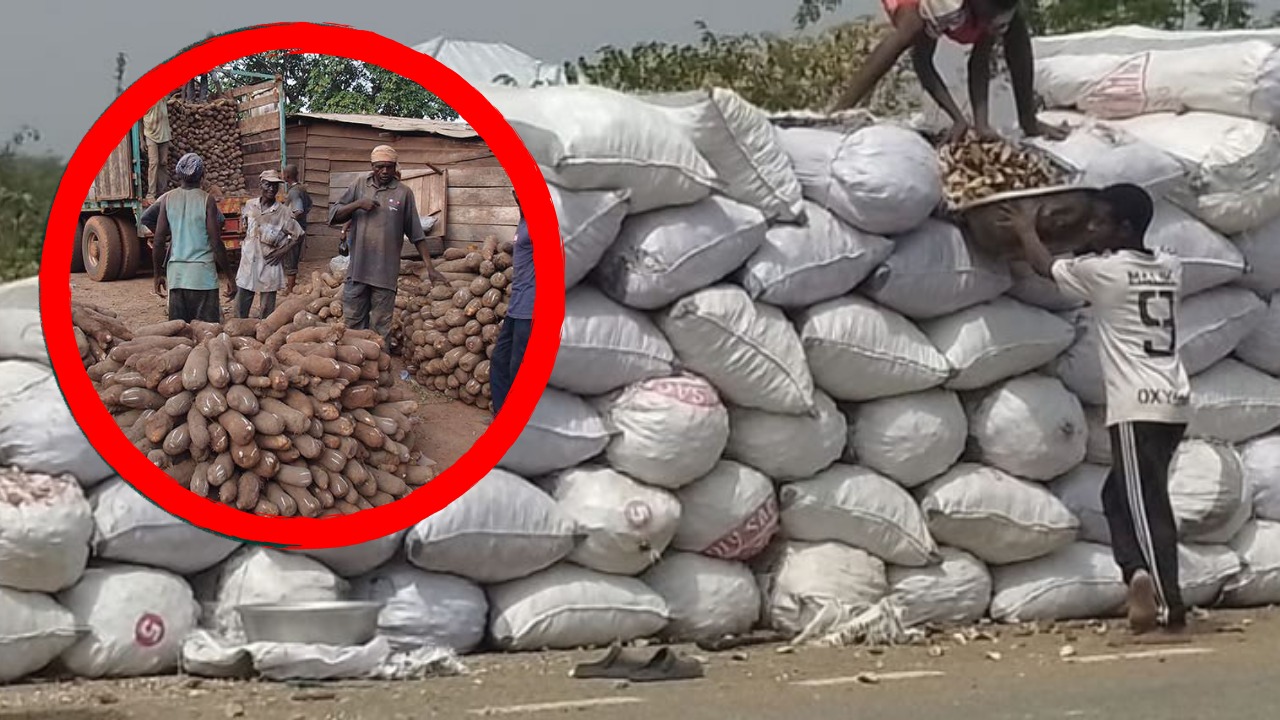
Farmers cultivating yam and cassava across the Oti Region and Northern Region say falling farmgate prices for their produce are worsening their economic conditions, despite broader claims of economic improvement.
While supporters of the current administration led by John Dramani Mahama point to declining fuel prices and relative stability of the Ghana cedi as signs of recovery, many farmers argue that these indicators do not reflect their daily economic realities.
For smallholder farmers, they say, the true measure of economic progress lies in the value of their produce compared to the cost of living and production.
Declining Prices and Shrinking Margins
Farmers note that under the previous government of the New Patriotic Party, a litre of fuel sold for about GH₵20, while a bowl of gari sold for roughly GH₵30. After buying fuel, a farmer could still retain around GH₵10 for other expenses.
Today, they say, fuel may sell for around GH₵10, but the price of gari has dropped to about GH₵15. After purchasing fuel, the farmer is left with only GH₵5, which farmers argue has far less purchasing power than GH₵10 previously did.
The situation appears even more challenging in cassava production. Farmers recall that during the previous administration, a bag of dry cassava sold for about GH₵400. After spending around GH₵100 on transportation—when fuel cost roughly GH₵20 per litre—the farmer would still take home about GH₵300.
Currently, they report that the same bag sells for approximately GH₵100. Even with lower fuel prices and transportation costs estimated around GH₵50, farmers say their net income drops to roughly GH₵50, representing a dramatic reduction in earnings.
Yam Farmers Report Similar Trends
Farmers cultivating yam report a comparable situation. Previously, 100 tubers of yam could sell for between GH₵1,500 and GH₵2,000, depending on size and quality. Today, they say, the same quantity sells for between GH₵700 and GH₵1,200.
The combined effect of falling produce prices, farmers argue, is pushing many deeper into financial difficulty.
Rising Labour and Production Costs
Although some agro-chemicals have seen slight price reductions, farmers say these gains are being offset by rising labour costs. For instance, labourers who once charged about GH₵20 to weed a 12×12 plot of land now charge around GH₵50, more than doubling production expenses.
Farmers also cite rising household costs such as electricity and water bills, which further strain already shrinking incomes.
Farmers Question Impact of Economic Policies
The current government came to power promising an economic “reset” aimed at improving livelihoods. However, farmers say falling fuel prices and currency stability provide little relief if the prices of their produce continue to decline.
For many farmers, the issue is straightforward: whether the proceeds from months of cultivating cassava and yam can sustain a household.
Increasingly, they say, the answer is no.
Farmers warn that if current trends persist, many smallholder producers across the Oti and Northern Regions could face worsening hardship, raising broader concerns about the sustainability of rural livelihoods and food production in Ghana.