
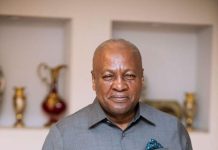
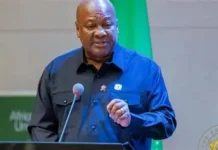







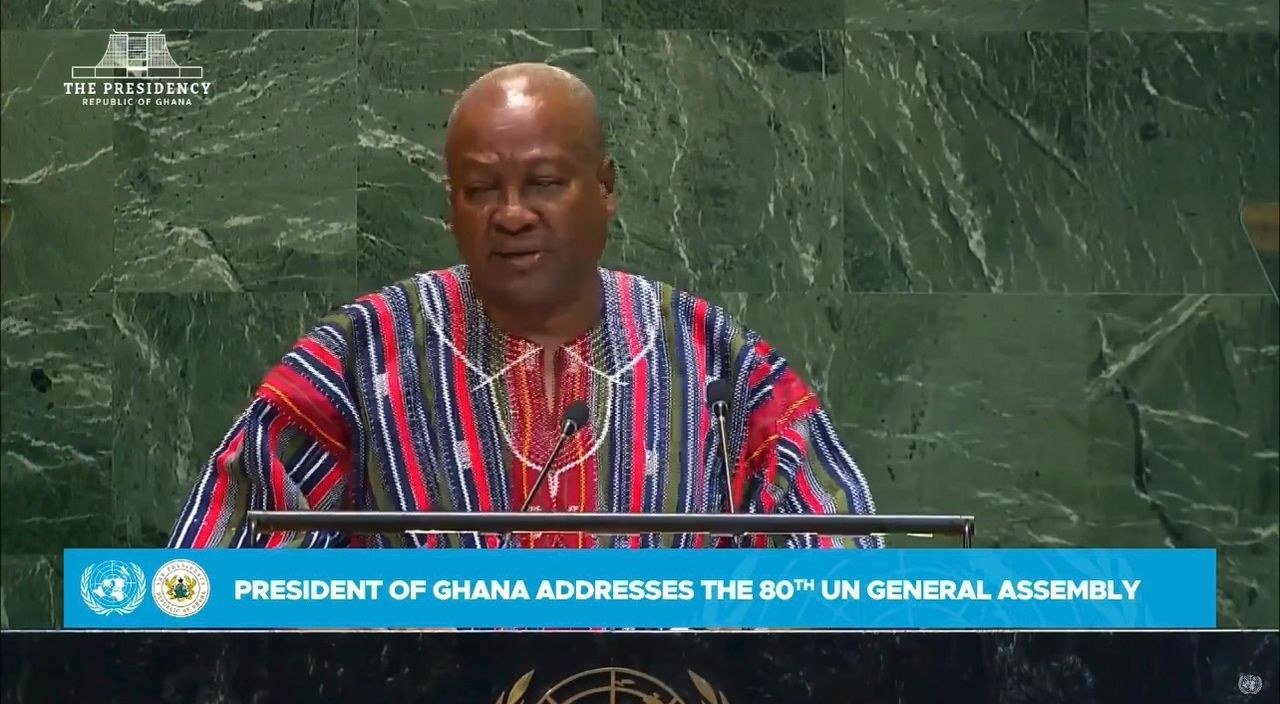
President of the Republic of Ghana, H.E John Dramani Mahama, delivered a bold and impassioned call for a “reset” at the United Nations during his address to the 80th General Assembly, challenging the global body to adapt to the realities of the 21st century and break away from the outdated power structures that have governed international relations since 1945.
In a speech marked by historical reflection and urgent appeals for reform, President Mahama urged the UN to “embark on a process of serious recalibration” as the world celebrates the organization’s 80th anniversary.
“It is not the same world that it was back then when the UN was formed,” he declared. “Imagine what it would be like after 80 years—this organization must evolve or risk irrelevance.”
Mahama, who began his second non-consecutive term as President of Ghana in January, used the occasion to challenge the legitimacy of the UN Security Council’s permanent membership structure, pointing out the continued dominance of post-World War II powers.
“The founding charter is outdated,” he said, referencing the Security Council’s five permanent members. “These nations are still being rewarded with an almost totalitarian guardianship over the rest of the world.”
Africa’s Absence in Power Circles
The President questioned why Africa—the second-largest continent with dozens of member states—still lacks permanent representation on the Security Council.
“If the principle of sovereign equality of all members truly guided this institution,” Mahama argued, “then Africa would have at least one permanent seat on the Security Council.”
He called for a restructured global power dynamic where digital influence and geopolitical authority are no longer monopolized by a select few.
A Modern World, An Outdated System
Mahama contrasted the world of 1945 with today’s technologically advanced, yet more complex and fragile global environment. He painted a vivid picture of how much the world has transformed:
“When the UN was founded, the sun had not yet set on the largest empire in history. Travel was largely by sea. The personal computer didn’t exist. Today, we live in a world of cryptocurrency, AI, social media—and the dark web.”
He also highlighted the existential threats of climate change, citing the submergence of island nations like the Maldives, the desertification of historic cities like Timbuktu, and deforestation in the Amazon.
Challenge to the Veto Power
A key part of his address focused on the controversial veto power held by the permanent members of the Security Council.
“No single nation should be able to exercise an absolute veto to serve its own interest in a dispute,” he said, calling for a mechanism that would allow the UN General Assembly to challenge such decisions.
Referencing the iconic words of Nelson Mandela during the UN’s 50th anniversary in 1995, Mahama echoed the call for structural reform, quoting:
“The United Nations must redefine its power and leadership structures to reflect the diversity of our universe and assure equity among nations.”
A Resounding Message
Mahama’s address was met with applause by several African and Global South delegations, who have long called for democratization of global governance.
As the UN marks eight decades of existence, President Mahama’s message rings clear: equality, reform, and relevance must take precedence over tradition and power politics.
Atinkaonline.com