

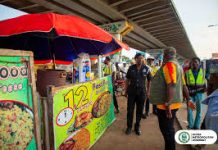



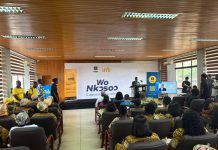








A section of traders, especially Central Market traders were left stranded at the new Kejetia Market as they struggled to get their keys and allocation of the stores.
The Kumasi Metropolitan Assembly (KMA) on July 15, 2019 begun the allocation of stores at the new Kejetia Market to traders.
According to the assembly reports, 1,500 traders had already been catered for under the first phase of the allocation exercise.
The Kumasi Metropolitan Assembly had fenced part of the Central Market to pave way for the construction of the 2nd phase of the Kumasi Central Market project.
The assembly has also ordered some traders who trade at the Central Market to vacate by the end of January 2020 since the contractor is moving to the site.
On May 2 , 2019, President Nana Addo Dankwa Akufo-Addo cut sod for the commencement of Phase 2 of the redevelopment project of the Kumasi Central Market and the provision of associated infrastructure, but work is yet to take off.
The contractor, Contract a Construction Ltd, UK, had not secured the right of access to the site despite all his efforts. The slow process in relocating traders at the Kumasi Central Market by Kumasi Metropolitan Assembly (KMA) delayed the commencement of Phase 2 of the market’s redevelopment project for more than five months.
Following the directives of KMA concerning the construction of the 2nd phase of the Central Market project, scores of Central Market traders stormed the Kejetia Market to receive their keys.
Some stranded traders expressing their grievances to media said, “We came here (Kejetia Market) yesterday but the assembly failed to give us the keys to our allocated stores”.
According to the traders, “We are ever ready to move from Central Market to Kejetia Market to do our business but KMA keeps delaying us”.
Meanwhile, Chairman of Concerned Central Market traders Mr. Frank Antwi urged the traders to exercise patience and complain all their concerns to the complain desk to deal with the issues accordingly.
Ghana| Atinkaonline.com
Allocation of stores: confusion rocks kejetia as traders struggle to get keys
Radio Tongu Boss arrested for promoting Western Togoland agenda
Information available indicates that, a team from the Bureau of National Investigations(BNI) and a joint Police and Military personnel have arrested and detained the Director of Radio Tongu, Mr. Zottor Bestway, in the South Tongu District of the Volta region.
He was arrested for allegedly promoting agenda of Homeland Study Group, a secessionist group in the Region.
Radio Tongu is a community radio station based at Sogakope in the South Tongu District of the Volta Region.
Mr. Zottor was picked up by the Security personnel at his residence in Sogakope on Wednesday, January 15.
Prior to his arrest, the Volta Regional Minister, Dr Archibald Yao Letsa, on Tuesday, January 7, issued a warning to media houses and practitioners in the Region who will on any ground promote the separatists group.
The Minister made this known during a press soiree held in Ho and categorically mentioned Radio Tongu to desist from championing the separatists activities.
It is understood, that the decision to arrest Mr. Zottor was taken after a District Security Council (DISEC) meeting.
Meanwhile, both Regional and the South Tongu District Police Command, BNI, family and staff of the station declined to speak on the development.
Ghana| Atinkaonline.com
US lifts visa restrictions on Ghana
The United States has lifted the visa restrictions in Ghana applied under Section 243(d) of the U.S. Immigration and Nationality Act.
A statement released by the public affairs section of the embassy of the United States of America in Ghana noted that the validity period from number of entries on new tourists and business visas (B1, BB2 and B1/B2) for all Ghanaian executive and legislative branch employees, their spouses, and their children under 21 will revert to receiving the normal validity, based on reciprocity, which is currently five years with multiple entries.
It, however, stated that all pending non-immigrant visas (NIV) to domestic employees (A3 and G5) OF Ghanaian diplomats posted in the United states that were received during the visa restrictions will now be processed.
This development follows the establishment of mutually agreed process for identification validating and issuance of travel documentation to Ghanaian citizens under final orders of removal in a manner consistent with international standards issued by the International Civil Aviation organization of which Ghana is a member state.
Visa processing will return to the normal procedures from January 17 2020.
Ghana | Atinkaonline.com
Ghana Gets €250 Million To Upgrade Electricity Transmission Infrastructure
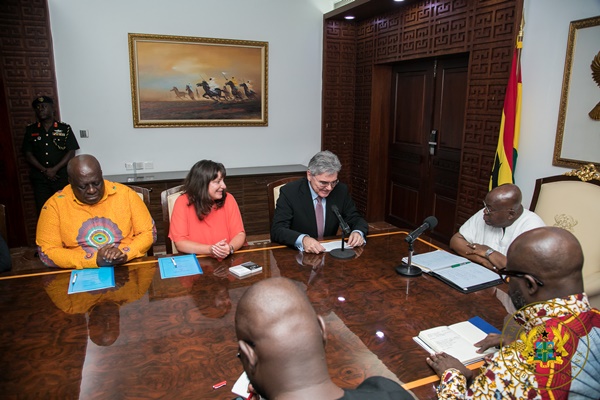
A Memorandum of Understanding, to this effect, was signed at Jubilee House, by Mr. Jonathan Amoako-Baah, CEO of the Ghana Grid Company (GRIDCo), on behalf of the Government of Ghana, and by Sabine Dall’Omo, a representative of Siemens, in the presence of the President of the Republic, and the President and Chief Executive Officer of Siemens AG, Mr. Joe Kaeser.
The signing of the MoU has seen Ghana receive a quarter of the €1 billion fund put in place by the German Government to boost the private sector in Compact countries, of which Ghana is one.
Under the agreement, the two companies will work not only to improve Ghana’s electricity grid capacity and stability, but also help ensure that the country expands her ability to export power to neighbouring countries in West Africa, such as Burkina Faso, Togo and Benin.
Witnessing the event, the President of the Republic, Nana Addo Dankwa Akufo-Addo, described the signing ceremony as a very important development in the energy sector of the country, adding that “the people from GRIDCO know, as well as I do, how necessary it is to undertake this project – the retooling, and refitting of our transmission and grid system across the country”.
The importance of the project, he underscored, stems from the “kind of future that we want to design for ourselves as a rapidly industrialising economy, that is going to be focused on important infrastructural developments, as well as big resource developments in our bauxite, manganese, and iron ore industries. All of this is going to have to be focused very much on reliable accessibility to power and the rest.”
With Ghana being the first country in Africa to benefit from a significant transaction from the ‘Compact with Africa’ programme, the President indicated that this “is, in itself, a big vote of confidence by the German leadership and Chancellor Merkel and yourself, one of the great German companies, to work in our country.”
He continued, “We welcome that expression of confidence, and we want to assure you that it is not one that we will abuse. We, on our part, are determined to work in transparency and openness with you, to make sure that this project comes to a proper conclusion.”
On his part, Mr. Joe Kaeser, President and Chief Executive Officer of Siemens AG, stressed that “the MOU will, together with our partner GRIDCO, modernize the whole grid of Ghana in steps, one at a time, and also organize the grids and bring the power to the people in a more efficient way. It will also help young people and train them and educate them for the future.”
He added that the Compact with Africa initiative is about the future of Africa.
“It is about showing them the way and on how to lead; and the first thing in this future in this vision is about electrification. It is about energy. The agreement is not only about supplying grids or products or solutions, it is about being a proud, responsible and an honoured partner to Ghana, and to the Ghanaian people, so that we can build this country for the future,” the Siemens President added.
It will be recalled that, on 12th June 2017, President Akufo-Addo attended G20 Africa Partnership Summit in Berlin, Germany, where the Compact with Africa (CwA) programme was announced, and at which Ghana became one of the beneficiary countries of the Compact. Again on 27th October, 2018, he attended another such meeting in Berlin.
Ghana| Atinkaonline.com
Statistical Service likely to change date for 2020 census
The Ghana Statistical Service (GSS) has stated that Ghana’s forthcoming 6th post independence population and housing census, which was originally scheduled for March 2020 is likely to be moved forward by a couple of months.
According to the GSS, the date is being anticipated following observations from the completed field census mapping exercise, which has engendered the need to redesign technological interventions required for complete coverage, enhanced accuracy and timely release of the census results.
In a statement by the GSS, signed by the Deputy Government Statistician, David Yenukwa Kombat, the GSS urged its stakeholders, media and the general public to maintain positive engagement and participation in the preparation and implementation of the 2020 census activities, including sharing of the right information.
Meanwhile, the GSS said it will communicate the new census date to the public once it is approved by the National Census Steering Committee.
Below is the statement:

Ghana| Atinkaonline.com| Porcia Oforiwaa Ofori
EC to meet IPAC over new voter register brouhaha
The Electoral Commission (EC) of Ghana is set to meet with the Inter Party Advisory Committee (IPAC) to have further deliberations on the proposed new voters’ register for the 2020 general elections.
The Electoral Commission (EC) requested over GHS400m for the compilation of a new voters’ register for the 2020 general election.
The call for a new voters’ has generated a heated debate among the major political parties in Ghana. The ruling NPP supports the call while the leading opposition party, the NDC is totally against it.
In the midst of the controversy, the Eminent Advisory Committee of the EC has in a statement signed by the Chairman of the committee, Emile Short called for calm.
The statement noted that the EC held a meeting with members of the Eminent Advisory Committee of the EC on Wednesday January 15 2020 to outline the justification for the procurement of a new biometric Voter management system and the compilation of a new voter register ahead of the 2020 general elections.
According to the statement, the EC and its Eminent Advisory committee will meet members of IPAC to have further discussions on the EC’s call for a new register.
“Meanwhile the Eminent Advisory Committee calls for calm from all Political Parties and other stakeholders as they work in the national interest,” the statement said.
Ghana | Atinkaonline.com
Video: Over 13 cars involved in accident on Adenta road
About 13 vehicles, both commercial and private, and a motorbike have been involved in a multiple car accident on the Adenta road, Atinkaonline.com has learnt.
Although the cause of the crash is unknown, reports indicate that the accident occured Wednesday evening, causing massive traffic on the stretch.
Meanwhile, personnel from the Police Service rushed to the scene to control the traffic situation.
Although some motorists involved in the accident were injured, no deaths have been recorded yet.
Below is a video of the accident.
Ghana| Atinkaonline.com| Porcia Oforiwaa Ofori
Russian government resigns as Vladimir Putin plans future
Russia’s government has resigned, hours after President Vladimir Putin proposed sweeping constitutional changes that could prolong his stay in power.
If approved by the public, the proposals would transfer power from the presidency to parliament.
Mr Putin is due to step down in 2024 when his fourth term of office comes to an end.
But there is speculation he could seek a new role or hold on to power behind the scenes.
Mr Putin put forward his plans in his annual state of the nation address to parliament. Later, in an unexpected move, Prime Minister Dmitry Medvedev announced that the government was resigning to help facilitate the changes.
Russian government sources told the BBC that ministers did not know about the government’s resignation ahead of the announcement.
“It was a complete surprise,” one source said.
What is Mr Putin proposing?
The Russian leader said during a speech to both chambers of parliament that there would be a nationwide vote on changes that would shift power from the presidency to parliament.
Constitutional reforms included giving the lower house of parliament, the State Duma, “greater responsibility” for the appointment of the prime minister and the cabinet.
Currently, the president appoints the prime minister and government ministers, and the Duma approves the decision.
Mr Putin also suggested an increased role for an advisory body called the State Council. The council, which is currently chaired by Mr Putin, comprises the heads of Russia’s federal regions. Mr Putin said it had proved to be “highly effective”.
Other measures include:
- Limiting the supremacy of international law
- Amending the rules that limit presidents to two consecutive terms
- Strengthening laws that prohibit presidential candidates who have held foreign citizenship or foreign residency permits
What was the response?
Mr Medvedev made his announcement on state television with President Putin sitting next to him.
“These changes, when they are adopted… will introduce substantial changes not only to an entire range of articles of the constitution, but also to the entire balance of power, the power of the executive, the power of the legislature, the power of judiciary,” Mr Medvedev said of Mr Putin’s proposals.
“In this context… the government in its current form has resigned.”
Mr Putin thanked Mr Medvedev for his work but said “not everything” had been accomplished.
He asked Mr Medvedev to become deputy head of the National Security Council, which is chaired by Mr Putin.
The president later nominated tax service chief Mikhail Mishustin to replace Mr Medvedev as prime minister.

Mr Medvedev has been prime minister for several years. He previously served as president from 2008-2012, switching roles with Mr Putin – a close ally – after the latter served his first two terms as president. Russia’s constitution only allows presidents to serve two consecutive terms.
Even when he was prime minister, Mr Putin was widely seen as the power behind then President Medvedev.
Opposition leader and leading Kremlin critic Alexei Navalny said he believed that any referendum on the constitutional changes would be “fraudulent crap”. He said Mr Putin’s goal was to be “sole leader for life”.
The last time Russia held a referendum was in 1993 when it adopted the constitution under President Boris Yeltsin, Mr Putin’s predecessor.
Mr Putin became acting president following Mr Yeltsin’s resignation in 1999 and was formally inaugurated a year later. He has held the reins of power – as president or prime minister – ever since.
Part of Putin’s bigger plan?
President Putin likes stability. It’s his thing. So the newsflash that the entire government had resigned was a big surprise. From the online chatter, it seems even the cabinet ministers didn’t see it coming. For a moment it was like a flashback to Russia of the 1990s, when President Yeltsin changed prime ministers as readily as his socks. Vladimir Putin is no Yeltsin, though, and this move looks like part of some bigger plan that’s all about consolidating – and extending – his hold on power.
Under the current rules, Mr Putin must step down as president in 2024 and it’s never been clear what he’d do next. That’s still true. But the constitutional tweaks he’s proposed are hints at some options. He’s bumped up the status of the little-known State Council, which he already heads. Or he could become PM again, now he’s slightly weakened the powers of Russia’s president.
If he is sticking around, perhaps he needs to make that palatable to people given all the social and economic problems he had to list once again in his annual address to the nation. If Mr Putin were to blame for their woes, Russians might well wonder why they should swallow him staying on, post-2024. Dmitry Medvedev – so often useful to Mr Putin – for now looks like a handy scapegoat.
What else did Mr Putin say?
In his address to parliament, the president unveiled a series of plans to increase the number of children being born in Russia. Like several Eastern European states, Russia has been struggling with a declining birth rate.
Last year Mr Putin promised tax breaks for bigger families.
On Wednesday he pledged state funding for new mothers in a bid to increase the number of children being born from an average of fewer than 1.5 per woman to 1.7 within four years.
So-called “maternity capital” has until now only been paid to families with at least two children.
Welfare benefits will also be paid for children aged three to seven in low-income families, and free school meals will be provided for the first four years of school.
Russia’s population has struggled to recover from a dramatic decline in the 1990s.
BBC
US-China trade deal: Winners and losers
After more than two years of rising tension, the US and China have signed a deal aimed at calming trade frictions. The agreement has been hard-fought, but it is unclear how much economic relief from their trade war it will offer.
Tariffs – in some cases at a lower rate – will remain in place. Analysts say it’s unlikely that the deal will produce gains sufficient to outweigh the losses already suffered.
We take a look at the winners and losers from the deal.
Winner: Donald Trump
Some critics say there is little substance, but the signing offers an opportunity for US President Donald Trump to put the trade war behind him and claim an achievement heading into the 2020 presidential election.
That may be a relief: Polls show that most Americans agree with the president that China trades unfairly, but they generally support free trade and oppose tariffs. Indeed, Republicans lost several congressional seats in 2018 – a change economists have linked to the trade war.
Winner: President Xi Jinping
China appears set to emerge from the signing having agreed to terms it offered early in the process, including loosening market access to US financial and car firms. In many cases, companies from other countries are already benefiting from the changes.
While President Xi can claim he did not simply bow to America’s demands, that doesn’t mean the Chinese are celebrating. The Federal Reserve estimates that China’s economy has taken a 0.25% hit, as US demand for its goods fell by about a third.
Loser: American companies and consumers

The new deal halves tariff rates on $120bn worth of goods, but most of the higher duties – which affect another $360bn of Chinese goods and more than $100bn worth of US exports – remain in place. And that’s bad news for the American public.
Economists have found that the costs – more than $40bn so far – are being borne entirely by US companies and consumers. And that figure does not even try to measure lost business due to retaliation.
Overall, the Congressional Budget Office estimates that tariff-related uncertainty and costs have shaved 0.3% off of US economic growth, while reducing household income by an average of $580 since 2018.
The CBO’s estimates take into account all new tariffs imposed since January 2018 – not just those involving China – but analysts say a more limited look would yield similar findings.
Loser: Farmers and manufacturers

The new deal commits China to boost purchases in manufacturing, services, agriculture and energy from 2017 levels by $200bn over two years.
Mr Trump has said that could include as $50bn worth of agricultural goods a year.
But other officials have put the figure lower, analysts are sceptical and China has said the purchases will depend on market demand. So far, the primary effect on business has been pain.
Farmers, who have been targeted by China’s tariffs, have seen bankruptcies soar, prompting a $28bn federal bailout.
Among manufacturers, the Federal Reserve has found employment losses, stemming from the higher import costs and China’s retaliation.
Over the long-term, American firms may reroute supply chains away from China to avoid the tariffs – but that’s an expensive prospect.
Winners: Taiwan/Vietnam/Mexico

Globally, economists estimate that the trade war will shave more than 0.5% off of growth. But some countries have benefited from the fight, which redirected an estimated $165bn in trade.
Analysts at Nomura identified Vietnam as the country that would gain the most, while the UN found that Taiwan, Mexico and Vietnam saw US orders ramp up last year.
The Fed found that the increased American imports boosted Mexico’s economic growth by just over 0.2%,
Some of those arrangements are likely to stick, even with a deal.
Loser: Washington China critics

The US has said that China has agreed to new protections for intellectual property, including lowering the threshold for criminal prosecution and increasing penalties. Critically, the two sides say they have agreed to a way to resolve such disputes.
Those were among the issues that ostensibly triggered the trade war.
But analysts say it’s not clear if the new commitments are any different from promises that China has made before. And the new deal does not address some of America’s chief complaints about China’s trade practices – such as the subsidies it provides to certain industries.
The White House has said it will tackle additional issues in a second, “phase two” deal but analysts say they don’t expect anything concrete anytime soon. The administration has also discussed how to address the subsidies with Japan and Europe.
BBC