












The World Health Organization (WHO) has unveiled a $518 million six-month response plan aimed at containing the rapidly spreading Ebola outbreak in the Democratic Republic of Congo (DRC) and neighbouring Uganda.
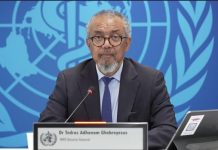
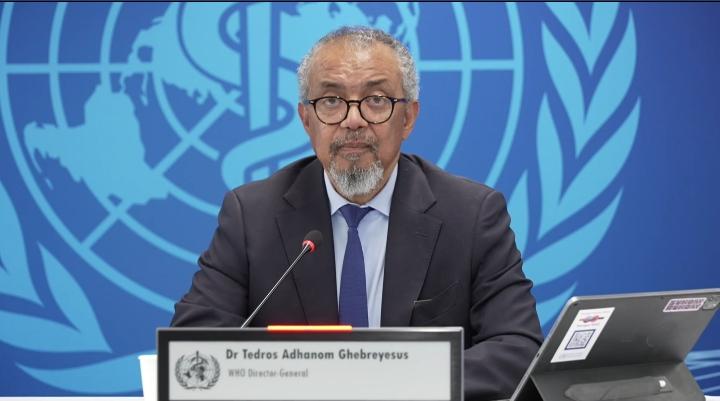
Announcing the initiative on Friday June 5, 2026, WHO Director-General Tedros Adhanom Ghebreyesus called for urgent financial support and strong political commitment to halt the outbreak, which has become the fourth-largest Ebola epidemic on record.
The joint strategy, developed by the WHO and the Africa Centres for Disease Control and Prevention (Africa CDC), seeks to strengthen outbreak control efforts in affected countries while helping neighbouring nations prepare for potential cases through enhanced surveillance, border screening, and emergency response measures.
“The outbreak is moving fast, and we are still playing catch-up,” Tedros said. “Containing Ebola requires political commitment, sustained financing, and trust in engaging communities.”
Health authorities say the outbreak remained undetected for several weeks, allowing the virus to spread before response measures could be fully implemented.
According to the Africa CDC, the DRC has recorded 381 confirmed Ebola cases and 62 deaths, while Uganda has reported 19 confirmed cases and two fatalities.
The outbreak involves the rare Bundibugyo strain of Ebola, for which there is currently no approved vaccine or treatment.
“This outbreak is very serious. If you compare it with previous Bundibugyo outbreaks, this is the most severe we have seen,” Africa CDC Director-General Jean Kaseya said.
Kaseya revealed that donors have pledged $315.8 million toward the response effort, significantly below the required funding target. He noted that earlier estimates of $498 million in pledged support were revised after some donors adjusted their commitments.
The Africa CDC officially announced the DRC’s 17th Ebola outbreak on May 15, prompting the WHO to declare it a Public Health Emergency of International Concern shortly afterwards.
Efforts to contain the outbreak have been complicated by testing difficulties. Standard Ebola diagnostic tests initially failed to detect the Bundibugyo strain, resulting in delays in identifying cases and obtaining laboratory results.
“It’s taking several days to a week or more, and that’s frustrating,” said Franklin Graham, president of Samaritan’s Purse, which is supporting response efforts in Congo’s Ituri Province.
Beyond logistical challenges, health workers have faced resistance from some communities. Reports of attacks on burial teams and treatment centres have further hindered containment efforts.
Highlighting the security concerns, the WHO announced that it had received three armoured vehicles from the United Nations peacekeeping mission in Congo to support frontline operations.
Health officials warn that without increased funding, stronger community engagement, and improved security, the outbreak could continue to spread across the region.
Source: Mavis Fantevi