





















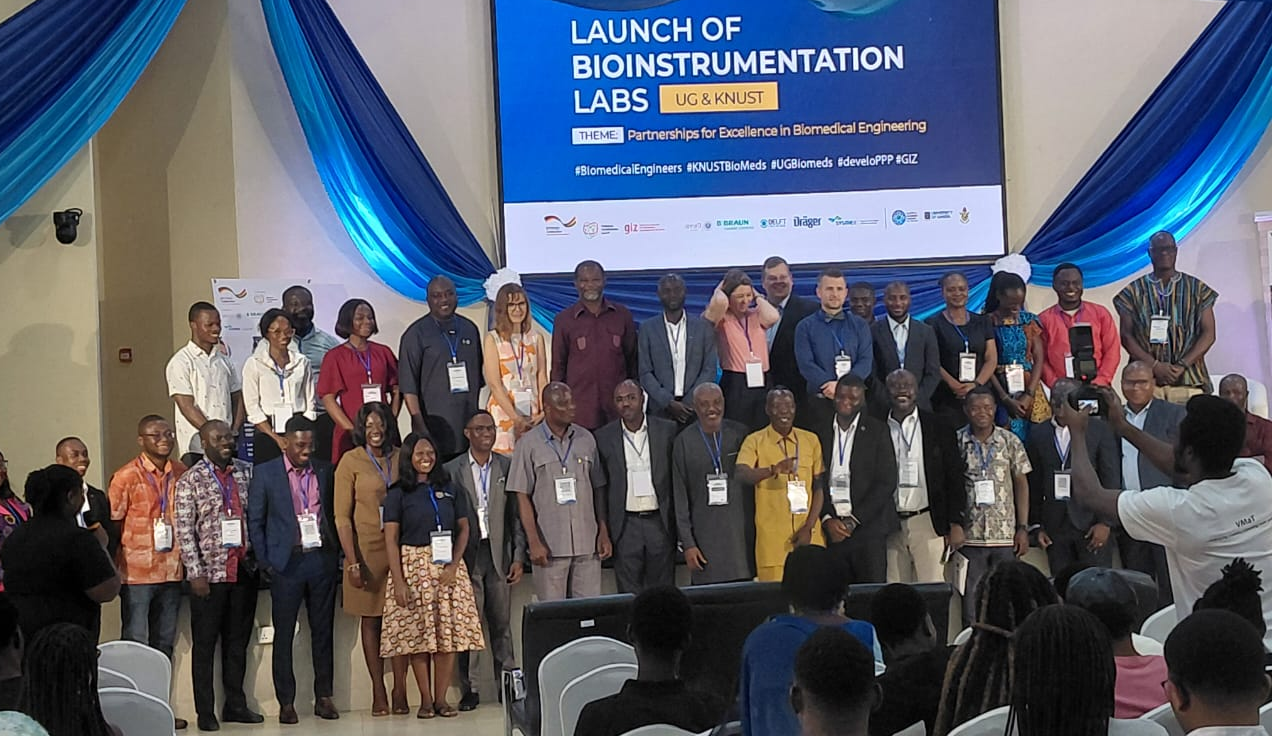
A collaborative project between Ghana and Germany is significantly advancing biomedical engineering education in Ghana by providing students at KNUST and the University of Ghana with state-of-the-art labs and employable, industry-ready skills.
The intervention, which is being provided as part of the Upskilling Biomedical Engineers for Ghana project, is to improve the connection between industry, research, and academia. It combines the adaptive learning platform Area9 Lyceum with top medical technology and diagnostics firms, including B. Braun, Delft Imaging, Dräger, and Sysmex Europe.
The project highlights Germany’s development partnership with Ghana in enhancing biomedical engineering education. It was carried out by GIZ on behalf of BMZ and funded under the develoPPP initiative.
Students can gain hands-on experience in medical equipment installation, maintenance, diagnostics, treatments, and innovation thanks to the renovation of two bioinstrumentation labs. The strategy is part of a larger movement toward experiential learning that was created to satisfy the needs of Ghana’s contemporary healthcare system.
The programme is also reshaping curricula at both institutions, with greater focus on applied learning, problem-solving, and industry-aligned technologies.
Stakeholders say the initiative will help deliver job-ready graduates, improve equipment utilisation in health facilities, strengthen patient care, and create employment opportunities in biomedical services and medical device-related industries.
Representing the partner companies, Prof. Dr. Torsten Wagner said the availability of graduates with hands-on experience in industry-standard equipment would be transformative. He noted that the laboratories would shorten onboarding timelines, increase productivity, and support the development of Ghana’s local medical manufacturing and services sector.