Frimpong-Boateng Defies Expulsion Threat, Calls NPP “Fake” Again

0

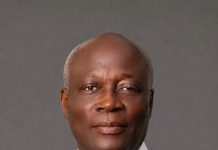
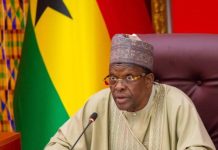
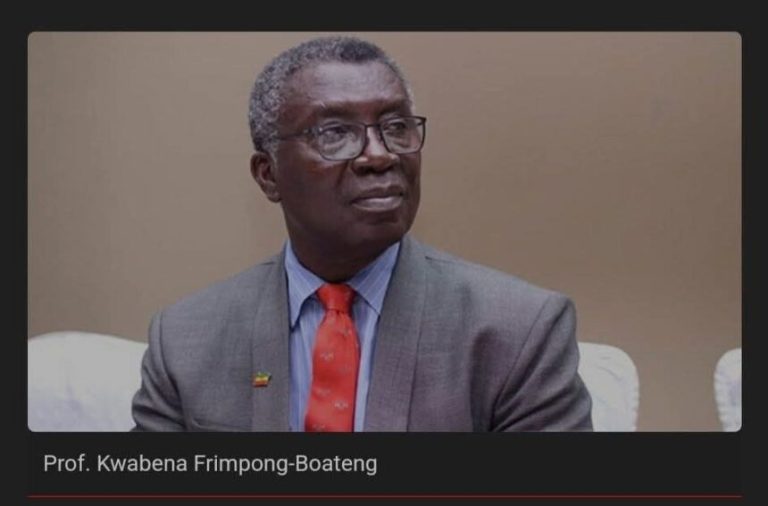
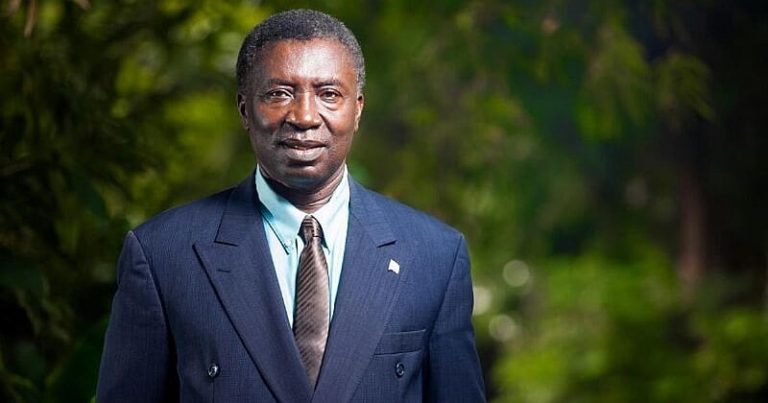
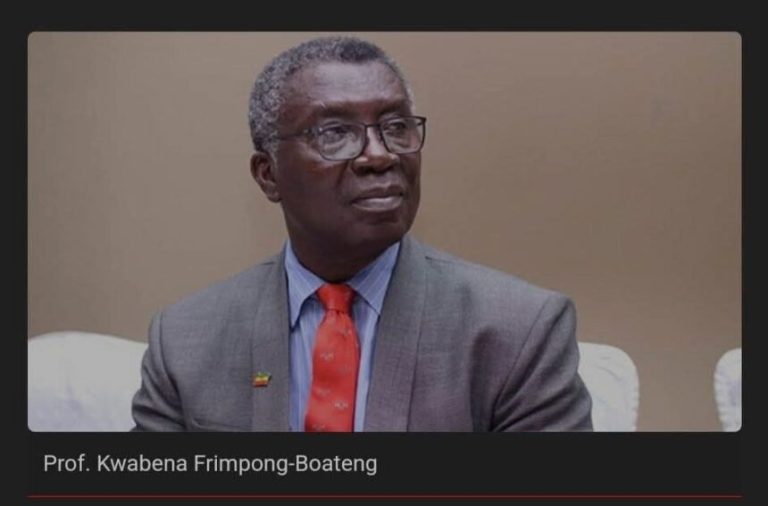
Prof. Kwabena Frimpong-Boateng, the renowned cardiothoracic surgeon and veteran of the New Patriotic Party, has issued a defiant response to moves by the party’s National Executive Committee to expel him, insisting he will not be forced out of the organization he helped shape.

Speaking on Tuesday, January 13th, on Asempa FM, the former Minister for Environment, Science, Technology, and Innovation dismissed reports of disciplinary proceedings as “a waste of time” and turned his fire on the current leadership.

“No! I’m not leaving the party; they should leave the party [because] they are the fake ones,” he declared. “They should go away and the true party will stand.”

Frimpong-Boateng, who has grown increasingly outspoken since the NPP’s defeat in the 2024 elections, accused the party of abandoning its founding principles of liberal conservatism and institutional integrity. He described the re-election of certain leaders as “a train wreck” and warned that the party is in “terminal decline.”

“We must accept that the NPP is destroyed; this was not how the party was in years past,” he said. “They should exit so that the young men and women with love for the party will rebuild.”

The NEC, led by General Secretary Justin Frimpong-Kodua, has accused him of “anti-party behaviour” and public disparagement, arguing that his remarks violate the party’s constitution. But Frimpong-Boateng signaled he would not cooperate with any disciplinary process. “I will not honour any invitation from the NEC to waste my time,” he said.

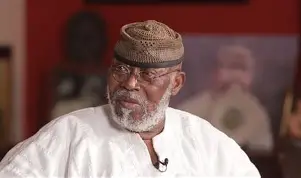
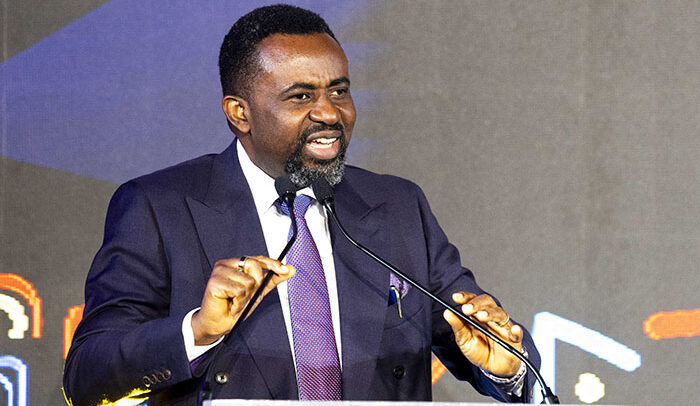
Dr. Nyaho Nyaho Tamakloe

Meanwhile, founding Member of the NPP, Dr Nyaho Nyaho-Tamakloe, has expressed concern over the party’s decision to initiate disciplinary action against former Minister for Environment, Science, Technology and Innovation, Professor Kwabena Frimpong-Boateng, following comments he made describing the party as “fake.

He argued that the party should have invited him for a discussion rather than moving swiftly to expel him.

“The way the leadership is handling this, if not careful, will disperse party members,” he said. “We have just come out of an election where we failed nationwide. You don’t treat outstanding members like this.”

He warned that the current approach could set a dangerous precedent, stating, “If they are going to displace Frimpong-Boateng, very soon they may sack many others who share similar views.”

By Ebenezer De-Gaulle

Seidu Agongo Writes: Power, Dust, and the Parable of Ken Ofori-Atta on ICE

0

There was a season in Ghana when a single whisper from the Finance Ministry could sway Parliament, steady or stumble the cedi, or send boardrooms scrambling.

For those of us who were keen observers, Mr Ken Ofori-Atta sat at the heart of that moment. He was a policy czar, loan negotiator, and public face of an era that promised transformation and delivered upheaval.

Among other things, Mr Ofori-Atta presided over the disbursement of billions of cedis to fund various projects, including the Free Senior High School program, though he openly opposed the mode of funding, the one district, one factory (1D1F), one village, one dam and the one constituency, one million policies.

Together with the Bank of Ghana and Securities and Exchange Commission, the investment banker funded the sweeping financial sector clean-up exercise that drained billions from state coffers, shattered nine banks and hundreds of firms in what promised stability but ended up costing jobs and wiping out the savings, sweats and businesses of ordinary Ghanaians.

My own sweat, the Heritage Bank, which was liquid, solvent, and well-governed by Bank of Ghana’s own assessment, was shut down after the Finance Ministry and Bank of Ghana wrote me off as “not fit and proper.”

Never mind that, days before the bank’s licence was revoked, the Bank of Ghana and the Ministry of Finance advised us to merge with other banks, like what happened to other indigenous banks.

From the Apex to ICE

It is a fact that at his peak, Mr Ofori-Atta was arguably the most powerful and influential figure in Ghana’s economic architecture, second only to the President. His grip on fiscal policy was unmatched; he negotiated billion-dollar loans, drove sweeping reforms, and shaped decisions that touched every Ghanaian household.

So entrenched was his influence that even when internal dissent within his own party reached fever pitch — when MPs openly demanded his removal — the President stood firm, insisting Ken was “the right man for the job.”

And so, for years, he weathered public protests, parliamentary censure motions, and political storms, remaining untouchable. It was only in the twilight of the administration, with the presidency itself nearing its end, that Ken was finally shown the exit, in what would later be a dramatic fall for a man once considered indispensable.

Though out of office from January 2025, Ken was not entirely out of power. He travelled to the United States of America, where his lawyers said he needed to be for medical reasons. Having failed to get him back to Ghana, the Office of the Special Prosecutor (OSP) had declared Ofori Atta a fugitive in February 2025, citing multiple investigations, from the SML revenue assurance contracts to procurement and payments in high-visibility projects.

By late 2025, 78 corruption-related counts had been filed in absentia, and an extradition effort was initiated. Many people, including the Attorney General and Minister of Justice, Dr Dominic Ayine said the fight to bring Ken home was difficult, given the top-notch lawyers fighting for him in the U.S.

But on January 6, 2026, things took a dramatic turn in a way that reminds us that all shall pass. On that fateful day, U.S. Immigration and Customs Enforcement (ICE) detained Ken at the Caroline Detention Facility in Virginia over immigration status issues, according to his lawyers.

Multiple Ghanaian outlets reported the targeted nature of the arrest; investigative journalist Manasseh Azure located the operation near Washington’s Westlight apartments. Meanwhile, Ghana’s Attorney General disclosed that the U.S. State Department had revoked Ofori Atta’s visa months earlier and set a deadline for him to leave.

The Bigger Lesson for Public Servants

For me, this is not a morality play about one man. It is a cautionary parable about power: Power is rented, not owned. Mandates sit on public patience, time and institutional checks. Humility stretches the lifespan of trust.

Ghana will move on. Governments rotate; markets adjust; headlines fade. What remains is the record of how power was used when it mattered.

The ICE detention is a sharp reminder that positions are temporary, that life humbles us all, and that the only lasting legacy is how we treated the country — its institutions, its businesses, and its people — when the pen was in our hand

As a Muslim, I always take refuge in the Qur’an.

Al-Kitab reminds us that power is transient, but faith and compassion endure. “All sovereignty belongs to Allah,” it teaches, and worldly authority is only a trust, never a possession.

Titles, wealth, and influence vanish like shadows at sunset, yet love for humanity and reverence for the Creator remain eternal.

Those who lead must do so with humility, mindful that the throne they occupy today may be dust tomorrow, but the deeds they leave behind will echo forever. The Author, Alhaji Seidu Agongo is a Businessman and Philanthropist.

By Ebenezer De-Gaulle

81-Year-Old Museveni Runs Again, Faces Bobi Wine Amid Talks of Succession

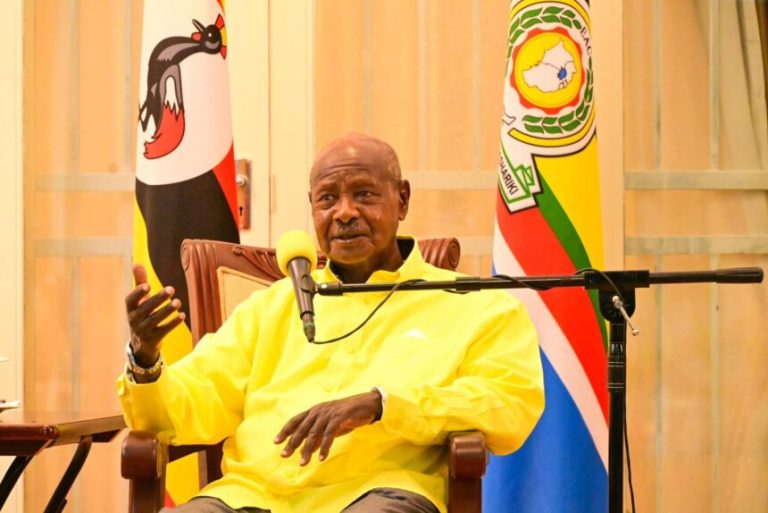
When Yoweri Museveni seized power in Uganda in 1986, he declared: “The problem of Africa in general and Uganda in particular is not the people but leaders who want to overstay in power.” Nearly four decades later, the 81-year-old president is seeking a seventh term in office, defying his own warning and testing the patience of a nation where most citizens have never known another leader.

Museveni rose to prominence as a rebel commander, leading insurgencies against autocratic governments and promising a “fundamental change” in Uganda’s politics. His early years in power were marked by optimism, foreign investment, and praise from Western allies for restoring order and tackling crises such as the AIDS epidemic. His government also won recognition for defeating the Lord’s Resistance Army, a brutal rebel group that terrorized Ugandans for nearly 20 years.

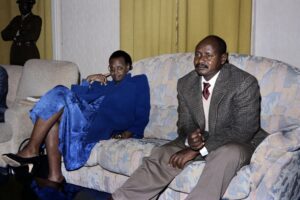
Ugandan President Yoweri Museveni with his wife Janet Musevini, October 24, 1987

But that goodwill has long since faded. Allegations of corruption, authoritarianism, and nepotism have dogged Museveni’s rule. Political observers say graft has been central to his government from the beginning. Parliamentary reports accused his administration of selling state enterprises to relatives and cronies at knockdown prices under a privatization program, with proceeds allegedly embezzled. Museveni has acknowledged corruption exists but insists offenders have been prosecuted.

Mixed Record at Home, Strategic Alliances Abroad

Museveni has proven a shrewd political strategist, cultivating foreign allies by aligning with Western security priorities. Uganda has deployed peacekeepers to Somalia and South Sudan, and the country hosts one of the largest refugee populations in Africa. Yet at home, corruption has hollowed out state services. According to UNICEF, only one in four Ugandan children who enter primary school make it to secondary education, while well-paid jobs remain scarce.

Born to Christian nomadic pastoralists, Museveni studied political science in Tanzania, where he founded a militant movement that helped oust dictator Idi Amin. After a series of coups, his National Resistance Army toppled Tito Okello in 1986, ushering Museveni into power. His promise of a new political order resonated with Ugandans and Western donors alike. But as the economy grew, so did public anger over corruption and repression.

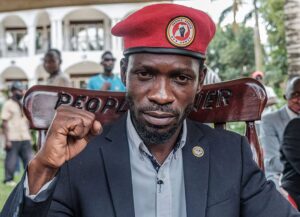
Robert Kyagulanyi Ssentamu, commonly known by his stage name Bobi Wine will compete against Museveni in a presidential election for the second time. But the odds are stacked against him.

Museveni has won all six presidential elections he has contested, often amid allegations of irregularities and heavy-handed crackdowns on opposition supporters. In 2005, parliament scrapped presidential term limits, a move critics said was designed to keep him in power for life. His longtime rival, former ally and physician Kizza Besigye, accused him of presiding over corruption and rights abuses. Besigye himself was arrested in 2024 and charged with treason.

Succession Questions Loom

Museveni’s main challenger in Thursday’s election is Bobi Wine, a 43-year-old pop star turned politician who has galvanized Uganda’s youth. Analysts say Museveni’s victory is all but certain, but the bigger question is succession. The president has shown signs of frailty, and attention has turned to his son, Gen. Muhoozi Kainerugaba, Uganda’s military chief. Opposition figures accuse Museveni of fast-tracking his son’s career to prepare him for eventual succession, despite Kainerugaba’s controversial remarks on social media.

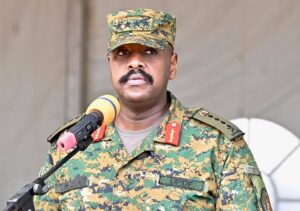
Museveni's son and Uganda’s military chief, Gen. Muhoozi Kainerugaba.
Museveni’s son and Uganda’s military chief, Gen. Muhoozi Kainerugaba.

Veteran politicians who once fought alongside Museveni have been sidelined, fueling speculation of a dynastic handover. Observers caution that Museveni may use the election outcome to recalibrate his strategy, either by promoting other party members to deflect criticism or by consolidating his son’s rise. “This is less about the results that will be announced, and more about the mood on the ground,” one analyst noted, suggesting a handover could still be years away.

Museveni himself has dismissed criticism from Western powers, once remarking: “If the international community has lost confidence in us, then that is a compliment because they are habitually wrong.” In recent years, he has diversified Uganda’s foreign ties, cultivating relationships with China, Russia, Iran, and the United Arab Emirates. The discovery of substantial oil deposits has further bolstered his standing, with agreements signed with TotalEnergies and China’s CNOOC to build an export pipeline.

Uganda’s Political Landscape

Uganda’s political system requires a presidential candidate to secure 50 percent plus one vote to avoid a runoff. The country has 353 constituencies, each represented by a member of parliament. Additional seats are reserved for women, youth, persons with disabilities, workers, older persons, and the military. Ex-officio members, including the vice president and cabinet ministers, may sit in parliament but cannot vote on legislative matters.

As Ugandans head to the polls, the stakes extend beyond the ballot box. Museveni’s frailty, his son’s ambitions, and the opposition’s resilience all point to a nation at a crossroads. Whether Uganda experiences another “fundamental change” or a continuation of the status quo remains uncertain. For now, Museveni appears determined to remain in power even, if he needs to use a walking stick. Uganda votes January 15, 2026.

By Ebenezer De-Gaulle

Two Burnt to Death, Two Injured in Offinso Road Crash

0

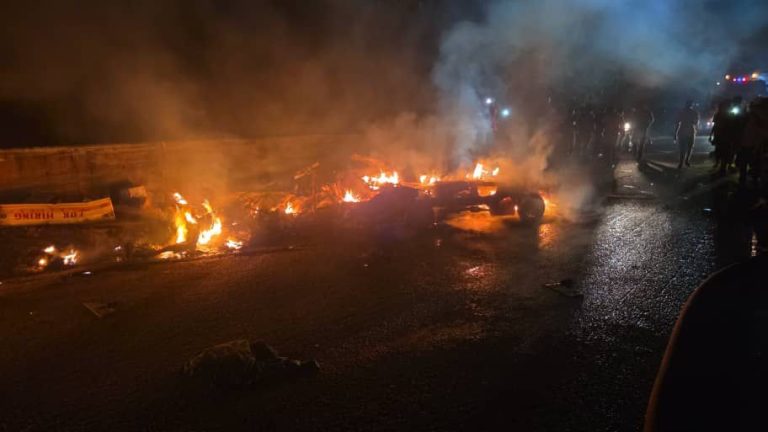
A tragic road accident at Offinso Old Town in the Ashanti Region has claimed the lives of two people, with two others sustaining injuries and currently receiving medical treatment.

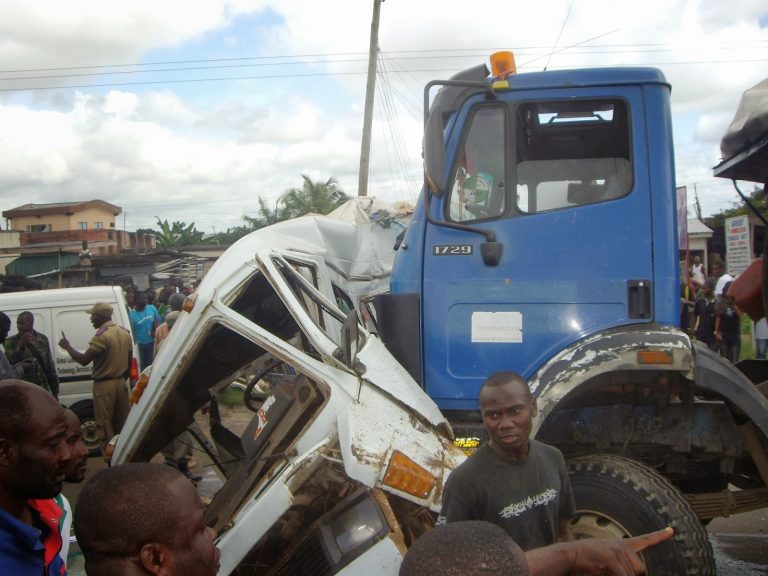
The deceased—a male driver and a female trader—were burnt to death after their vehicle caught fire following a collision involving a trailer (registration number GR-1357-W) and a mini truck loaded with building materials.

Eyewitnesses told the media that the accident occurred in the early hours of Tuesday, January 12, 2026.

According to residents, the female victim was a building materials dealer who was transporting goods from Kumasi to Offinso at the time of the crash. Upon impact, the vehicle burst into flames, trapping both her and the driver inside. They were burnt beyond recognition and died instantly at the scene.

The bodies have since been conveyed to the hospital morgue for preservation and further investigations.

Meanwhile, the trailer driver and his mate, who sustained injuries in the accident, are currently receiving treatment at a nearby health facility.

The Ghana Police Service has taken control of the scene and has commenced investigations to determine the cause of the crash.

Reported By Sofoba Kwame Afrifah

Ghana’s Surgical System Lags Global Standards, Frimpong-Boateng Warns

0

Renowned cardiothoracic surgeon and former Minister of Environment, Science, Technology and Innovation, has urged Ghana to raise its surgical standards to match global benchmarks, warning that inadequate facilities, outdated equipment, and limited investment in specialist training continue to hold the country back.

Speaking on Accra based Channel One TV’s The Point of View on Monday, January 12, Frimpong-Boateng lamented that many complex procedures are still performed abroad because Ghana lacks the infrastructure to handle them.

“It has not grown that much; there has not been adequate investment in equipment and training,” he said. “Training is very important. We have to train people all the time for the next generation, but that has been lagging.” He said.

The surgeon, who pioneered Ghana’s National Cardiothoracic Centre, noted that capacity in cardiac surgery has barely expanded over the years. He attributed the stagnation to insufficient investment in both technology and human resource development. While some private hospitals boast strong diagnostic capabilities, he said, only a handful of centers are equipped to carry out advanced surgical procedures.

“There are private hospitals in Ghana that do diagnostics, but there are only a few centres that are able to do the surgery,” he observed. “We’re hoping that some bold private people will get involved. We need equipment. Things are growing very fast and developing very fast, and we need to be abreast with the times.”

Frimpong-Boateng rejected comparisons that measure Ghana’s surgical performance against regional peers, insisting that the country must aim higher. “I don’t like things like we’re good in West Africa, Africa, we’re good in South of the Sahara,” he said. “No, if we’re good, we should be at par with the rest of the world. We cannot do a transplant of the heart; the lungs. We cannot do certain things in the heart. We do pediatric cases, but some are sent outside.”

He pointed to the National Cardiothoracic Centre at Korle-Bu Teaching Hospital as an example of the strain on existing facilities, describing it as too small to meet growing demand. He expressed optimism that the University of Ghana Medical Centre, once fully operational, could help ease the pressure. “We need to expand the facility, Korle-Bu; the cardio centre is too small. The University of Ghana Medical Centre is coming up, and I hope that it will absorb some of the pressures,” he said.

Despite the challenges, Frimpong-Boateng emphasized that Ghana has no shortage of motivated and intelligent professionals. What is lacking, he argued, is leadership and strategic investment to ensure the country keeps pace with rapid global advancements in medical technology. “Somebody must be there to lead and train and get the equipment there so that we can be abreast with the rest of the world,” he said.

By Ebenezer De-Gaulle
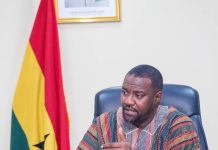
Frimpong-Boateng Faces Expulsion From NPP Over ‘Fake Party’ Remarks

0

The New Patriotic Party has begun formal proceedings to expel Professor Kwabena Frimpong-Boateng, the former minister for environment, science, technology and innovation, after he publicly denounced the party as “fake” and questioned its democratic credentials.

In a statement issued late Monday, the party’s general secretary, Justin Kodua Frimpong, said the NPP had taken “due notice” of remarks made by Mr. Frimpong-Boateng during an appearance on Accra based Channel One TV on Jan. 12, in which he declared that he no longer considered himself a member of the party.

The former minister, a respected surgeon and academic, also alleged that the party’s 2023 presidential primary had been manipulated to favor Dr. Mahamudu Bawumia, the former vice president and now the NPP’s presidential candidate for the 2024 elections.

“The Party unequivocally rejects Professor Frimpong-Boateng’s unfortunate characterization of the NPP and firmly denies his baseless and unsubstantiated allegations regarding the conduct of the 2023 Presidential Primary,” the statement said.

Party officials insisted the contest was “free, fair, transparent, and credible,” adding that it had been “widely accepted by all aspirants who participated.”

The NPP described Mr. Frimpong-Boateng’s comments as “highly reprehensible and inimical to the values, unity, and integrity of the Party,” arguing that his public criticism undermined cohesion and discipline.

“Consequently, the Party has invoked the relevant provisions of its Constitution to commence the necessary processes to expel him from the Party, strictly in accordance with due process,” the statement concluded.

By Ebenezer De-Gaulle

Tema Police Intercept Over 1,600 Parcels of Suspected Narcotic Drugs

0

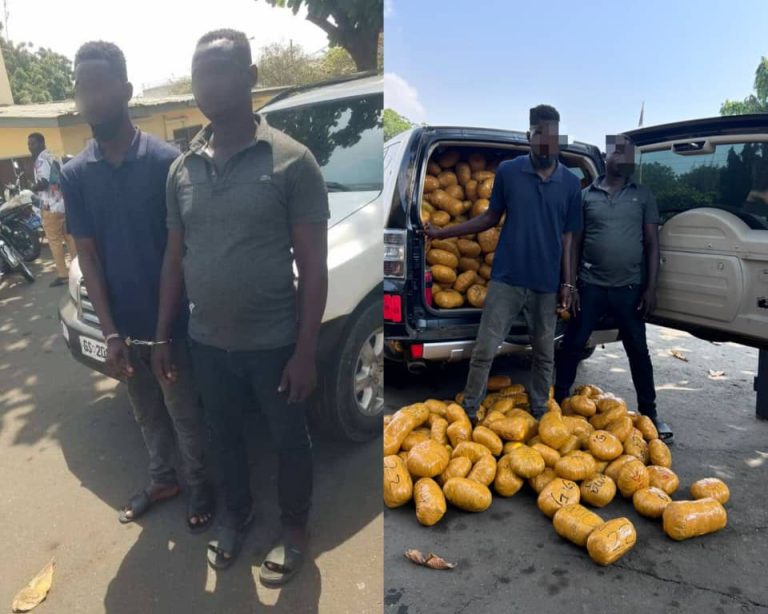
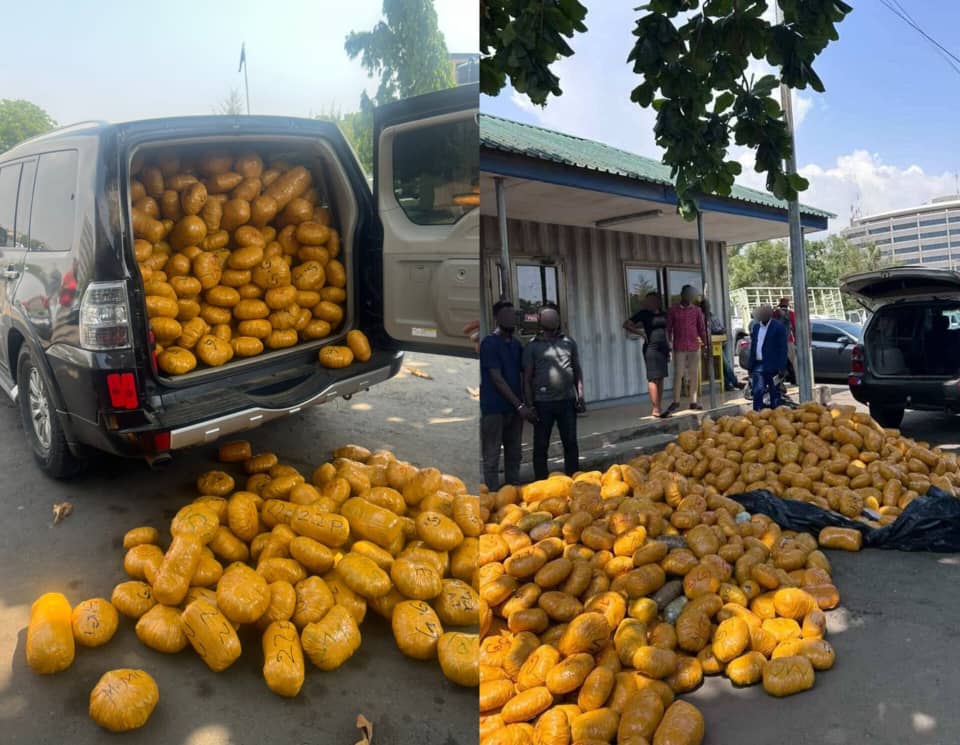
The Tema Regional Police Command has intercepted 1,613 parcels of substances suspected to be narcotic drugs following a well-coordinated intelligence-led operation along the Akosombo–Tema road.

The operation, carried out in the early hours of Sunday, January 11, 2026, forms part of the Police Service’s intensified efforts to combat drug trafficking and related crimes within the region.

According to the Police, intelligence received on January 10, 2026, indicated that large quantities of suspected narcotic substances were being transported from the Volta Region toward Tema. Acting swiftly on the information, police personnel mounted surveillance along key sections of the route, particularly around the Agomeda Junction.

At about 12:45 a.m., officers intercepted two vehicles—a white Toyota Highlander with registration number GS 2013-13 and a black Mitsubishi Pajero with registration number GC 400-22. The vehicles were being driven by Isaac Odoi, aged 33, and Kwame Mani, aged 39.

Tema Police Intercept Over 1,600 Parcels of Suspected Narcotic Drugs

A search conducted on the vehicles revealed several compressed, yellow-wrapped parcels suspected to be narcotic drugs. The suspects were immediately arrested, and both vehicles were escorted to the police station for further investigation.

On Monday, January 12, 2026, the suspects and the exhibits were handed over to the Regional Criminal Investigations Department (CID) in Tema, where photographs and inventories were taken. Police confirmed that 872 parcels were retrieved from the Mitsubishi Pajero, while 741 parcels were found in the Toyota Highlander.

The suspects are currently in police custody assisting with investigations. Samples of the seized substances are expected to be sent to the Forensic Crime Laboratory for analysis, while searches will also be conducted at the suspects’ residences. Police say processes are underway to arraign the suspects before court.

The Tema Regional Police Command has reaffirmed its commitment to intensifying operations against drug trafficking and other criminal activities. The Police have also urged the public to continue providing credible information to support law enforcement efforts and help ensure the safety of communities.

Early Road Accidents in 2026 Raise Alarm

0

Barely weeks into 2026, Ghana is already recording a worrying number of road accidents, raising concern among motorists, road safety experts, and the general public. The sudden surge has come as a surprise, particularly after the country experienced relatively fewer accidents during the Christmas and New Year festivities.

Many are now asking: What changed so quickly?

During the 2025 festive season, road accidents declined largely due to heightened police presence, intensified road safety campaigns, traffic congestion, and motorists’ fear of law enforcement. Drivers exercised greater caution, eager to arrive safely for celebrations.

However, once the festivities ended, the situation shifted dramatically. Roads became freer, enforcement relaxed in some areas, and many drivers reverted to dangerous habits such as over-speeding, reckless overtaking, poor vehicle maintenance, and disregard for traffic regulations. These factors are believed to be major contributors to the early spike in road accidents.

Several serious incidents have already been recorded across the country:

  • On the Offinso–Abofuor road in the Ashanti Region, a commercial bus travelling from Techiman to Kumasi crashed into a broken-down cement truck near Samproso. Seven people died instantly, while several others sustained serious injuries.
  • At Suame-Maakro, an okada rider believed to be in his late twenties was crushed under a trailer transporting soya beans and died on the spot.
  • In the Savannah Region, five officers of the Ghana National Fire Service sustained injuries when their fire engine overturned while responding to a fire outbreak at Buipe.
  • At Mankrong on the Accra–Kumasi Highway, a bus collided with a truck, resulting in one fatality and 37 injuries.

The early wave of road accidents in 2026 serves as a serious warning. Without urgent and sustained action, more lives could be lost. Drivers must maintain the discipline exhibited during the festive season, law enforcement agencies must intensify road safety enforcement, and the public must continue to speak out against reckless driving.

Road safety is not seasonal—it is a shared responsibility that must be upheld every day.

By Nana Achiaa Aboagye

Coach Alonso Leaves Real by Mutual Agreement After Super Cup Final Defeat

0

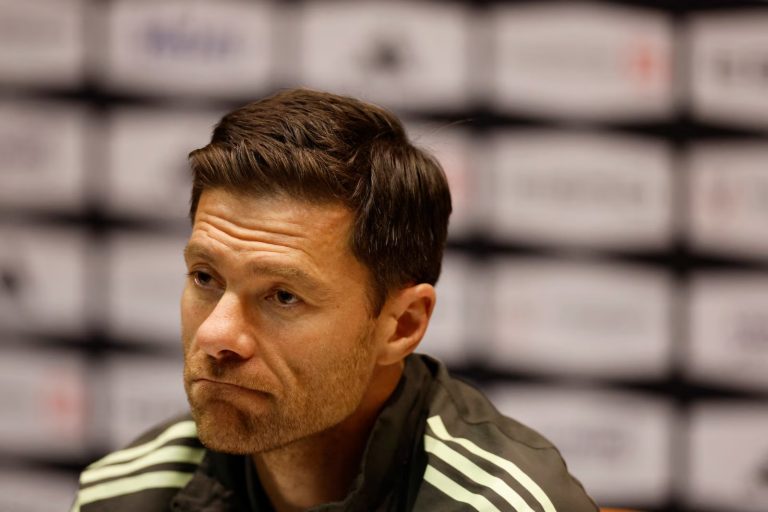
Real have officially confirmed the departure of head coach Xabi Alonso following a mutual agreement between both parties, in the wake of the club’s Super Cup final loss to rivals Barcelona.

The decision came after internal discussions between the club’s hierarchy and the coach, with both sides concluding that it was the appropriate time to part ways. The defeat to Barcelona in the Super Cup final ultimately marked Alonso’s final match in charge.

In a brief statement, the club expressed appreciation for Alonso’s professionalism, dedication, and contributions during his tenure, while wishing him success in his future coaching career.

Alonso, in turn, thanked the players, technical staff, and supporters, describing his spell at the club as an important and valuable chapter in his managerial journey.

Real is expected to announce either an interim coach or a permanent replacement in the coming days as they continue preparations for the remainder of the season.

By Prince Tuffuor

Gold-for-Oil Cancellation Gets BoG Governor’s Backing

0

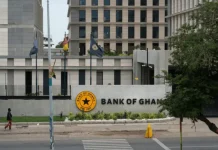
Governor of the Bank of Ghana (BoG), Dr. Johnson Asiama, has defended the decision to terminate the Gold-for-Oil programme in March 2025, describing it as justified and beneficial, while assuring Parliament that the Gold-for-Reserves initiative is being strengthened rather than abandoned.

Dr. Asiama made the remarks when he appeared before Parliament’s Public Accounts Committee, where he addressed concerns about the impact of ending the policy.

According to him, the suspension of the Gold-for-Oil programme has contributed to easing fuel supply challenges, noting the absence of fuel shortages and long queues at petrol stations since the programme was cancelled.

“Since we cancelled the Gold-for-Oil in March 2025, we have not seen a build-up of queues at the pumps. One of the objectives of the policy was to address that issue, and so we believe that the cancellation was worth it,” he told the committee on Monday, January 12.

Dr. Asiama explained that the programme was fraught with operational and governance challenges, which necessitated a deeper review.

“There were too many issues under the Gold-for-Oil that we needed to unearth. As a result, the Board authorised an external audit into the policy. We obtained Public Procurement Authority (PPA) approval for the audit two months ago, and that exercise is currently underway,” he disclosed.

Turning to the Gold-for-Reserves programme, the BoG Governor stressed that its core objective is to boost Ghana’s foreign reserves, not to generate profit.

“The objective of Gold-for-Reserves, as the name suggests, is for us to increase reserves,” he explained.

He added that available data shows the programme remains viable but requires efficiency improvements rather than termination.

“Based on the data available so far, the evidence is clear. It is not a question of shutting it down but rather enhancing its efficiency and removing the inefficiencies we have identified. That is why we went after GoldBod,” Dr. Asiama stated.

The Governor’s assurances come amid ongoing scrutiny of Ghana’s gold-backed policies, as the central bank seeks to strengthen transparency, accountability, and long-term economic stability.