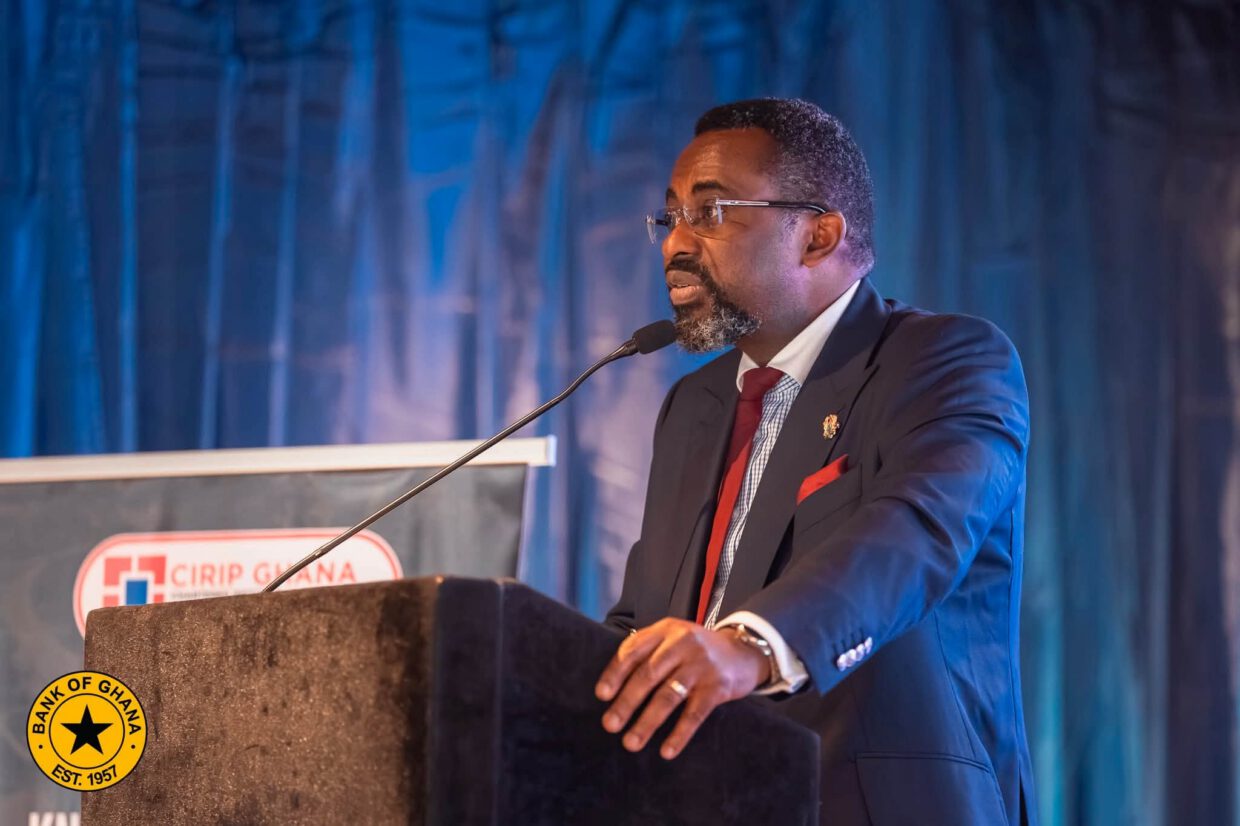
The Governor of the Bank of Ghana (BoG), Dr. Johnson Pandit Asiama, has called for a more disciplined and transparent business rescue framework to help address non-performing loans (NPLs) while safeguarding the country’s financial stability.
Speaking at the opening of the Bank of Ghana–Chartered Institute of Restructuring and Insolvency Practitioners (CIRIP) Ghana Forum on Non-Performing Loans and Post-Commencement Financing at Bank Square on Tuesday, August 4, Dr. Asiama said Ghana’s financial sector requires a predictable and risk-sensitive approach to restructuring distressed businesses.
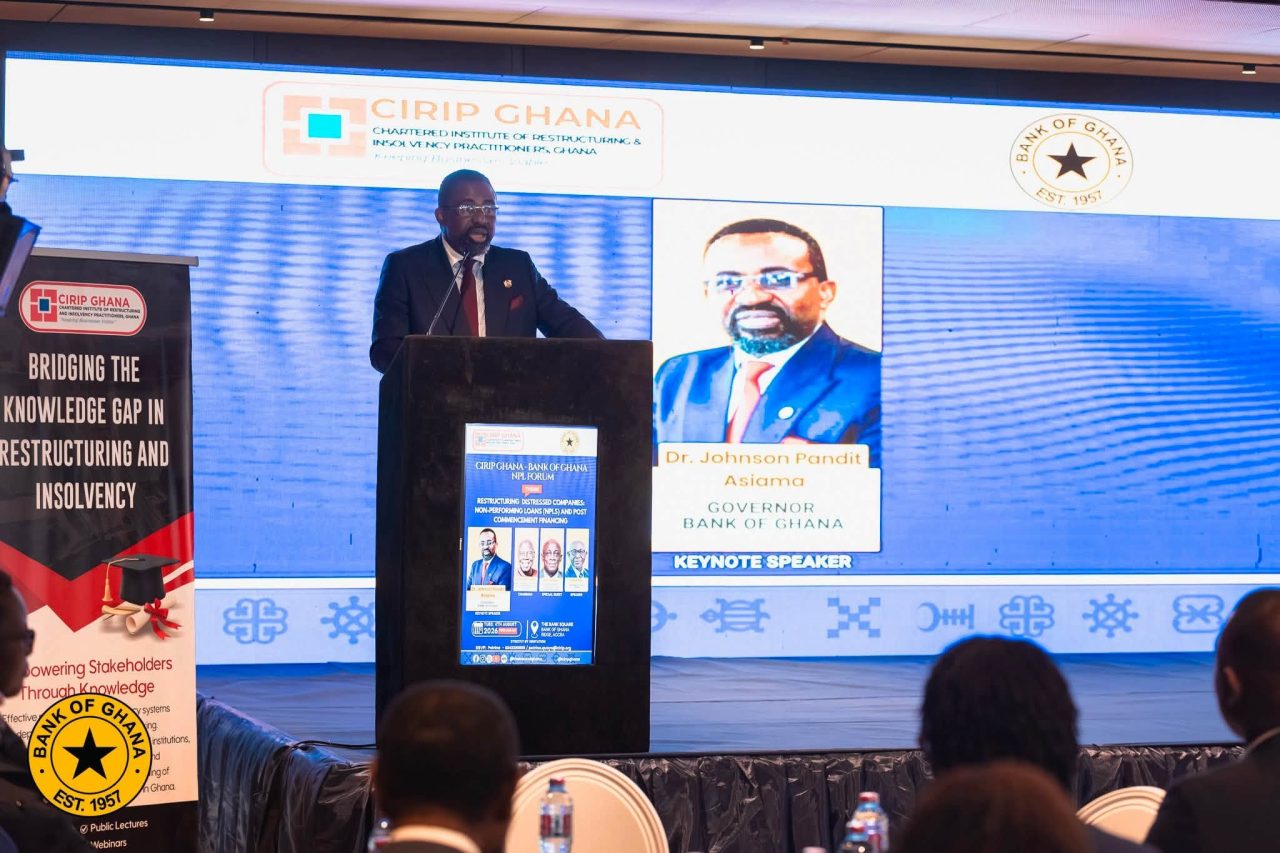
According to the Governor, an effective business rescue framework is essential to preserving viable businesses, protecting jobs, and strengthening confidence in the financial system.
He stressed that post-commencement financing, funding provided to companies undergoing restructuring must be based on clear commercial principles rather than sentiment.
Dr. Asiama said such financing should be guided by commercial viability, transparency, sound credit risk management, and accountability to ensure financial institutions are adequately protected while supporting businesses with realistic prospects of recovery.

The Governor noted that rising non-performing loans continue to pose challenges for financial institutions, making it necessary to strengthen restructuring and insolvency practices that balance business recovery with prudent lending standards.
He urged banks, insolvency practitioners, regulators, and other key stakeholders to deepen collaboration in developing a business rescue framework that is both predictable and responsive to risk.
According to him, closer cooperation among industry players will help improve confidence in the restructuring process, facilitate responsible lending, and create an environment where distressed but viable businesses can recover without undermining the stability of the financial sector.

Dr. Asiama added that a well-functioning insolvency and restructuring regime is critical to building a resilient financial system capable of supporting long-term economic growth.
The forum brought together regulators, financial institutions, insolvency practitioners, legal experts, and other stakeholders to discuss strategies for managing non-performing loans and improving post-commencement financing practices in Ghana.
Participants are expected to explore policy and practical solutions aimed at strengthening Ghana’s insolvency framework, enhancing credit recovery mechanisms, and promoting sustainable financing for businesses undergoing restructuring.
CREDIT: MAVIS FANTEVI