



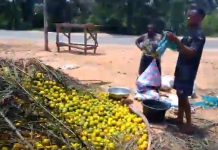
























Credit: Nana Achiaa Aboagye
Cashew is rapidly emerging as one of Ghana’s high-growth tree crops, with strong prospects for export expansion and value-added processing, stakeholders have said at the 2026 Ghana Tree Crops Investment Summit and Exhibition.
Panellists at the summit highlighted the crop’s growing role in boosting rural livelihoods, generating foreign exchange, and driving agro-industrialisation across the country. With global demand for cashew nuts and processed products on the rise, speakers stressed that expanding local processing capacity and improving quality standards could significantly increase export earnings while creating jobs.
Industry players also underscored the need for targeted support for farmers, including access to financing, modern cultivation training, pest and disease management, and secure land tenure.
Mr. Ernest Mintah, Managing Director of African Cashew Alliance, said sustained investment is critical to unlocking the sector’s full potential. “Money should be invested in the industry to improve materials and overall productivity,” he noted, adding that a strong financial backbone is essential to strengthening the entire value chain.
On the research front, Dr. Adu Gyamfi of the Cocoa Research Institute of Ghana emphasized innovation. “Research is needed in this industry,” he said, pointing to improved farming techniques and technology adoption as key drivers of growth.
Meanwhile, Portia Akua Kumah, Chief Executive Officer of NH Natural Foods Supplies, called on young people—especially women—to venture into cashew cultivation. She said the sector offers expanding opportunities for employment, agribusiness, and entrepreneurship.
Providing a policy perspective, the Chief Executive Officer of the Tree Crops Development Authority, Dr. Andy Osei Okrah, announced plans to establish a dedicated crop fund to support farmers. According to him, the proposed fund will offer affordable credit, risk support, and long-term financing to boost productivity and resilience, particularly among smallholder farmers.
Cashew, stakeholders noted, has become a strategic national asset—supporting hundreds of thousands of farmers, boosting exports, and offering strong potential for industrialisation, job creation, and regional development. Production reached an estimated 260,000 tonnes in 2025 and is projected to rise to about 280,000 tonnes in 2026, driven by improved extension services and climate-smart practices in the Bono, Bono East, and Ahafo regions. However, most exports remain in raw form, leaving significant processing opportunities untapped.
Sylvester Mensah, Chief Executive Officer of Ghana Exim Bank, urged stakeholders to adopt a disciplined investment approach. “Invest with discipline, support efficient operators, and pursue scalable partnerships,” he said, adding that “farmers and processors are the engine of this transformation.”
On the legislative front, Majority Leader and Member of Parliament for Bawku Central, Mahama Ayariga, pledged strong parliamentary backing for the transformation of the cashew value chain and the broader tree crops sector. Speaking at the summit, he assured that Parliament stands ready to support forward-looking legislation to strengthen regulation, promote domestic processing and value addition, protect farmers, and attract long-term, responsible investment.
The Minority Leader in Parliament, Alexander Afenyo-Markin, broadened the conversation by describing coconut as a strategic national asset, no longer a peripheral crop. He called for stronger collaboration among policymakers, investors, financial institutions, researchers, security agencies, and the private sector to improve market linkages, quality standards, fair pricing, and export traceability, while expanding farmer training and access to long-term credit and insurance.
Stakeholders agreed that the establishment of the proposed crop fund, combined with strategic investment, robust research, youth participation, and supportive legislation, would mark a major step toward transforming Ghana’s tree crops sector into a more industrialised and globally competitive industry unlocking the full economic potential of cashew, coconut, and other tree crops for national and regional development.