Walk through Makola Market on any given morning, and you will hear two conflicting stories about the Ghanaian economy at the same time.
Traders will tell you things have calmed down compared to the chaos of a few years ago.The same traders, in the next breath, will complain that wholesale prices keep creeping up and that their margins are thinner than the official numbers suggest.
Both things are true, and understanding why is key to answering the bigger question hanging over the country this year. Has Ghana actually recovered, or has it simply stopped falling?
On paper, 2026 has been kind to Ghana’s macroeconomic figures. Inflation, which sat above twenty percent not long ago, has fallen to levels not seen in nearly three decades, hovering around three percent for much of the first half of the year.
The Bank of Ghana has responded by repeatedly cutting its policy rate, bringing it down to roughly 14% from highs above 30% in 2023.
The Ghana Stock Exchange has had one of its strongest runs in years, climbing well past its previous records and crossing fifteen thousand points for the first time, buoyed largely by financial and petroleum stocks.
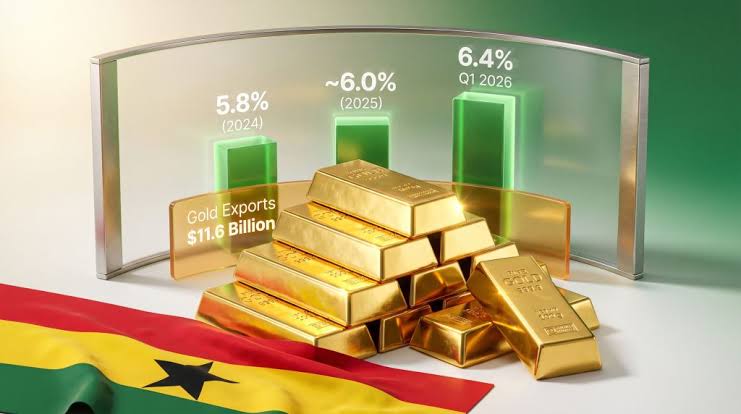
Gold has played a starring role in this turnaround.
With bullion prices surging past four thousand dollars an ounce and Ghana’s mining output at record levels, export earnings have provided a cushion that helped rebuild the country’s foreign reserves and steady the cedi through much of 2025, when the currency actually strengthened by more than forty percent, its best year in three decades.
Perhaps the clearest sign of confidence came in late July, when the International Monetary Fund’s Executive Board moved to approve the sixth and final review of Ghana’s Extended Credit Facility programme, unlocking a final disbursement of a few hundred million dollars and effectively closing the chapter on the current bailout arrangement.
In its place, Ghana has requested a non-financing Policy Coordination Instrument, a lighter-touch arrangement meant to keep the country anchored to reform discipline without the pressure of fresh borrowing.
Here is where the story gets complicated. After its remarkable 2025 rally, the cedi has given back some ground this year, depreciating by roughly eight percent against the dollar between January and May, and continuing to face pressure since.
For a currency that Ghanaians have watched swing wildly over the past decade, this renewed softness has revived old anxieties, even though officials point out that the currency remains broadly competitive on a trade-weighted basis.
That anxiety is not misplaced. Ghana’s recovery, however real, still rests on foundations that global events can shake quickly.
Cocoa prices, one of the country’s traditional export pillars, have cooled considerably as global supply recovers from the shortages of recent years, taking some shine off farmer incomes in the Ashanti and Western regions.
Any renewed volatility in oil prices, a shift in United States interest rate policy, or a slowdown in Chinese demand for gold could all ripple through Ghana’s currency and borrowing costs faster than domestic policy can respond.
Ask a trotro driver in Accra whether the economy has recovered and you are unlikely to get an enthusiastic yes.
Fuel prices, transport fares and rent have not fallen at the same pace as headline inflation, partly because prices that rose sharply during the crisis years rarely come all the way back down even when inflation slows.
Businesses, particularly small and medium enterprises that rely on imported inputs, are still adjusting to a lending environment where interest rates, though falling, remain high enough to discourage the kind of borrowing that fuels expansion and job creation.
There is also a generational dimension to this.
Many young Ghanaians who came of age during the worst of the crisis remain skeptical of stability that shows up in statistics before it shows up in their pockets.
Trust, once broken by years of currency depreciation and rising living costs, does not rebuild itself simply because the Government Statistician announces a good inflation print.
None of this means Ghana’s progress is fake or fragile in the way past recoveries sometimes were.
The fiscal discipline that produced a primary surplus, the debt restructuring that eased the burden on the budget, and the steady rebuilding of reserves are genuine achievements that took years of difficult, often unpopular decisions to secure.
The transition from a financing programme to a lighter reform instrument is itself a vote of confidence from an institution not known for handing out praise lightly.
But strong on paper is not the same as resilient in practice.
The real test of this recovery will not be how it performs in calm conditions but how it holds up the next time global markets sneeze, whether through a commodity price shock, a geopolitical disruption to trade routes, or a shift in how international investors view emerging markets generally. Ghana has bought itself breathing room.
Whether that room is wide enough to absorb the next shock, rather than simply delay it, is the question policymakers, business owners and everyday Ghanaians alike will be watching closely in the months ahead.
CREDIT: ApurumManasseh Wintemah Apurum