



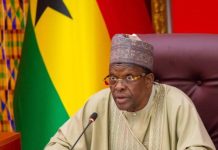









Political Aide to the Founder and Leader of the Movement for Change, Alan Kyerematen, Nana Yaw Sarpong, has waded into the ongoing standoff between the Minister of Communications and Digitalization, Samuel Nartey George, and MultiChoice Ghana, operators of DSTV.
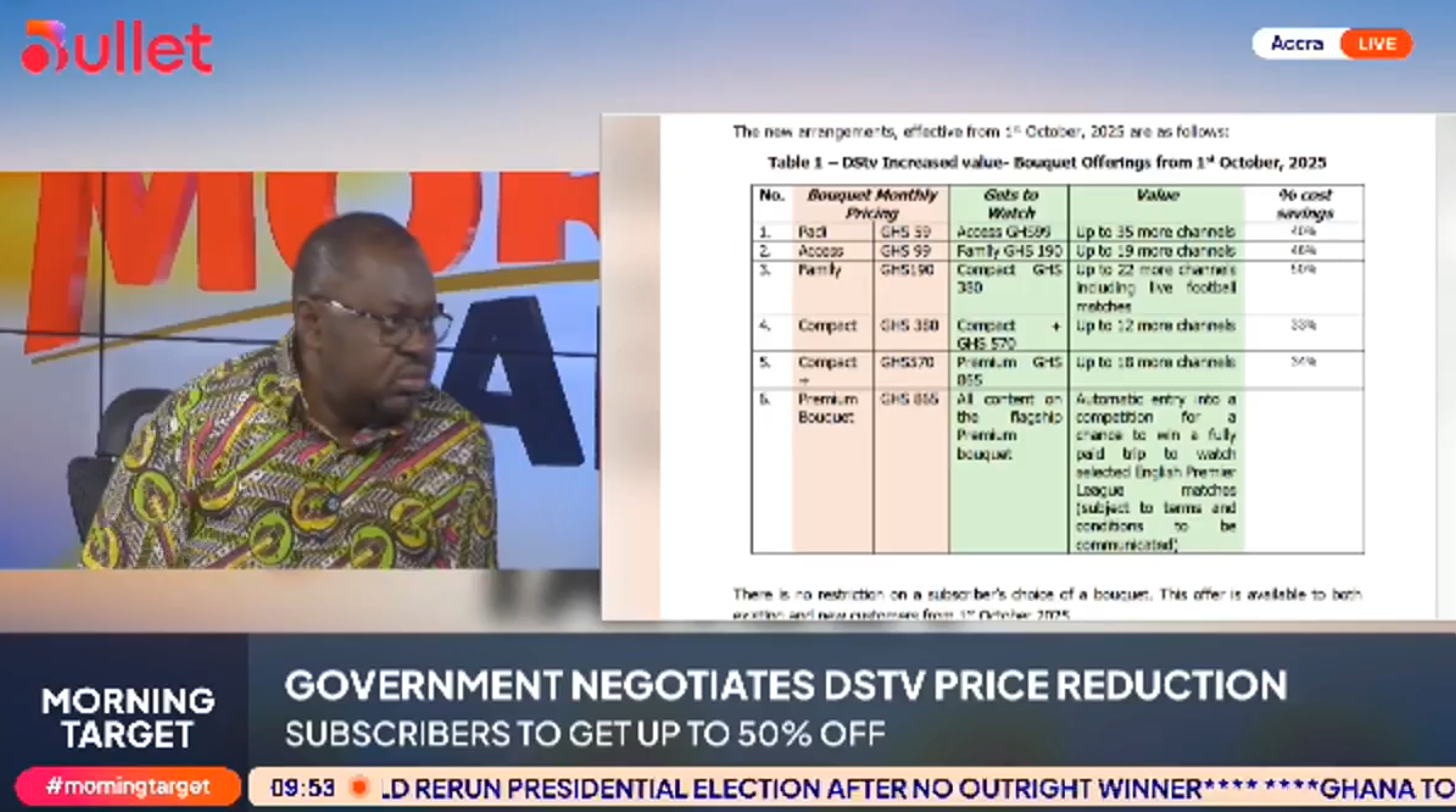
Speaking on Bullet TV’s Morning Target show with host Nana Kweku Aduah, Nana Yaw Sarpong argued that Sam George should not be leading the charge for lower subscription fees, insisting that this fight properly belongs to the long-neglected Consumer Protection Agency.
“This fight is not supposed to be Sam George’s fight,” Nana Yaw Sarpong stated bluntly. “If we had an act that deals with consumer protection — that guarantees value for money, quality, and assurance — we would not be here fighting over subscription prices.”
According to Nana Yaw Sarpong, the lack of a Consumer Protection Act in Ghana has left ordinary citizens vulnerable to exploitation by multinational corporations like MultiChoice. He criticized successive Parliaments for allowing the proposed Consumer Protection Bill to gather dust on shelves instead of passing it into law.
“This is a wake-up call to Parliament,” he said. “There’s a bill that has always been going to Parliament and coming out, getting rotten. It’s about time we fought to have that bill passed this year.”
“Consumer Protection, Not Politics”
Sarpong warned against politicizing what he described as a purely consumer rights issue. In his view, using political figures to battle multinational corporations is ineffective in the absence of a legal framework that protects Ghanaian consumers.
“If DSTV did this in Nigeria, they would face legal consequences. Why? Because the Nigerian consumer is protected. They were taken to court, and they didn’t escape accountability,” he noted.
He accused multinationals of taking advantage of Ghana’s regulatory vacuum, pricing their services arbitrarily, and undermining the Ghanaian market with impunity.
“You think they can do this in other jurisdictions? They can’t,” Sarpong said. “These multinational companies walk into Ghana, do whatever they want, and go scot-free. At least, we have the market!”
“Majority of DSTV Subscriptions Bypass Ghana’s Tax System”
Mr. Sarpong also revealed startling concerns about DSTV subscriptions in Ghana, suggesting that a majority of Ghanaian subscribers access the service via Nigerian decoders, thereby bypassing Ghana’s taxation and regulatory system.
“I can say for a fact that more than 80% of DSTV subscribers in Ghana use Nigerian digital boxes,” he alleged. “We are paying to another country while our own government loses taxes. National Geographic and others manage the system, so what are we doing as a country?”
He accused DSTV’s management in Ghana of failing to address these discrepancies, adding that such cross-border subscription practices represent a deeper issue of market disrespect and weak national enforcement.
“Ghana Must Wake Up”
Drawing a broader economic parallel, Mr. Sarpong recounted past incidents during Alan Kyerematen’s time in government, where similar multinational influence allegedly blocked efforts to industrialize and create jobs locally.
“When we wanted to assemble cars here in Ghana, countries we import cars from began instigating second-hand car dealers against us,” he recalled. “Shouldn’t we be happy to create jobs, pay taxes, and support our development? Instead, we’re excited to pay others and keep Ghana behind.”
Call for Legislative Urgency
Nana Yaw Sarpong’s remarks echo growing calls from civil society and advocacy groups for Parliament to prioritize the Consumer Protection Bill, which has stalled for years despite repeated advocacy. His intervention shifts the conversation from subscription pricing alone to the broader question of consumer justice and sovereignty in Ghana’s economy.
Whether Parliament will heed the call remains to be seen, but for now, Sarpong has reignited the debate over who truly protects the Ghanaian consumer — and whether politics is the answer at all.
Ghana|Atinkaonline.com|Ebenezer Madugu