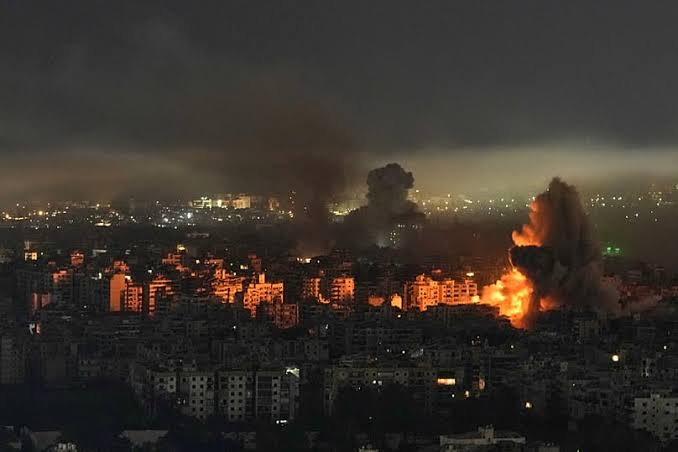
Global oil prices have surged past $100 a barrel for the first time since July as escalating attacks between the United States and Iran, alongside renewed Houthi strikes in Saudi Arabia, heighten fears of further disruption to global energy supplies.
Brent crude, the global benchmark for oil prices, climbed above $100 on Wednesday before easing slightly to around $99.90 a barrel.
The latest surge follows a series of retaliatory attacks between Washington and Tehran. The United States struck five Iranian oil tankers after Iran targeted a US warship, according to US officials.
Four of the tankers were reportedly operating in the Gulf of Oman and were linked to Iran’s Islamic Revolutionary Guard Corps (IRGC), while another was targeted near Kharg Island, Iran’s main oil export terminal.
US Central Command (Centcom) later said one of the vessels, the M/T Riesco, sank in the Gulf of Oman.
Iran responded by launching missiles at a US base in Jordan. Jordanian authorities said 18 of the 20 missiles were intercepted, while the remaining two landed in unpopulated areas.
Iran’s Revolutionary Guards also claimed to have attacked two US vessels, eight oil tankers and 10 other vessels attempting to pass through the Strait of Hormuz.
The latest escalation has renewed concerns about the security of the strategically important waterway, through which about 20% of the world’s oil and liquefied natural gas supplies pass.
Houthi attacks add to supply concerns
Oil markets are also being pressured by renewed attacks between Yemen’s Iran-backed Houthi movement and Saudi Arabia.
The Houthis launched missile and drone attacks on Saudi airports, oil facilities and tankers in the Red Sea on Tuesday. Saudi authorities said the attacks targeted civilian and economic sites in Abha, Khamis Mushait, Jazan and Najran.
Saudi officials said the attacks injured 73 people and caused fires at oil facilities, temporarily disrupting operations.
The Houthis have described their attacks as retaliation for what they say is a Saudi blockade and military strikes against Yemen.
Global fuel prices under pressure
Brent crude was trading at about $70 a barrel before the US-Iran conflict began on 28 February, but prices have since fluctuated sharply.
The effective closure of the Strait of Hormuz during the conflict has added to concerns about global supplies and pushed fuel prices higher in markets around the world.
US Secretary of State Marco Rubio said Washington would continue responding to Iranian attacks on US naval vessels.
“Iran continues to try to hit US naval ships. And, for every time they do that or try to do that, they’re going to lose tankers,” Rubio said.
Iran has meanwhile warned of a “faster, heavier, more painful response” to further US attacks.
The continued tit-for-tat strikes have raised concerns that a prolonged conflict could further disrupt oil supplies and drive petrol and diesel prices higher for consumers worldwide.
SOURCE: BBC