



















Scrap Allowances for Trainee Nurses and Doctors — Yaw Kwakye-Ackah Urges Gov’t

0

Former Member of Parliament for Amenfi Central, Peter Yaw Kwakye-Ackah, has called on the government to scrap training allowances and fee subsidies for medical and nursing students, arguing that the state is “wasting money” on policies that are no longer yielding the intended results.

Speaking on Atinka TV’s Ghana Nie, hosted by Ama Gyenfa, the former MP said the current standoff—where a majority of newly posted doctors have refused to report to their assigned duty stations—demonstrates the need for a complete reset of Ghana’s health-sector training and posting regime.

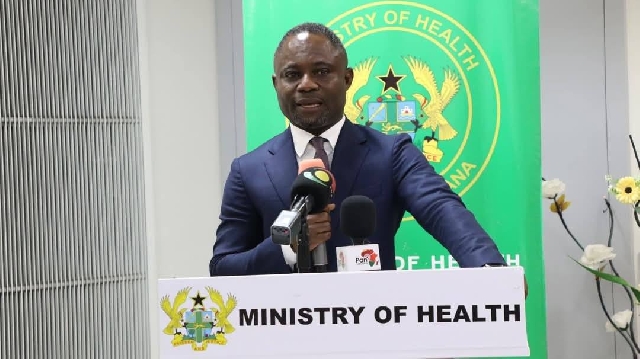
Hon. Kwakye-Ackah’s comments come on the heels of an alarming report from the Minister of Health, Kwabena Mintah Akandoh, who revealed that seven out of every ten newly posted medical doctors have failed to report to their duty stations.

According to the minister, the situation is most critical in the Upper West and Upper East regions, where none of the newly assigned doctors had arrived as of Friday, November 28.

Hon. Kwakye-Ackah argued that neither the state nor taxpayers should be burdened with the responsibility of funding medical trainees who later decline postings, especially to underserved districts.

“Let’s come together and reset things in this country. Doctors should look after themselves in school, and after school they should look for work. If they think it’s not good for them, they can apply to work abroad,” – he said.

He insisted that if government wants to improve conditions in the sector, then it must simultaneously end the payment of allowances and fee support for medical and nursing students.

“If we are to provide amenities or increase salaries, then government should stop covering doctors’ or nurses’ allowances or fees. We are wasting money on certain areas,” he added.

He called on government to redirect funds used for training allowances into improving health facilities, especially in rural communities where staff shortages remain dire.
“Government should put money used in paying nurses’ and doctors’ allowances somewhere, and also stop paying for their fees. They should allow them to pay their own fees,” he said.

Ghana|Atinkaonline.com|Abeka Kangah Lordina

Education: Anis Haffar Calls for Urgent Overhaul of Ghana’s Exam System After Worrying 2025 WASSCE Results

0

Renowned educationist and Founder of the Gifted and Talented Education (GATE) Institute, Anis Haffar, has called for a complete overhaul of Ghana’s examination and teaching system, describing it as outdated and incapable of producing competent learners for the modern world.

Reacting to the poor performance in the 2025 provisional WASSCE results, Mr. Haffar said the decline is alarming and should trigger a serious national reflection on Ghana’s educational priorities. He warned that the current “chew and pour” learning culture has outlived its usefulness and continues to produce graduates who struggle to apply knowledge outside the classroom.

Education: Anis Haffar Calls for Urgent Overhaul of Ghana’s Exam System After Worrying 2025 WASSCE Results

Sharp Decline in 2025 Results

According to provisional data released by WAEC, only 55.82% of candidates obtained grades A1 to C6 in the 2025 WASSCE—a steep drop from 71.53% in 2024.
The 15.71-percentage point decline marks the country’s worst performance since 2021, when 66.03% passed.

Core Mathematics recorded the most troubling results, with more than half of the candidates failing, making it the weakest performance in seven years. Several other core subjects also saw significant declines, raising concerns about the quality of teaching and learning nationwide.

“The System Is Not Working” – Haffar

Mr. Haffar said the results should serve as a wake-up call.

“Our school system, and the WASSCE results in particular, have proven not to be working for the country. It has only succeeded in producing functional illiterates because the system causes students to acquire knowledge they cannot relate to outside the classroom.”

He argued that Ghana’s theory-heavy education model has become inimical to national development, stressing that learning must shift toward practical, hands-on experiences that develop applicable skills.

Call for a Paradigm Shift

The GATE Institute founder outlined several areas where urgent reforms are needed. If given the mandate to redesign Ghana’s education structure, he said he would prioritise:

-Technology-driven teaching and assessment

-Project-based and practical learning

-Skill development aligned with industry needs

-Reduced emphasis on high-stakes, theory-based examinations

He emphasised that global education systems are transforming rapidly, and Ghana risks being left behind if the country does not adopt similar forward-looking reforms.

Technology as a Game-Changer

Mr. Haffar highlighted technology as central to improving learning outcomes. He said integrating digital tools, simulations, and interactive platforms would modernise classroom delivery and prepare students for a digital-first global economy.

Advice to Students and Teachers

He encouraged students to cultivate critical thinking, creativity, and curiosity, rather than relying on last-minute memorisation.

Teachers, he said, must adopt modern teaching methods, embrace technology, and create practical learning experiences to bridge the gap between theory and application.

A Moment for National Reflection

The disappointing 2025 WASSCE performance has reignited urgent conversations about the state of Ghana’s education system. As stakeholders debate the implications, one question remains:

Will Ghana commit to transforming its theory-heavy curriculum into a practical, skills-based system capable of producing graduates who can compete globally?

Many experts, including Mr. Haffar, believe this moment presents an opportunity for Ghana to re-engineer its education model for long-term growth and competitiveness.

By Nana Achiaa Aboagye

Entertainment: Graduation Glam — Dressed and Certified

Graduation ceremonies have become a significant milestone for students, especially at the tertiary level, symbolising the end of their academic journey and their transition into the professional world.

Beyond celebrating academic achievements, many students focus keenly on their appearance for the big day. For them, graduation is not just a ceremony—it is a fashion moment.

Miss Gifty Mensah William, a graduate of the University of Media, Arts and Communication–Institute of Journalism (UniMAC-IJ), told the Ghana News Agency (GNA) during the university’s recent graduation ceremony that she wanted to show up looking exceptional.

“Bagging a degree in UniMAC is a tough one, especially completing it with distinction. I wanted to show up looking my best,” she said.

For the UniMAC Class of 2025, one lesson from their lecturers stood out: presentation is everything. The frequently repeated mantra, “Dress how you want to be addressed,” was clearly reflected in their appearance.

The North Dzorwulu campus transformed into what looked like a runway where academia met fashion. While graduation ceremonies are often characterised by bright colours and bold style statements, this year’s edition took a different turn. The school issued a directive prescribing strict court wear or formal outfits, signalling that graduation was not just about earning a degree but also about projecting readiness for the job market.

Graduates stepped out looking professional and polished, swapping the usual party-style flair for a focused, business-oriented aesthetic.

Even though the communiqué arrived late, most students adhered to the instructions, selecting soft-toned formal pieces paired with full glam looks.

“It’s not like I was stubborn and didn’t want to follow the instructions given; I had planned everything before the communiqué came out,” said Joyce Opare, one of the graduates.

Many graduates told GNA that their decision to “dress to kill” was also a celebration of the difficult journey they had endured through years of academic work.

With glam budgets ranging from GHS 2,000 to GHS 5,000, preparations covered everything from makeup and outfits to shoes and maintaining the look throughout the day.

For the women, powdered faces, striking court heels and tailored, body-flattering outfits created an atmosphere of elegance. The men elevated their executive looks with coats, crisp ties and polished office shoes.

However, the journey to achieving the perfect graduation appearance was not without challenges. Securing vendors for outfit inspiration, sizing, styling and on-time delivery proved stressful for many.

“I experienced setbacks three days before graduation. The people who had to deliver my things kept giving excuses, leading to unplanned expenses,” said Miss Rita Ganyo, another graduate.

Miss Ganyo added that getting her facial makeup done also became a race against time, as appointments were fully booked. Thankfully, the results—and the beautiful, camera-ready photographs—made the struggle worthwhile.

Despite the restrictions, many graduates welcomed the formal dress code, stating that it reinforced professionalism and instilled confidence.

“The court attire was a standard or guide for us to dress appropriately,” a graduate said, expressing satisfaction with the directive.

In a competitive world, the UniMAC graduates believed their dressing sent a powerful message—that they were not just creative thinkers but professionals ready for the industry as journalists, public relations officers, filmmakers and communication experts.

Their outfits, they said, were more than mere fashion; they were declarations of readiness for the future.

By Miriam Oparebea

Stonebwoy Reveals the Inspiration Behind Bhim Festival as It Marks a Decade of Celebration

Ghanaian Grammy-nominated artiste Stonebwoy has shed light on the origins of the Bhim Festival, as the event celebrates 10 years of energising audiences across the country.

Reflecting on the early days of his career, Stonebwoy credited legendary highlife musician Kojo Antwi as a major source of inspiration. He explained that in 2014 and 2015, he closely observed how Kojo Antwi consistently hosted his annual December concerts—an iconic tradition that fans looked forward to every year.

According to Stonebwoy, Kojo Antwi’s reliability in choosing a December date and his dedication to building a strong concert culture influenced him to craft a similar experience for his own fanbase. That vision eventually gave birth to the Bhim Concert, which has now grown into the much-celebrated Bhim Festival, marking a decade-long evolution.

Stonebwoy also highlighted the critical role of his community-driven event, Ashaiman To The World (ATTW), in shaping the festival’s direction. Held in his hometown, ATTW was created not only to entertain but also to uplift the community, challenge negative stereotypes about Ashaiman, and spark pride among its residents.

He noted that the combined impact of Kojo Antwi’s example and the success of Ashaiman To The World laid the foundation for what the Bhim Festival has become today—one of Ghana’s most significant year-end entertainment events.

This year’s edition of the Bhim Festival is scheduled for 24th December at the Accra Sports Stadium, and it promises one of the most electrifying celebrations yet, commemorating a decade of stellar performances, cultural expression, and unforgettable musical moments.

By Atsu Noble

Joyce Aryee Calls for ‘Human-Focused’ Mining, Urges Ethics and Community-Centred Development

0

Former CEO of the Ghana Chamber of Mines, Rev. Dr. Joyce Aryee, is calling for a bold rethinking of Ghana’s mining sector — one that puts people, ethical leadership, and community wellbeing at the heart of operations.

Speaking during a mentorship session at the Africa Media Extractives Fellowship in Accra on Wednesday, November 26, Dr. Aryee delivered an inspiring lecture on “The Human Face of Mining: Leadership, Ethics, and Community Relations.”

She told participants that while mining remains a backbone of Ghana’s economy, the industry must move beyond profit-oriented approaches and demonstrate genuine social impact.

“Mining is more than the minerals we take out of the ground,” she said.

“We must balance economic growth with how we care for people and the environment.”

Mining Must Be About People — Not Just Profits

Dr. Aryee urged mining companies to shift from transactional corporate social responsibility to true partnerships with host communities.

She cited the sector’s substantial national contribution — over 8% of GDP and about GH₵6.8 billion generated in the second quarter of 2025 — as evidence that companies must deepen their social commitments.

“With that level of impact, companies must work hand-in-hand with the people who make that possible,” she emphasized.

She also applauded the increasing presence of women in the extractive sector, noting that their leadership has strengthened ethical standards and improved community engagement.

A Legacy That Communities Can Recognize

Drawing on decades of leadership in the industry, Dr. Aryee said mining companies should aim to leave lasting benefits in the communities where they operate.

“When a community can say, ‘If this company hadn’t been here, we wouldn’t have these jobs, these facilities, this education,’ then you know your presence truly mattered,” she said.

She stressed that mining often disrupts land use and livelihoods, making it even more important for companies to invest meaningfully in local people.

“Why Exactly Do We Want to Mine?” — A Challenge to National Leadership

Dr. Aryee urged policymakers to confront a fundamental question: what does Ghana ultimately seek to achieve through mining?

“If it’s only to make money, then we’ve missed the mark,” she warned.

“Mining has consequences. There will always be a hole. But what do we want that hole to represent for us as a country?”

She said Ghana needs a clear, long-term national vision to guide mining laws and policies — one that ensures development without sacrificing environmental integrity or community wellbeing.

“Once a country decides what it wants from mining, the laws we craft will reflect that purpose,” she added.

By Philip Azu

Bawku Conflict: Chiefs’ Absence Weakens Mediation Process- Security Expert

0

International Relations and Security Analyst Irbad Ibrahim has expressed concern about the lack of direct engagement between the feuding chiefs in the ongoing mediation of the Bawku conflict.

In an interview on Morning Target on Bullet TV, he commended the Asantehene, Otumfuo Osei Tutu II, for his mediation efforts but argued that a physical meeting between the Kusaase and Mamprusi chiefs would have sent a far stronger message of unity and reconciliation.

“There was no face-to-face encounter between the two feuding chiefs, Naa Sheriga for the Mamprusis and Naa Abugrago for the Kusaases. Those two chiefs have not sat across the same table”. He said.

“It would have been if yesterday passed out or passed off with the Otumfour sandwiched between the Kusaase chief and the Mamprusi chief”. He noted, adding “That would have best image to have come out of this mediation effort. That didn’t happen and I’m told there hasn’t been any physical meeting between the two chiefs”

Mr. Ibrahim described the reliance on delegations rather than direct participation of the chiefs as a “serious deficiency” in the process, stressing that the two leaders are the most critical actors in resolving the conflict.

Drawing parallels with the Ukraine-Russia war, he noted that even in that high-stakes conflict, world leaders such as the U.S. President have met individually with both Volodymyr Zelenskyy and Vladimir Putin, with efforts underway to bring them together.

He therefore urged the Otumfuo to ensure that, at some stage, the feuding chiefs meet face-to-face, insisting that such a symbolic gesture would carry immense weight in advancing peace in Bawku.

The Asantehene has been entrusted by President John Dramani Mahama to spearhead renewed efforts toward resolving the decades‑old conflict, is expected to formally present the outcome of the mediation process to the President in the coming days.

By Ebenezer De-Gaulle

UW/R – Free SHS Food Scandal Erupts at Wa Technical Institute as Domestic Bursar Found With Suspected Diverted Supplies

0

A major scandal has hit the Wa Technical Institute after police reportedly discovered large quantities of government-supplied food items—including bags clearly labeled “Free SHS – Not for Sale”—in the private residence of the school’s Domestic Bursar. The revelation comes just days after a violent student riot forced the temporary shutdown of the school.

Police Discovery After Tip-Off

The incident occurred on the evening of Saturday, November 29, 2025, when plainclothes officers from the Ghana Police Service conducted a search at the Bursar’s home, located roughly 300 meters off the Inservice Road toward the Wonuo junction.

Police are said to have acted on a credible tip-off but initially met resistance. The Bursar allegedly refused to grant access to her storeroom, claiming only her husband could authorize entry. A tense standoff ensued until the husband arrived several hours later and allowed the officers inside.

Upon gaining access, police reportedly found quantities of food so large that two pickup trucks were required to transport them to the Wa Police Station for safekeeping.

UW/R – Free SHS Food Scandal Erupts at Wa Technical Institute as Domestic Bursar Found With Suspected Diverted Supplies

Witness Allegedly Threatened

The operation turned chaotic when a bystander attempting to observe the search was reportedly attacked and threatened by members of the Bursar’s family. Witnesses claim he was warned not to speak publicly about the incident.

Items Found: Free SHS-Branded Goods Among Them

Items retrieved from the storeroom included:

-Millicent Vietnamese 5% broken rice

-Margarine buckets

-Gallons of cooking oil concealed in unmarked sacks

-Kandy Mackerel

-Onga seasoning

-Several sacks believed to contain gari and rice

-NAFCO-branded bags marked: “PRODUCE FOR NAFCO – Free SHS – STRICTLY NOT FOR SALE”

The Upper West Regional Free SHS Coordinator, Hon. Adamu Dassan, was present during the search but declined to comment.

Scandal Follows Major Student Riot

This discovery comes as the school deals with the aftermath of a destructive student riot that led to a one-week closure beginning November 23, 2025. The incident drew the attention of the Deputy Minister of Education, Dr. Clement Apaak, who was in the region for a university congregation ceremony.

In a radio interview on Monday, December 1, the school’s principal, Mr. Saaka Adams, confirmed that three students had been arrested and were assisting police with investigations. He noted that the cause of the disturbance is still unclear and is being investigated by a joint committee established by the school and the Ministry of Education.

Mr. Adams stated that, as of 4:11 pm on Monday, he had not received any official communication indicating that a staff member had been implicated in the diversion of food supplies.

Possible Cause of the Riot

Sources suggest the riot may have been triggered by an altercation between students and unknown men from town. One account claims the situation escalated after an unexpected attack on the school’s Cadet Corps, leading to widespread destruction and looting.

Reportedly damaged were:

-Administration offices

-School buses

-Dormitories and classrooms

-School stores containing electronics, food items, and academic materials

Police Yet to Issue Official Statement

The Ghana Police Service has not yet released a formal statement on the alleged diversion of Free SHS supplies or possible charges against the Domestic Bursar. Stakeholders are awaiting official updates on both the riot investigation and the fate of the confiscated items.

Reported By Ahmed Abubakari Saanyuo

ATU Vice Chancellor Urges Government to Boost Research Funding

0

The Vice Chancellor of Accra Technical University (ATU), Engr. Prof. Amevi Acakpovi, has called on government to create a stronger national funding system to support scientific research and innovation in Ghana.

Speaking in an interview with the MD of Tobinco Media Group, Odelia Ntiamoah Boampong on Bullet TV, Prof. Acakpovi said universities are struggling to fund research because they rely mainly on government subvention, student fees, and foreign grants. According to him, research in Ghana is too expensive for institutions to finance alone.

He explained that some research projects require hundreds of thousands of cedis, yet universities do not have the financial muscle to support them fully. “Research is very costly. If we depend only on institutional capacity, we will not make progress,” he said.

Prof. Acakpovi added that most grants available to Ghanaian researchers come from Europe and America because Ghana has very few local funding sources. He said this dependency risks turning the country into a place that always waits for solutions from abroad.

He proposed the establishment of a National Competitive Research Fund managed by a credible committee to support Ghana-focused solutions. “We have many problems as a developing country, and we cannot keep importing solutions,” he said.

Despite the funding challenges, he noted that ATU graduates are highly valued in industry. He highlighted the university’s regular feedback mechanisms, including industrial attachments, curriculum reviews, and industry stakeholder conferences, which help keep their programmes relevant.

Prof. Acakpovi urged government to prioritize research funding, saying Ghana’s development depends on its ability to support local innovation.

By Ebenezer Madugu

Asantehene Delivers Final Ruling Today on Bawku Chieftaincy Dispute

0

The Asantehene, Otumfuo Osei Tutu II, is today expected to bring an end to the protracted Bawku chieftaincy dispute as he announces his final ruling at the Manhyia Palace — a pivotal step in national efforts to restore lasting peace to one of Ghana’s most volatile areas.

Otumfuo was appointed by President John Dramani Mahama earlier this year to lead an independent mediation process aimed at resolving the decades-old conflict, which has claimed numerous lives and destabilised the Bawku municipality for years.

The Asantehene began formal mediation in April, hosting representatives of the opposing factions from April 28 to 30 to rekindle dialogue. Although the discussions were briefly suspended, talks resumed on May 13, during which Otumfuo observed that sustained engagement had helped foster a period of relative calm in the area.

For years, Bawku has been gripped by recurring violence, sporadic attacks, and security-enforced curfews. The conflict has disrupted livelihoods, deepened community divisions, and underscored the urgent need for a durable peace settlement.

According to the Manhyia Palace, today’s sitting marks the culmination of months of intensive consultation and peace-building work.

Across Bawku, residents and stakeholders are anxiously hopeful that the Asantehene’s final pronouncement will signal the beginning of a new era of stability, reconciliation, and development for the municipality.

By Nana Achiaa Aboagye

Ghana Marks World AIDS Day with Health Walk and Awareness Rally

0

Ghana has commemorated this year’s World AIDS Day with a health walk and public rally aimed at deepening awareness about HIV prevention and promoting nationwide uptake of self-testing.

President of the Ghana HIV and AIDS Network (GHANET), Ernest Amoabeng Orstin, called on the public to prioritise consistent condom use and regular HIV self-testing as part of measures to curb rising infections.

The event, organised by GHANET in partnership with the Ghana AIDS Commission, the Ghana Health Service, and other civil society groups, formed part of national efforts to intensify the response to HIV/AIDS. This year’s activities focused strongly on expanding public knowledge of HIV Self-Testing (HIVST) and encouraging individuals to take proactive steps to protect themselves and others.

Ghana Marks World AIDS Day with Health Walk and Awareness Rally

The health walk, which started at Ayi Mensah and ended at Peduase in Aburi, drew a large and diverse crowd. Participants later took part in an aerobics session led by fitness instructors to promote healthy living and physical wellbeing.

Carrying placards with bold messages, participants advocated an end to stigma and discrimination against persons living with HIV, while highlighting the importance of prevention, early testing, and timely treatment.

Addressing the gathering, GHANET President Ernest Amoabeng Orstin reaffirmed Ghana’s commitment to achieving the global target of eliminating HIV and AIDS as a public health threat by 2030. He urged citizens to know their status, access treatment when needed, and support efforts to reduce stigma.

He also appealed for stronger government backing:
“I am pleading with the government to allocate funding to the national HIV fund, which is crucial for helping Ghana meet global targets to eliminate HIV and AIDS by 2030,” he said.

Ghana Marks World AIDS Day with Health Walk and Awareness Rally

Director-General of the Ghana AIDS Commission, Dr. Kharmacelle Prosper Akanbong, underscored the national importance of the event, describing the walk as both symbolic and practical.

“The health walk is not just a physical exercise but a movement toward empowering Ghanaians with knowledge and resources to protect themselves and their communities,” he noted.

As Ghana marks World AIDS Day, stakeholders are urging the public to embrace HIV self-testing, practise safe sex, and reject stigma—stressing that collective action remains vital to reducing new infections and strengthening the national fight against HIV and AIDS.

By Nana Achiaa Aboagye