Atinka OnlineAtinka Online is the fastest growing radio-tv news portal in Ghana. Get all breaking news updates, latest news headlines, local and world stories, entertainment, sports, etc.
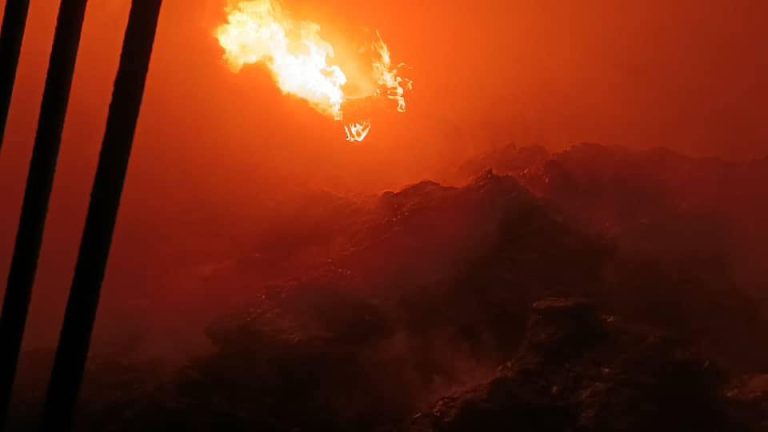
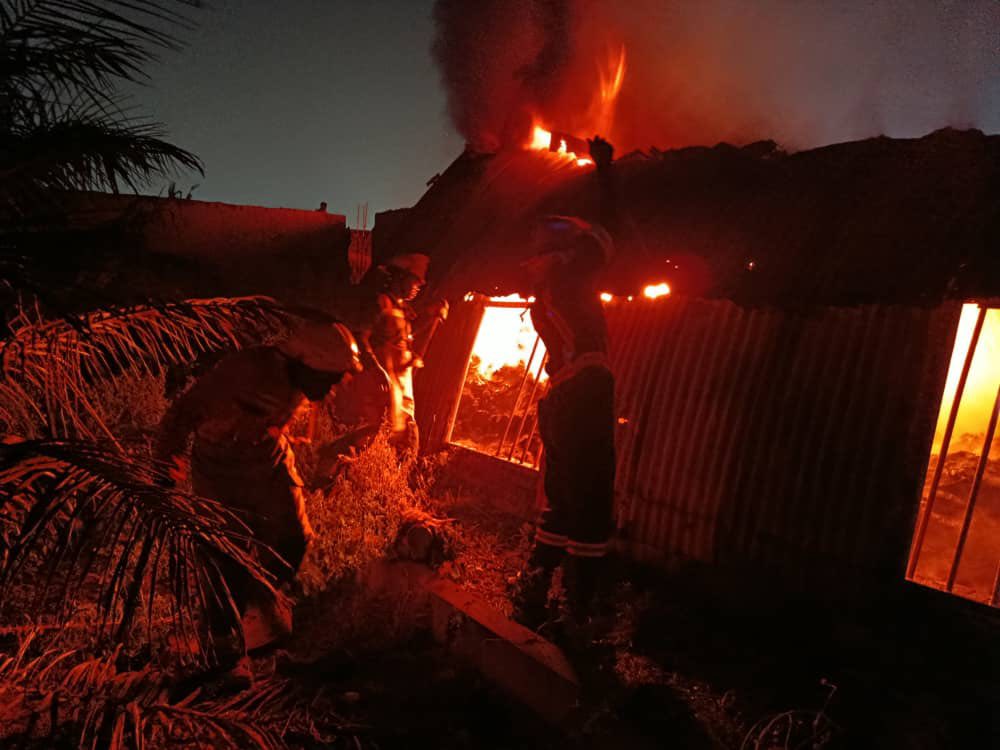
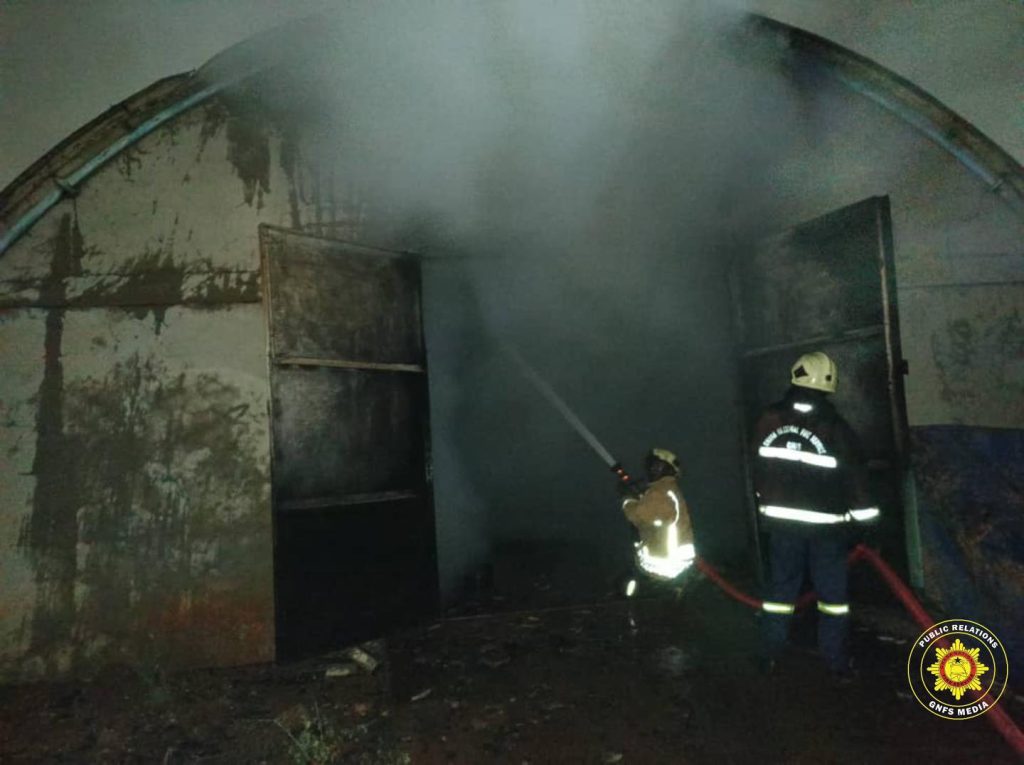
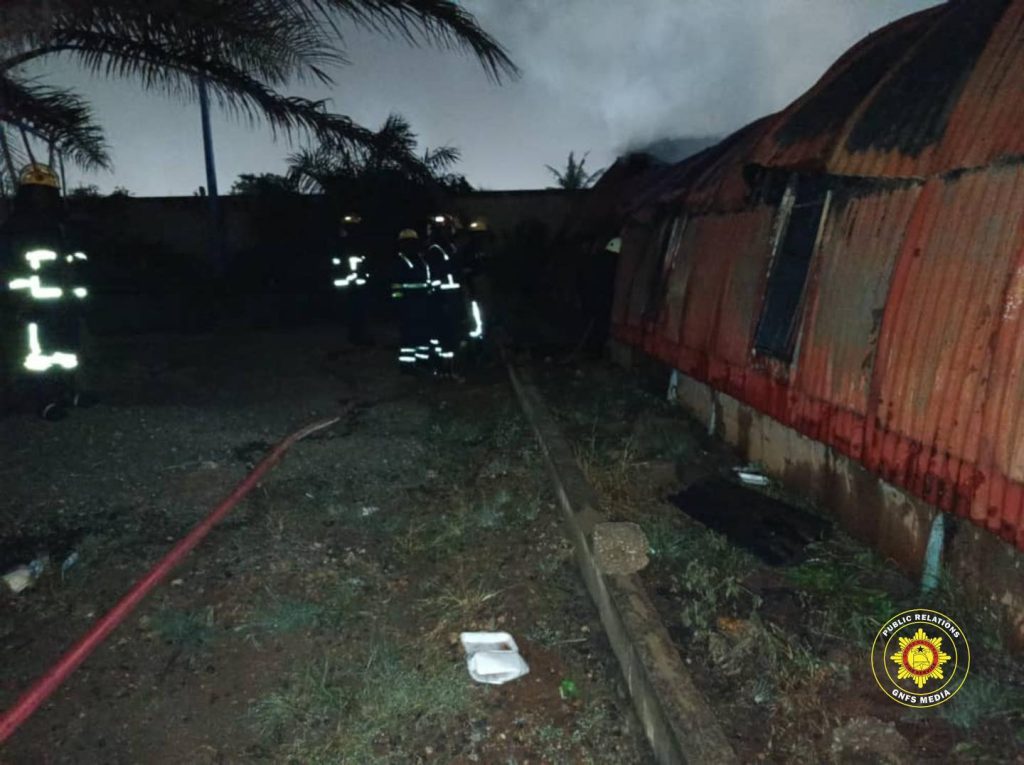
The Ghana National Fire Service (GNFS) has confirmed that a raging fire that broke out at a warehouse in Ashaiman’s Gulf City area has been successfully contained.
According to an official update posted by the GNFS on its Facebook page, the fire has been confined to the affected warehouse, preventing it from spreading to nearby structures. Firefighters remain at the scene and are working relentlessly to fully extinguish the blaze.
The Service noted that efforts are focused on bringing the situation completely under control while ensuring the safety of adjoining properties.
No further details regarding the cause of the fire or possible casualties were immediately available at the time of filing this report.
The Ghana National Fire Service assured the public that additional updates would be communicated as the situation continues to develop.
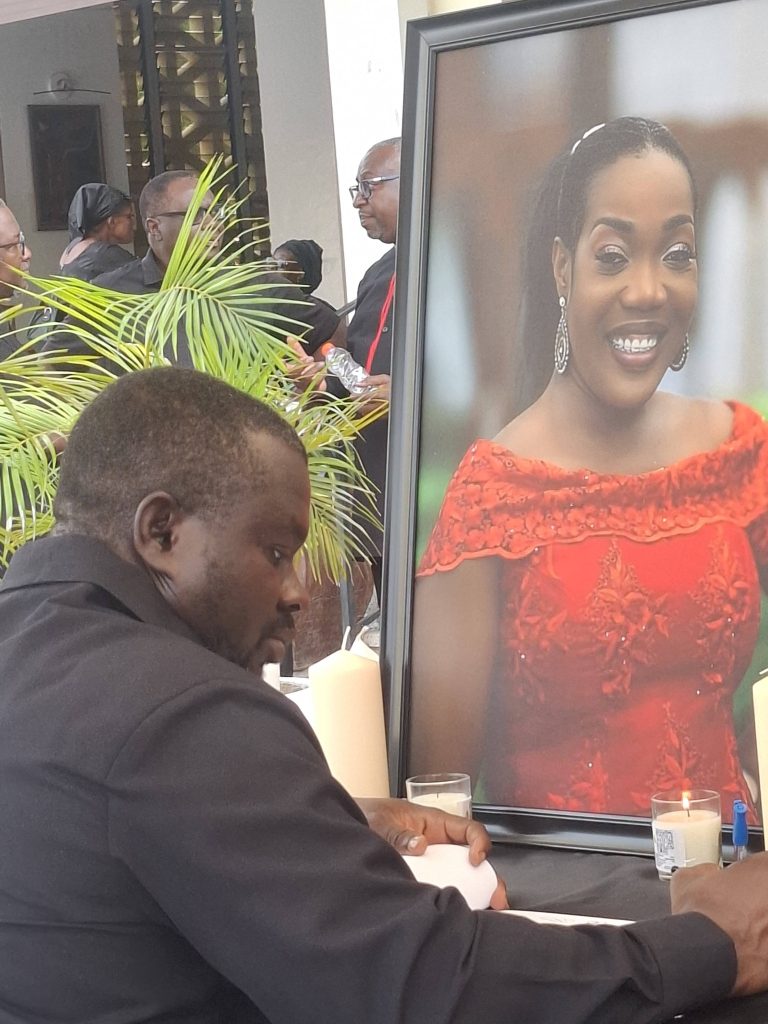
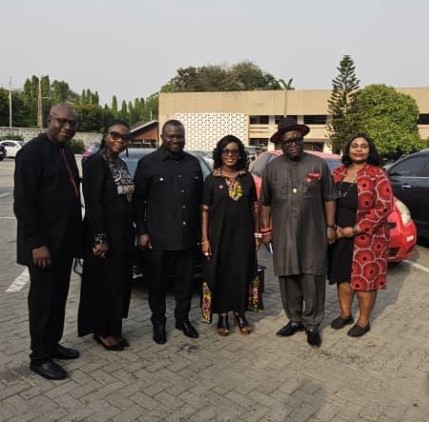
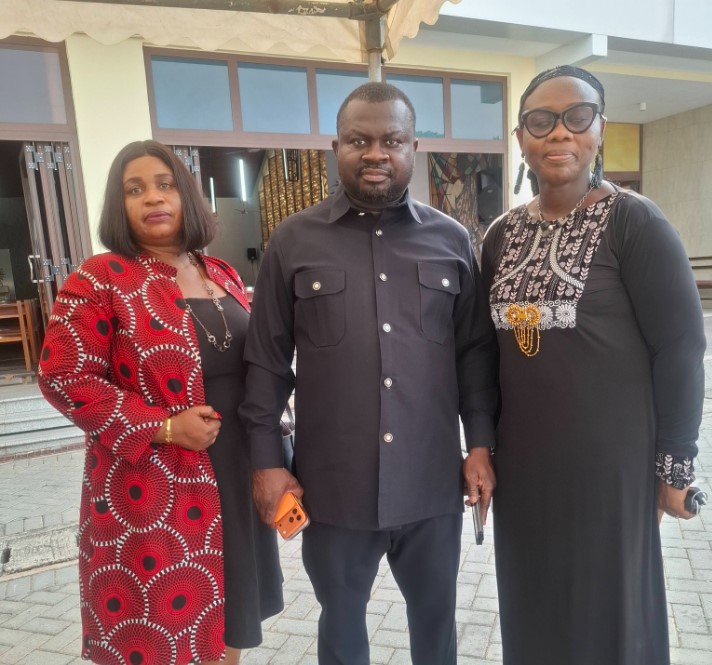
The President of the Ghana Journalists Association (GJA), Albert Kwabena Dwumfour, has led members of the media fraternity to mourn late Gloria Hiadzi, Executive Secretary of the Ghana Independent Broadcasters Association (GIBA), at the Christ the King Parish in Accra.
Mr. Dwumfour signed the book of condolence opened in her honour, accompanied by GJA Vice-President, Ms. Rebecca Ekpe, and other media practitioners. The delegation also joined the congregation for a Requiem Mass held at the Christ the King Parish of the Catholic Church.
The late Gloria Hiadzi, widely regarded as a vibrant and committed figure within Ghana’s media ecosystem, passed away on December 24, 2025, after a short illness. Her death has been described as a significant loss to the broadcasting and journalism community.
A final funeral service for the late media executive has been scheduled for February 28, 2025, at the Christ the King Parish, where colleagues, friends, and family are expected to pay their final respects.
In an open letter to Chief Justice Paul Baffoe-Bonnie, the security analyst and commentator Nana Kweku Ofori Atta has called for sweeping reforms to strengthen Ghana’s judiciary in handling extradition and high-risk cases.
“The judiciary is the cornerstone of justice, the guardian of constitutional order, and a beacon of the rule of law on our continent,” Ofori Atta wrote while praising the Chief Justice’s “visionary leadership” since his appointment to the Supreme Court in 2008.
The letter outlined four major recommendations. First, the assignment of specialised legal practitioners to ensure accuracy in prosecutions. “Assigning lawyers outside their field of specialisation introduces unacceptable risks,” he warned, noting the need for experts in extradition, human rights, immigration, and constitutional law.
Second, he emphasized investigative rigor, stressing that extradition cases must be grounded in “thoroughly verified intelligence and professionally conducted investigations.”
Third, Ofori Atta called for enhanced judicial security, including secure transportation for judges, prosecutors, and detainees, as well as modern surveillance systems around court premises. “This is far more than a logistical consideration,” he wrote. “It is a critical safeguard against vulnerabilities that could compromise personnel safety and the credibility of judicial proceedings.”
Finally, he urged closer collaboration among the Police Service, Judicial Service, and Prisons Service, supported by encrypted data systems to protect evidence and streamline operations.
Framing these measures as a strategic investment, Ofori Atta concluded: “When our courts are professionally supported, technologically equipped, and secure, justice is not only done but it is seen to be done.”
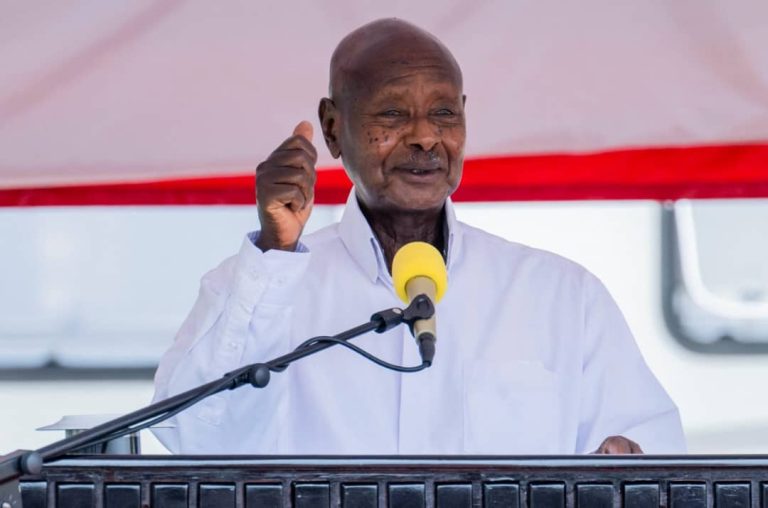
President Yoweri Museveni appeared headed for another term in office on Friday, as partial results from Uganda’s electoral commission showed him with a commanding lead in a vote marred by allegations of fraud, intimidation, and an internet blackout.
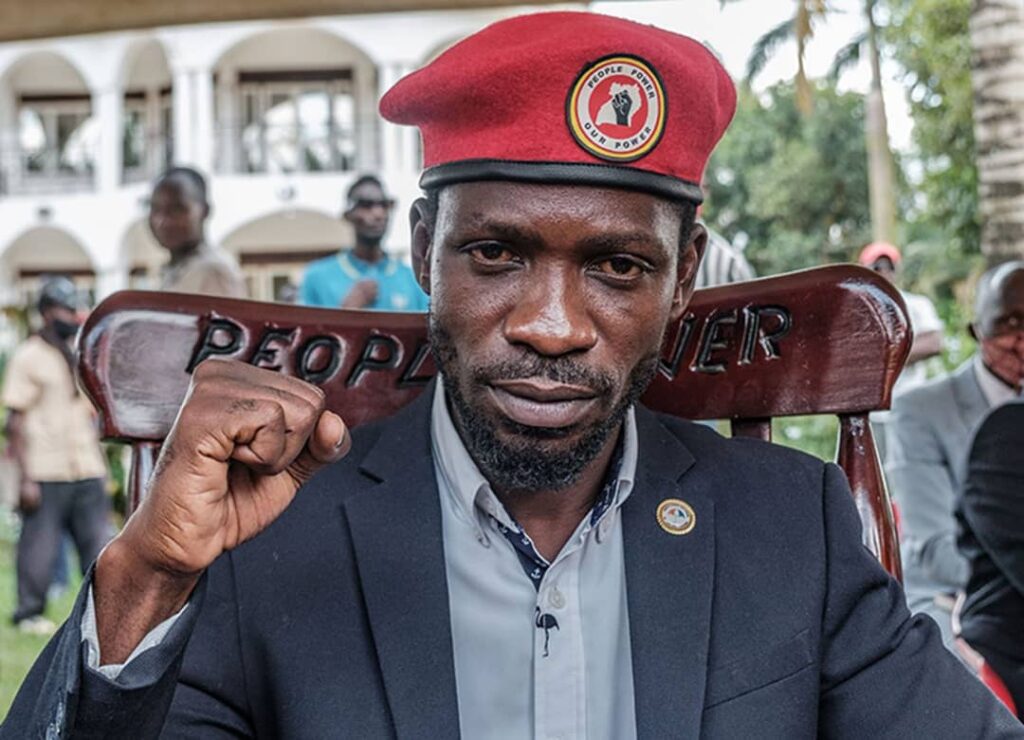
With tallies from 45 per cent of polling stations counted, Mr Museveni, 81, has secured 76 per cent of the vote, far ahead of his main challenger, the pop star-turned-politician Bobi Wine, who trailed with 20 per cent. The commission said final results would be announced by Saturday afternoon.
Even as votes were being counted, security forces surrounded Mr Wine’s home in Kampala, effectively placing him and his wife under house arrest, according to his party, the National Unity Platform. “Security officers have unlawfully jumped over the perimeter fence and are now erecting tents within his compound,” the party wrote on X late Thursday.
Police officials defended the deployment. Kituuma Rusoke, a spokesman, told local news that Mr Wine was “a person of interest” and insisted the heavy presence was for his protection. Journalists reported being blocked from accessing the opposition leader’s residence in Magere, a suburb of the capital.
The move echoed events in 2021, when Mr Wine, whose real name is Robert Kyagulanyi, was confined to his home for days after he won 35 per cent of the vote in a previous presidential contest.
Ugandans went to the polls Thursday in an election marked by delays, technical failures, and a tense atmosphere. Ballot boxes arrived late at many polling stations, and biometric machines meant to verify voters malfunctioned, in some cases pushing voting back by several hours. Analysts linked the problems to a nationwide internet shutdown imposed earlier in the week.
Electoral chief Simon Byabakama dismissed concerns that the blackout had compromised the count, saying the commission was using a “private system” to transmit results. “We are on course to announce the winner of the presidential election within 48 hours,” he said.
Mr Wine has alleged “massive” fraud, though he has not provided evidence. The United Nations Human Rights Office warned last week that the election would be marked by “widespread repression and intimidation.”
The campaign itself was marred by violence and restrictions on opposition activities. Security forces were accused of assaulting and detaining Mr Wine’s supporters, charges the police rejected, accusing opposition activists of being disruptive.
Internet access was cut off on Tuesday, with the Uganda Communications Commission saying the blackout was necessary to prevent misinformation and incitement. The U.N. condemned the move as “deeply worrying.”
Despite Mr Wine’s calls for protests if the results were manipulated, there were no signs of demonstrations as of Friday morning.
Mr Museveni, who first took power as a rebel leader in 1986, has long portrayed himself as the guarantor of stability in Uganda. His critics say his extended rule has entrenched corruption and stifled dissent. A victory would extend his grip on power into a fifth decade.
Speculation has swirled that Mr Museveni is grooming his son, Gen. Muhoozi Kainerugaba, the country’s military chief, as his successor. The president has denied those claims.
For many Ugandans, the contest was essentially a two-man race between the veteran strongman and the youthful challenger who has sought to rally the country’s under-30 majority with promises of reform.
The electoral commission said the final results would be announced by 4 p.m. local time on Saturday.
Residents of Numereso, a community in the Amansie Central District of the Ashanti Region, are facing severe communication challenges, as they must climb a nearby mountain to access mobile phone networks.
According to the community’s Unit Committee Secretary, Mr. Isaac Kyei Baffour Abebrese, Numereso has been without reliable mobile network coverage since a failed attempt in 2018 to extend telecom services to the area.
Atinka News reporter Sofoba Kwame Afrifah reports that residents often spend more than three hours at a specific spot on the mountain where network signals are available just to make phone calls. Many are forced to hire motorbikes to reach the location due to the difficult terrain.
The situation has raised serious privacy and security concerns, as residents are compelled to make calls in open bush areas. There have also been reports of robberies, with criminals targeting mobile phones at the mountain’s signal point.
Mr. Abebrese noted that the lack of network connectivity has significantly weakened security in the community, making it difficult to promptly alert the police or other authorities during emergencies.
Residents are therefore appealing to government and telecommunications companies to urgently address the situation and provide reliable mobile network services to the area.
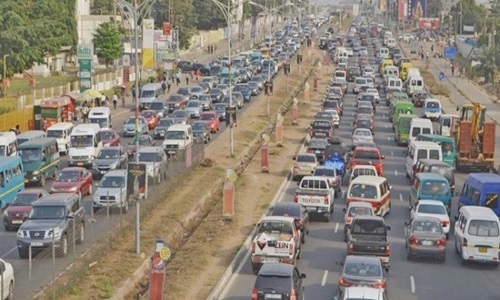
The Ghana Private Road Transport Union (GPRTU) has identified severe peak-hour traffic congestion as the primary cause of the ongoing public transport challenges in Accra.
According to the union, persistent gridlock across the capital is disrupting operational efficiency, preventing drivers from making multiple trips and leading to long queues at major transport terminals.
Speaking in an interview with the Ghana News Agency, National Chairman of the GPRTU, Nana Nimako Asiamah, dismissed allegations that commercial drivers are deliberately creating “artificial” vehicle shortages to justify fare increases.
“As far as the GPRTU is concerned, we are not creating any artificial scarcity. The problem is the traffic in Accra is affecting the transport business,” he stated.
He explained that the situation is particularly challenging during morning and evening peak hours, when drivers are unable to return to terminals on time to pick up additional passengers.
“The situation is worse in the mornings and evenings because drivers are not able to return to the stations on time to pick more passengers,” he added.
Nana Asiamah assured that the union is open to collaboration, expressing readiness to engage government and other transport unions to find lasting solutions to the challenges facing the sector.
“We are ready to meet the government and work together with other transport unions to find solutions to the challenges,” he said.
The National Labour Commission (NLC) has declared illegal an intended strike by the Ghana Air Traffic Safety Electronics Association (GhATSEA) and ordered the group to immediately call off the action.
The decision was taken at a meeting held on Wednesday, January 14, 2026, involving the NLC, the Ghana Civil Aviation Authority (GCAA) and representatives of GhATSEA. The Commission ruled that GhATSEA, being an association and not a registered union, lacks the legal capacity to declare or institute a strike under Ghana’s labour laws.
GhATSEA had earlier announced plans to embark on an indefinite strike beginning Thursday, January 15, 2026. The Association cited alleged salary discrepancies and also demanded the removal of the Director of Human Resources of the GCAA.
Following the announcement, the GCAA petitioned the National Labour Commission to intervene to avert possible disruption to aviation services.
In its ruling, the NLC stated that the planned strike contravenes Regulation 20(e) and (h) of the Labour Regulations, L.I. 1833. The Commission further explained that the issues raised by GhATSEA fall within the scope of an existing Collective Agreement, which the Association has no legal authority to negotiate or enforce.
The Commission emphasized that such matters should be pursued through the recognized union that is a party to the Collective Agreement. It also noted that GhATSEA does not have the legal capacity to appear before the NLC and therefore has no lawful right to declare a strike.
The NLC directed individual members of the Association who feel aggrieved to channel their concerns through the grievance procedures outlined in the applicable Collective Agreement. It added that once the issues are properly brought before GCAA management, they should be addressed promptly.
Meanwhile, the Ghana Civil Aviation Authority has reiterated its commitment to human capacity development and the promotion of staff welfare, assuring workers of its readiness to engage through the appropriate legal and institutional channels.
A pastor has issued a strong warning against domestic abuse, stating that he would personally ensure the arrest of any man who abuses his daughter. Speaking on Atinka TV’s relationship programme Kisses & Roses, Rev. William Akyea Asiedu, Head of Chaplaincy and Lecturer at the Presbyterian Nurses and Midwifery Training College (PNMTC), made the statement while discussing marriage, responsibility, and the protection of women. According to him, love and marriage must never be used as an excuse for abuse, stressing that any form of violence in a relationship is unacceptable. “I will arrest any man that abuses my daughter straight to the IGP,” Rev. Asiedu said, emphasizing his zero tolerance for domestic abuse. The pastor explained that marriage should be built on love, respect, and mutual understanding, not fear or control. He noted that families have a responsibility to protect their daughters and ensure their safety within marriage.
Rev. Asiedu’s comments came during a broader discussion on expectations in marriage and the responsibilities that come with forming a family, where he urged parents not to remain silent when abuse occurs.
His strong stance has resonated with many viewers, sparking conversations on social media about the need for families, religious leaders, and society to take a firmer position against domestic violence.
The remarks reinforce growing calls for accountability and protection for women within marriages, and the importance of reporting abuse through the appropriate legal channels.
The Head of Chaplaincy and Lecturer at the Presbyterian Nurses and Midwifery Training College (PNMTC), Rev. William Akyea Asiedu, has stirred discussion on the concept of marriage after stating that the Bible does not explicitly describe a “wedding” ceremony as it is known today.
Speaking on Atinka TV’s relationship programme Kisses & Roses, Rev. Akyea Asiedu, explained that biblical marriage is fundamentally about family agreement and union, rather than ceremony.
According to him, marriage in biblical times involved the coming together of a man’s family and a woman’s family in mutual agreement, establishing a covenant between two families.
“There is nothing like a wedding in the Bible. What we see is marriage, where the man’s family and the woman’s family come together in agreement,” Rev. Asiedu stated.
He noted that many of the elaborate wedding ceremonies practiced today are cultural and societal additions, not direct biblical instructions.
Rev. Asiedu further emphasized that while ceremonies are not wrong, they should not overshadow the true foundation of marriage, which includes commitment, responsibility, and mutual understanding.
His comments came during a discussion on the topic, “How much should a man have before thinking about wedding?”, where he encouraged couples to focus less on expensive ceremonies and more on readiness for marriage itself.
The remarks have since sparked conversation on social media, with many reflecting on the pressure to host elaborate weddings before marriage.
Dr. Ghadafi Saibu, President and CEO of the Institute of Comparative African Policy Analysis (ICAPA) and Associate Researcher at the German Institute of Development and Sustainability (IDOS), has expressed concern over Africa’s vulnerability to policies imposed by advanced countries, particularly in the wake of the recent U.S. visa suspension affecting Ghana and other nations.
Speaking on Bullet TV’s Morning Target, Dr. Saibu asked,
“When will we stop being vulnerable to advanced countries?” He emphasized that African nations should respond decisively and not adopt a passive or conciliatory stance in the face of such unilateral measures. “African countries should not be soft in their response,” he added.
Dr. Saibu also weighed in on the proposed Presidential Advisory Group on the Economy, noting that it may not be necessary at this time. He stated, “I don’t think government needs it at the moment; the current economic team is working.”