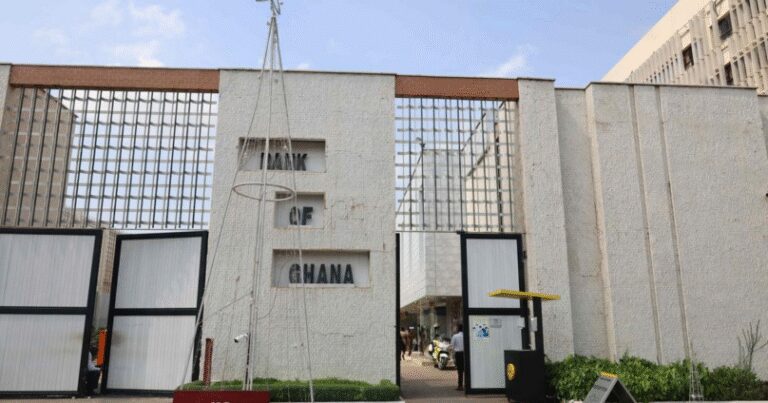
The International Monetary Fund (IMF) has revealed that the Bank of Ghana (BoG) incurred losses of more than US$1.7 billion in 2025 through its Domestic Gold Purchase Programme (DGPP), despite the initiative playing a key role in stabilising the economy and strengthening the country’s foreign exchange reserves.
According to the IMF’s Selected Issues Paper released alongside Ghana’s 2026 Article IV Consultation, the programme helped export US$10.9 billion worth of artisanal and small-scale gold in 2025 alone, equivalent to 9.5 percent of Ghana’s Gross Domestic Product (GDP).
The report noted that the rapid expansion of the DGPP significantly reduced gold smuggling, increased official exports and contributed to the sharp appreciation of the cedi, improved debt sustainability and stronger external balances.
However, the IMF said the programme came at a substantial financial cost.
“The significant scaling up of DGPP operations led to losses of over US$1.7 billion (1.5 percent of GDP) in 2025, almost entirely related to Gold-for-Reserves purchases,” the report stated.
It explained that the losses resulted from service and assay fees paid during gold purchases, discounts offered to exporters, and exchange rate differences between the forex bureau rate used to buy gold and the Bank of Ghana’s accounting reference rate.
The IMF said these losses weakened the central bank’s balance sheet, contributing to negative equity estimated at 6.7 percent of GDP by the end of 2025.
Despite the losses, the programme enabled the Bank of Ghana to dramatically increase foreign exchange interventions.
According to the report, BoG sold US$10.6 billion in foreign exchange in 2025—equivalent to 9.2 percent of GDP—helping improve market liquidity and supporting a 41 percent appreciation of the cedi against the US dollar during the year.
The IMF also noted that Ghana’s gross international reserves rose to US$11.9 billion, representing about four months of import cover and significantly exceeding targets under the IMF-supported programme.
The report said responsibility for the programme was transferred fully to the Ghana Gold Board (GoldBod) from July 1, 2026, with government now assuming all operational costs while the Bank of Ghana exits direct exposure to the programme’s financial risks.
CREDIT: MAVIS FANTEVI