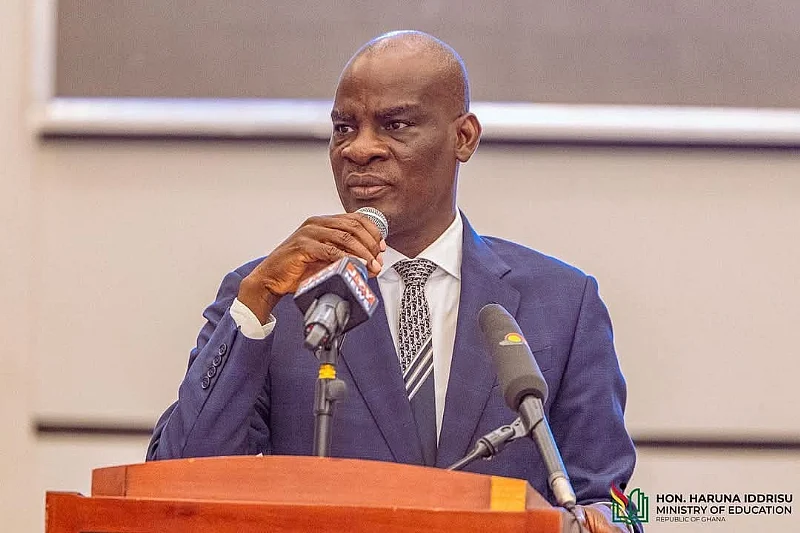
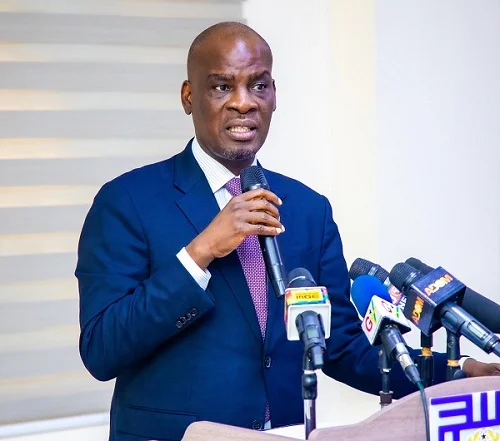
Minister for Education Haruna Iddrisu has announced that a revised curriculum for kindergarten to junior high school will be presented to the Ministry of Education on Wednesday, introducing coding, electronics, artificial intelligence (AI) and Technical and Vocational Education and Training (TVET) as part of efforts to equip learners with future-ready skills.
The proposed reforms will also strengthen values-based education by promoting ethics, patriotism and civic responsibility, reflecting the government’s commitment to preparing learners for both the modern workforce and responsible citizenship.
Speaking during the Government Accountability Series on Monday, July 20, Mr. Iddrisu said the revised curriculum forms a key pillar of the Mahama administration’s education reform agenda. He explained that the review seeks to align Ghana’s basic education system with the demands of a rapidly evolving global economy while ensuring pupils acquire practical, technical and digital competencies from an early age.
According to the Education Minister, the curriculum will integrate emerging fields such as coding, electronics, artificial intelligence and TVET into classroom instruction to nurture innovation, creativity and problem-solving skills among learners. He noted that exposing children to these disciplines at the foundational level would better position them for opportunities in the digital economy and help address the country’s future workforce needs.
Beyond technical knowledge, Mr. Iddrisu said the curriculum will place equal emphasis on character development through values-based education. He stressed that ethics, patriotism and civic responsibility would be embedded across learning areas to cultivate disciplined, responsible and nationally conscious citizens capable of contributing meaningfully to Ghana’s development.
If approved, the new framework is expected to modernise teaching and learning at the basic school level by combining technological innovation with moral and civic education to better prepare Ghanaian learners for the challenges and opportunities of the 21st century.
CREDIT: Esther Yeboah.