

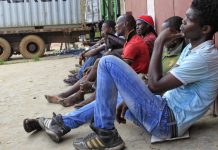






















Violence that erupted during the District Schools Athletics Games in Agona Swedru is a “general reflection of the kind of society that we are living in,” according to the National Secretary of the Conference of Heads of Assisted Secondary Schools (CHASS), Primus Baro.
He said what happens in schools is “just a micro part of the general society of Ghana,” stressing that the challenges facing Senior High Schools cannot be viewed in isolation from the broader breakdown in the country’s social and family systems.
The incident, which occurred during the inter-school athletics competition, involved students of Obrachire Senior High Technical School and Swedru School of Business (SWESBUS). One student sustained injuries following clashes between the two schools.
Speaking in an interview on the midday news on Bullet TV with anchor Kanneth Amenyeke, Mr. Baro described the incident as “very unfortunate,” adding that all stakeholders regret what transpired.
Responding to suggestions that the violence indicates a total breakdown of law and order in Senior High Schools, Mr. Baro rejected the assertion.
“I will not agree entirely that there is a total breakdown,” he said. “Yes, we have challenges in our Senior High Schools as far as discipline is concerned, and these issues come up on a daily basis. But what is reported in our schools is a reflection of the larger society.”

He emphasized that disciplinary problems in schools stem from deeper societal issues, beginning from the family system through to the community and national levels.
“There’s a breakdown generally—from the family system to the larger societal level and to the schools,” he explained. “These are not things that happen in isolation. They are a result of the orientations and training students receive from their homes and communities before they even get to school.”
While acknowledging that teachers and school authorities have a responsibility to ensure student safety and prevent casualties, Mr. Baro urged the public to appreciate the complexities involved in managing large student populations.
He noted that rules and regulations are established because deviant behavior exists in every human society.
“It is humanly possible,” he said, explaining that even parents struggle to manage two or three children at home. “You go to a school with a population of about 2,000 to 3,000 students, and you see the magnitude of the task.”
Though he admitted there could be lapses or administrative loopholes in some instances, Mr. Baro cautioned against rushing to judgment or unfairly blaming school heads and staff.
“The school is also a human society,” he stated. “As much as we can be strict, there are some students who are very deviant and may go out of their way to do whatever they want. Let’s not be too fast to pass judgment and take certain actions against authorities without considering the broader context.”
The incident has reignited public debate about discipline, youth behavior, and the role of families and schools in shaping students across Ghana.
Ghana|Atinkaonline.com|Ebenezer Madugu