Man has 49 watermelons chopped on his stomach

0

A martial artist from India claimed a unique world record by allowing dozens of watermelons to be chopped on his stomach.

Vispy Jimmy Kharadi enlisted the help of fellow martial artist Vispi Baji Kasad to use a 30-inch katana to slice the fruit in order to claim the Guinness World Record for most watermelons chopped on the stomach in one minute.

The pair managed to avoid injury and chop a total of 49 watermelons, narrowly edging out the previous record of 48.

"The danger is always there in all such stunts, especially when there's a Japanese katana in the picture which can cut skin very easily, but because of the practice and confidence of Vispi Kasad, the pain can be offset," Kharadi said.

Kasad said he had to be very careful to balance properly cutting the watermelons while also avoiding injury to his friend.

"The most challenging part is the final precision of the cut. After I cut the watermelon, I have to be very careful that the blade does not even touch the skin of the open stomach," he said.

Once the record attempt was completed Kasad and Kharadi were presented with a world record plaque and the watermelon slices were shared with guests and workers at the event.

The pair of martial artists also attempted the world record for most layered bed of nails sandwich (1 inch) as part of their quest to claim multiple records for India.

"We want to break 10 Guinness World Records titles for our country," Kasad said. "We are already prepared with the next two records with a sword."

upi.com

Bitcoin falls below $6,000

0

The value of Bitcoin has fallen to below $6,000 – its lowest price since November 2017.

The price fell to $5,947.40 (£4,256.44) on Tuesday, according to a price index run by news website Coindesk.

Bitcoin reached its peak in November, when it hit $19,000, and then began to fall steadily from mid-December.

The latest fall comes a day after several major US and UK banks banned customers from using credit cards to purchase the digital

Chinese state media is reporting that China will soon take steps to prevent investors from accessing foreign virtual currency exchanges, although it is not clear how the government intends to achieve this.

China and South Korea have already banned digital currencies, while Japan and Australia have taken steps to tighten Bitcoin regulations.

The US is likely to follow suit – on Tuesday, the US Securities and Exchange Commission (SEC) and the Commodity Futures Trading Commission (CFTC) are due to testify before the Senate regarding digital currencies.

The chiefs of both regulators are expected to recommend that the US government tightens the rules governing the crypto-currency market to reduce the risks of fraud and market manipulation, according to pre-released testimonies.

While not banning crypto-currencies, the financial regulators in both the UK and France have warned investors that they could lose all their money if they buy digital currencies issued by companies, known as "initial coin offerings".

Besides legislation, virtual currencies have been dogged by criminals seeking to hack wallet services to steal users' funds.

A US man is currently suing T-Mobile for a security breach that enabled hackers to access his mobile number and compromise his crypto-currency accounts to steal 2.875 Bitcoin, according to legal news service Law360.

bbc

Zimbabwe's opposition leader Morgan Tsvangirai 'critically ill'

0

Zimbabwe's main opposition leader Morgan Tsvangirai is critically ill in a South African hospital, reports say.

Local media quoted family sources as saying the 65-year-old former prime minister – who is being treated for colon cancer – is suffering from weight loss, exhaustion and muscle thinning.

During his political struggle against ex-President Robert Mugabe, he has been beaten and imprisoned numerous times.

Mr Tsvangirai heads Zimbabwe's Movement for Democratic Change (MDC) party.

He has been in and out of hospital since June, receiving treatment in a Johannesburg hospital for cancer. He returned to the hospital early last month.

Mr Tsvangirai's health deteriorated rapidly on Monday, family sources told Zimbabwe's Bulawayo24 news website on Tuesday.

He had lost appetite and had difficulty eating or swallowing fluids, the sources said. Mr Tsvangirai also reportedly had breathing problems.

Meanwhile, an MDC party source was quoted by Reuters news agency as saying that Mr Tsvangirai "is critically ill and we should brace for the worst".

Mr Tsvangirai's spokesman, Luke Tamborinyoka, said the MDC leader was "stable but the nation should keep on praying".

The hospital where Mr Tsvangirai is being treated has so far made no public comments on the issue.

Last November, Mr Tsvangirai hailed the resignation of Robert Mugabe, expressing hopes that Zimbabwe was on a "new trajectory" that would include free and fair elections.

He said that Mr Mugabe – who was forced to quit after ruling the country for 37 years – should be allowed to "go and rest for his last days".

Mr Tsvangirai's illness has divided the MDC, with a number of party officials reportedly jockeying to succeed the former trade union activist.

This has raised concerns about the party's political future, and its chances of taking on the ruling Zanu-PF party in presidential elections expected within six months.

In November, Mr Mugabe was succeeded by the former vice president, Emmerson Mnangagwa.

bbc

 Teachers abandon classrooms over ‘shit bombing’ at Prestea 

0


Teachers of the D/A Basic School at Ayensikrom Number 1, a community in the Prestea Huni-Valley Municipality on Monday abandoned their classrooms after the school was desecrated with human excreta.

The   uncivilized action is said to be an age old  practice in the area. The teachers therefore decided to abandon class  to register their displeasure  with the shameful  practice . 

When this reporter got to the school premises around 10 am, pupils were still loitering around; only few were in class without teachers. 

The assistant head teacher declined to comment on the issue as his boss was not around.

However, one of the teachers, Emmanuel Buabeng said teachers were fed with  up with the situation.

“I have been in this school for the past six years and there has not been any year that such misbehavior had not been exhibited. The Parent Teacher Association (PTA) and the Chief have asked the community members to desist  from such acts, but their calls have been ignored ” Mr. Buabeng said.

He said the teachers will permanently abandon the school if the uncultured attitude  continues . 

“The P2 madam who is greatly affected has even left the school premises. We have resolved that, if it continues, we (teachers) won’t teach in this community again," he warned.


Ghana | Atinkaonline.com | Nana Kojo Fletcher
 

FGM is a crime; Stop it – Otiko

0

FGM is a crime; Stop it – Otiko

The Minister for Gender, Children & Social Protection, Otiko Afisah Djaba, has served notice proponents of Female Genital Mutilation (FGM) will be prosecuted since the practice is against the laws of Ghana.

As the world marks the International Day of Zero Tolerance for Female Genital Mutilation on Tuesday, February 6, 2018, Ms Djaba is appealing to all hands to be on deck to completely eradicate the archaic practice.

The day was set aside by the United Nations since 2003 to raise awareness as concerted efforts are combined to stem the canker.

 “As we mark this day as part of our combined efforts with the UN and other social activist parties, we must remind ourselves that the elimination of FGM is a key target under SDGoal 5, We therefore call on our friends from the media to send this information to the furthest parts of the country and let the public know that the practice of FGM is a crime in Ghana. 

“The law against FGM, ACT 741 of the Parliament of the Republic of Ghana entitled Criminal Code (Amendment) Act 2007, provides for imprisonment and/or fines for both the circumciser and those who request, incite or promote excision by providing money, goods or moral support. The person who commits this offense is liable on summary conviction to imprisonment for a term of not less than five years and not more than 10 years,” the outspoken Gender Minister averred in a statement to mark the day.

According to her, FGM is against the human rights of the victims and “the practice of FGM has serious implications on the health of the females in terms of maternal health, infant mortality, self-esteem, discrimination, stigma and productivity.”

She added: “Indeed, the practice has no benefits for girls and women but rather in the name of ensuring fidelity in females, FGM exposes them to health hazards and psychological trauma. It causes severe bleeding, problems in urinating which can develop into cysts, infections, complications in children and increased risks of fistula during child birth.”

“We have come very far as the leading African country in our practice of democracy, the rule of law and the fight for human rights. After sixty years of independence THE TIME IS NOW FOR GHANA TO STOP FGM completely. We have to understand that ending FGM is not to be narrowed down as a women’s issue or a Ministry of Gender, Children & Social Protection problem. The fight to eradicate FGM must be addressed as a national crusade that would lead to sustainable development,” Ms. Djaba stressed.

Below is the full statement:


PRESS STATEMENT

TO MARK 

THE INTERNATIONAL DAY OF 

ZERO TOLERANCE FOR 

FEMALE GENITAL MUTILATION IN GHANA BY OTIKO AFISAH DJABA

 
ALL THE MEDIA
 

Female Genital Mutilation (FGM) is recognized internationally as a human rights violation of girls and women. It results in deep rooted inequality between the sexes and constitutes as an extreme form of discrimination against females. It violates the right to health, physical integrity, the right to be free from torture and cruelty, inhuman treatment and the right to live where it results in death. Thus, since 2003, the United Nations introduced The International Day of Zero Tolerance for Female Genital Mutilation as an annual awareness day, that is celebrated globally every 6th February as part of the UN’s efforts to eradicate Female Genital Mutilation.

Female Genital Mutilation is one of the ancient cultures which has been practiced in Africa and Asia for decades. History has it that the practice of FGM came from neighboring countries such as Burkina Faso, Mali, Niger and Togo into Ghana. In Ghana, some parts of the Northern, Upper East, Upper West and Brong Ahafo and the Volta regions including the Zongo Communities in certain urban centers of the country are notable places where the practice still goes on.

It is clear that the adoption of this cultural practice of FGM has not served any good purpose in our country. Culture that violates the rights of the people is not worth practicing. The practice of FGM has serious implications on the health of the females in terms of maternal health, infant mortality, self-esteem, discrimination, stigma and productivity. Indeed, the practice has no benefits for girls and women but rather in the name of ensuring fidelity in females, FGM exposes them to health hazards and psychological trauma. It causes severe bleeding, problems in urinating which can develop into cysts, infections, complications in children and increased risks of fistula during child birth.

Studies show that an estimated 100 to 140 million girls and women in the world today have undergone some form of FGM and two million girls are at risk from the practice each year. Studies also indicate that in Ghana, the prevalence in the 1990s was as high as 77% but reduced drastically due to the advocacy and sensitization that has gone on.  In 1994, Ghana abolished the practice of FGM and in 2011, the World Bank reported female genital mutilation prevalence as 3.8%.

The current national prevalence stands at 4%, but regional prevalence, especially in the Upper East is reported to be higher. This increase could be due to the cross boarder practice where people move to and fro Ghana and neighboring countries to perpetuate this crime. Nationwide surveys are being embarked on to ascertain the accurate current data per our regions.

It is believed that this practice fosters our male dominant and patriarchal traditions designed to ensure fidelity and honour in women and girls. FGM is erroneously believed to be an honourable act which is a determination of womanhood. However, it does not take into consideration the fact that women and girls have a right over their sexuality. The Question is: Who checks the fidelity of the males?
 
As the Ministry for the vulnerable, the weak, excluded and marginalized, we join the international community to condemn female genital mutilation in Ghana. As we celebrate this International Day of Zero Tolerance for FGM we wish to forge better collective responsibility with the media, faith-based organizations, traditional rulers, MMDAs, civil society and community based organizations to implement concrete actions to end FGM NOW in Ghana and to intensify public community based awareness campaigns against FGM.

We have come very far as the leading African country in our practice of democracy, the rule of law and the fight for human rights. After sixty years of independence THE TIME IS NOW FOR GHANA TO STOP FGM completely. We have to understand that ending FGM is not to be narrowed down as a women’s issue or a Ministry of Gender, Children & Social Protection problem. The fight to eradicate FGM must be addressed as a national crusade that would lead to sustainable development.

Ghana can no longer leave anyone out or behind, especially females. Thus, we cannot afford our women and children to be subjected to this risky, life threatening, inhuman, degrading and shameful FGM practice in this country any longer. We as a community of Ghanaians must demonstrate our commitment to protect our women and girls from human rights abuses to eliminate all forms of violence against them.

The challenges are mainly attitudinal and the issues of cross border practice. The Ministry will increase collaboration with the Ministry of Health, Foreign Affairs, Interior and Regional Integration to sensitize and educate citizens from the border areas and neighbouring countries through their Embassys and or High Commissions. The Ministry will also intensify our grassroots community based approach of public awareness, capacity building and reward systems. We are initiating A National Social Protection Excellence Awards program this year to promote best practices of social protection tenets and actions.

The Ministry of Gender, Children and Social Protection through its regional offices has been doing a lot of sensitization and advocacy on ending inimical and harmful cultural practices including inhuman widowhood rites, child /forced marriages and FGM among others.

Over the years, Governments, Non-Governmental Organizations Civil

Society Organizations, Development Partners and individuals have have worked hard to reduce the practice of FGM to 4% nationally in Ghana but we need to consolidate the gains made to date and get it down to zero tolerance.

Lastly, the Ministry will collaborate with the law enforcement agencies and our development partners through a series of targeted stakeholder consultations to ending FGM once and for all in Ghana.

As we mark this day as part of our combined efforts with the UN and other social activist parties, we must remind ourselves that the elimination of FGM is a key target under SDGoal 5, We therefore call on our friends from the media to send this information to the furthest parts of the country and let the public know that the practice of FGM is a crime in Ghana. The law against FGM, ACT 741 of the Parliament of the Republic of Ghana entitled Criminal Code (Amendment) Act 2007, provides for imprisonment and/or fines for both the circumciser and those who request, incite or promote excision by providing money, goods or moral support. The person who commits this offense is liable on summary conviction to imprisonment for a term of not less than five years and not more than 10 years.

Long live the Girl Child

Long live Women

Long live GHANA

Thank you.

Signed Otiko Afisah Djaba

Minister for Gender, Children & Social Protection
Int’l Day of Zero Tolerance of FGM:  Otiko outlines measures to stop practice

0


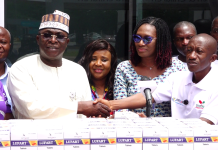
The Ministry of Gender, Children and Social Protection has hinted of concrete steps it’s initiating to end the practice of Female Genital Mutilation (FGM) in the country.

In a statement signed by the Minister of Gender, Children and Social Protection to commemorate the International Day of Zero Tolerance for Female Genital Mutilation, Otiko Afisah Djaba stated that, her Ministry will  forge better collective responsibility with the media, faith based organizations, traditional rulers, MMDA’s, civil society and community based organizations to implement concrete actions to end FGM NOW in Ghana as well as intensify public community based awareness campaigns against FGM.

The Gender Minister noted that the country had come very far as the leading African country in its practice of democracy, the rule of law and the fight for human rights.

“After sixty years of independence THE TIME IS NOW FOR GHANA TO STOP FGM completely. We have to understand that ending FGM is not to be narrowed down as a women’s issue or a Ministry of Gender, Children & Social Protection problem. The fight to eradicate FGM must be addressed as a national crusade that would lead to sustainable development,” she said.
She noted: “Ghana can no longer leave anyone out or behind, especially females. Thus, we cannot afford our women and children to be subjected to this risky, life threatening, inhuman, degrading and shameful FGM practice in this country any longer. We as a community of Ghanaians must demonstrate our commitment to protect our women and girls from human rights abuses to eliminate all forms of violence against them.”

READ FULL STATEMENT BELOW


COMMEMORATION OF THE INTERNATIONAL DAY OF ZERO TOLERANCE FOR FEMALE GENITAL MUTILATION

Female Genital Mutilation (FGM) is recognized internationally as a human rights violation of girls and women. It results in deep rooted inequality between the sexes and constitutes as an extreme form of discrimination against females. It violates the right to health, physical integrity, the right to be free from torture and cruelty, inhuman treatment and the right to live where it results in death. Thus, since 2003, the United Nations introduced The International Day of Zero Tolerance for Female Genital Mutilation as an annual awareness day, that is celebrated globally every 6th February as part of the UN’s efforts to eradicate Female Genital Mutilation. 

Female Genital Mutilation is one of the ancient cultures which has been practiced in Africa and Asia for decades. History has it that the practice of FGM came from neighboring countries such as Burkina Faso, Mali, Niger and Togo into Ghana. In Ghana, some parts of the Northern, Upper East, Upper West and Brong Ahafo and the Volta Regions including the Zongo Communities in certain urban centers of the country are notable places where the practice still goes on. 

It is clear that the adoption of this cultural practice of FGM has not served any good purpose in our country. Culture that violates the rights of the people is not worth practicing. The practice of FGM has serious implications on the health of the females in terms of maternal health, infant mortality self-esteem, discrimination, stigma and productivity. Indeed, the practice has no benefits for girls and women but rather in the name of ensuring fidelity in females, FGM exposes them to health hazards and psychological trauma. It causes severe bleeding, problems in urinating which can develop into cysts, infections, complications in children and increased risks of fistula during child birth.

Studies show that an estimated 100 to 140 million girls and women in the world today have undergone some form of FGM and two million girls are at risk from the practice each year. Studies also indicate that in Ghana, the prevalence in the 1990s was as high as 77% but reduced drastically due to the advocacy and sensitization that has gone on.  In 1994, Ghana abolished the practice of FGM and in 2011, the World Bank reported female genital mutilation prevalence as 3.8%.

The current national prevalence is about 3.8% but regional prevalence, especially in the Upper East is reported to be higher. This increase could be due to the cross-border practice where people move to and fro Ghana and neighboring countries to perpetuate this crime. Nationwide surveys are being embarked on to ascertain the accurate current data per our regions.

It is believed that this practice fosters our male dominant and patriarchal traditions designed to ensure fidelity and honour in women and girls. FGM is erroneously believed to be an honourable act which is a determination of womanhood. However, it does not take into consideration the fact that women and girls have a right over their sexuality. The Question is: Who checks the fidelity of the males? 

As the Ministry for the vulnerable, the weak, excluded and marginalized, we join the international community to condemn female genital mutilation in Ghana. As we celebrate this International Day of Zero Tolerance for FGM we


wish to forge better collective responsibility with the media, faith based organizations, traditional rulers, MMDA’s, civil society and community based organizations to implement concrete actions to end FGM NOW in Ghana and to intensify public community based awareness campaigns against FGM.

We have come very far as the leading African country in our practice of democracy, the rule of law and the fight for human rights. After sixty years of independence THE TIME IS NOW FOR GHANA TO STOP FGM completely. We have to understand that ending FGM is not to be narrowed down as a women’s issue or a Ministry of Gender, Children & Social Protection problem. The fight to eradicate FGM must be addressed as a national crusade that would lead to sustainable development.
Ghana can no longer leave anyone out or behind, especially females. Thus, we cannot afford our women and children to be subjected to this risky, life threatening, inhuman, degrading and shameful FGM practice in this country any longer. We as a community of Ghanaians must demonstrate our commitment to protect our women and girls from human rights abuses to eliminate all forms of violence against them.

The challenges are mainly attitudinal and the issues of cross border practice. The Ministry will increase collaboration with the Ministry of Health, Foreign Affairs, Interior and Regional Integration to sensitize and educate citizens from the border areas and neighbouring countries through their Embassies and or High Commissions. The Ministry will also intensify our grassroots community based approach of public awareness, capacity building and reward systems. We are initiating A National Social Protection Excellence Awards program this year to promote best practices of social protection tenets and actions.

The Ministry of Gender, Children and Social Protection through its regional offices has been doing a lot of sensitization and advocacy on ending inimical and harmful cultural practices including inhuman widowhood rites, child /forced marriages and FGM among others.

Over the years, Governments, Non-Governmental Organizations Civil

Society Organizations, Development Partners and individuals have have worked hard to reduce the practice of FGM to 4% nationally in Ghana but we need to consolidate the gains made to date and get it down to zero tolerance.

Lastly, the Ministry will collaborate with the law enforcement agencies and our development partners through a series of targeted stakeholder consultations to ending FGM once and for all in Ghana.

As we mark this day as part of our combined efforts with the UN and other social activist parties, we must remind ourselves that the elimination of FGM is a key target under SDGoal 5, We therefore call on our friends from the media to send this information to the furthest parts of the country and let the public know that the practice of FGM is a crime in Ghana. The law against FGM, ACT 741 of the Parliament of the Republic of Ghana entitled Criminal Code (Amendment) Act 2007, provides for imprisonment and/or fines for both the circumciser and those who request, incite or promote excision by providing money, goods or moral support. The person who commits this offense is liable on summary conviction to imprisonment for a term of not less than five years and not more than 10 years.

Ghana|Atinkaonline.com|Regina Asamoah|[email protected]


Auditor-General applies for powers to act like Special Prosecutor

0


The Auditor-General could become the next public official with prosecutorial powers to fight corruption within the public service following the creation of the Office of the Special Prosecutor.

Mr. Daniel Domelevo says he has applied to the Attorney-General to grant him the powers to prosecute those indicted in the annual Auditor-General's report often riddled with repetitive stories of mismanagement.

"If the Attorney-General gives me a fiat which I have applied for, you will see me in action", the tough-talking Domelevo said.

He expressed what he described as "big disappointment" in some accountants within the public service faulting them for double payments made for goods and services procured in the public and civil services.

The Auditor-General has already disallowed the payment of 5.4bn cedis in overpaid contracts. At a press conference Monday, he explained that the overpayment was because some accountants simply failed to uphold professional standards

The accountants who are to scrutinize requests for payment sometimes make requests for double payments, a practice he suspects is deliberate.

But the excuse the accountants give is simply that they forgot that the good or service has already been paid for, he said.

Domelevo who has made no secret of his delight at a Supreme Court judgment that ordered his department to disallow and surcharge persons who abuse public funds, revealed his efforts are bearing fruits.

"Good things are happening…most of the people are paying," he said adding he will update the public on how much has been collected since he was appointed in December 2016.

He said those who "dared" to challenge the surcharge in court have now come pleading for out of court settlement after the Auditor-General replied to the suit.

At least 62 companies and organisations have been issued surcharge certificates to the tune of 8.8m cedis after they received payments without documented proof between December 31, 2013 and December 31, 2015.

He said the judgment delivered in OccupyGhana vs Auditor-General case which charged it to surcharge has become an important document for him.

The Auditor-General said he has read the judgment over 15 times to fully appreciate the implications. Mr. 

He said the annual Auditor-General reports presented to Parliament will no longer be only a compilation of wrong-doings and embezzlements. It will now include actions it has taken to retrieve the money.

According to him, as the report points out the infractions of public and civil servants, it will also show remedial steps that have been taken to protect the public purse, he explained.

Henceforth, the Auditor-General's Department will no longer depend on the Public Accounts Committee of Parliament in its fight against abuse and embezzlement of public funds.

He said the era of waiting for parliament to grant it the go-ahead to retrieve such monies is over.

"Instead of waiting for PAC to come and say go and bring the money that you have embezzled, we disallow and surcharge you".

"Once you cannot provide documentation, once you cannot justify, we disallow it, we surcharge you. We don't wait for Public Accounts Committee, it will be too late".

He said like many Ghanaians he found efforts taken by Parliament to address issues raised in the annual reports "surely disturbing".

PAC holds public hearings on the annual reports where heads of institutions come and explain reports of abuse, embezzlement, and corruption. 

But little is done to the heads or persons indicted in the reports and little is heard of Parliament's Public Accounts Committee after the hearings.

 Indicted persons in the report who are surcharged will not have to go to parliament to challenge the Auditor-General, he will now have to go to court.

"It is no more a matter for parliament it is court…we will take the ball to court", he said.

The Auditor-General said the new strategy is not to downplay the importance of parliament's Public Accounts Committee.

The committee is important in checking that heads of ministries tighten internal controls of public funds.

Myjoyonline

“We invoked curses because national executives treated us unfairly” – Angry NPP delegates

0


Some members of the New Patriotic Party (NPP) who invoked curses on the party’s leadership have attributed their action to neglect and unfair treatment meted unto them in the just ended polling station elections.

Some disgruntled members of the new patriotic party (NPP) in the Awutu Senya East in the Central Region have invoked curses on the party’s acting General Secretary John Boadu and other executives.

Speaking to Ekourba Gyasi on Atinka AM Drive, William Aggrey, the leader of the delegation stated that the elections did not come off in areas such as “Iron City and Steps to Christ”, but the party national executives claimed the elections have been held and polling station executives elected.
According to him, some of them have laboured and made a lot of sacrifices for the party. He added that after winning, some executives of the party have removed their names from the register as delegates.

However, Deputy General Secretary of the NPP, lawyer Obiri Boahen, stated that the delegates have not been fair to John Boadu and the national executives. According to him, John Boadu has done his best as the general secretary for the NPP.

“I learnt they invoked the curses on Friday, while we were still in a meeting deliberating on ways to solve the issues amicably. Such situations do not help in the growth of the party” he added.

Ghana | Atinkaonline.com | Vivian Adu Boatemaa


Ras Mubarak was extremely abusive – Ex-wife reveals 

0


Rasheeda  Adams, ex-wife of Ras Mubarak, has revealed that, she divorced  the Kumbugu MP because he was extremely abusive towards her.

Ms Adams’ response   follows claims by  Ras Mubrak that, his ex-wife divorced him just before the December 7, 2017 election for no apparent reason.

Ras Mubarak married daughter of Asawase MP, Muntaka Mubarak in Kumasi over the weekend, but reports suggested that the new bride was his second wife.

However, the lawmaker in a Facebook post Monday, disputed the claims, saying he has only one wife.

“I've just woken up to news that I married an additional wife yesterday. Let me put it on record that – though I am unapologetically a believer in polygamy and my religion, and my proud Dagbon tradition and culture permit polygamy, – I just remarried yesterday after my wife then, packed out and sued for divorce a few weeks before the 2016 election,” Ras Mubarak stated.

However, setting the records straight on her Facebook page Monday,  Rasheeda said: 

*I was married to Mr. Mubarak, which resulted in two beautiful children.
*Said marriage has been over for more than a year, as we are now in court over custody matters
*The marriage ended due to extremely abusive behavior from Mr. Mubarak towards me.
*We have not lived together for the last 1 year

  
Below is  her full statement:

DISCLAIMER:

TO WHOM IT MAY CONCERN

I woke up this morning to a barrage of calls sympathizing with me, because my “husband” ,Ras Mubarak took a second wife. I wish to categorically state that, this information is wrong. I have refrained from commenting on this issue because I believe my time and energy would be put to better use by working hard and nurturing my children. However, it has gotten to a point where I am avoiding business calls just so I do not have to speak to another “sympathizer”.
*I was married to Mr. Mubarak, which resulted in two beautiful children.
*Said marriage has been over for more than a year, as we are now in court over custody matters
*The marriage ended due to extremely abusive behavior from Mr. Mubarak towards me.
*We have not lived together for the last 1 year
For those who were “kind” enough to call me to solicit for information:
*No, I do not know his new wife, Don’t ask me if she is his sister, I don’t know.
*Yes I’m fine with it. The Ashantis have a proverb to wit;” After one pushes an old lady, where she falls is not one’s business”.
*A man cannot have a second wife when he does not have a first, and I AM NOT HIS WIFE.
I am very happy for him as the father of my children and wish him marital bliss so he can completely forget my existence. I feel nothing but relief.
Finally, I would be grateful if my former colleagues in the media would verify their facts before putting them out. It will save us all a great deal of stress.
Thank you.

Ghana| Atinkaonline.com 
 

Dead body exhumed, raped

0

The farming community of Wassa Saaman in the Wassa Amenfi East District of the Western Region was thrown into a state of shock last Thursday when news broke out that the corpse of a thirty-year-old woman buried in the area had been exhumed and left at the cemetery.

Some of the residents believed that the dead body of Maame Ajoa, popularly called Maajoa, who was buried about three weeks ago, was exhumed purportedly by some people believed to be engaged in blood money, also called ‘sakawa’.

They asserted that the cloth which was used to cover her private part when she was being buried was also removed.

“So we are suspecting that the purported ‘sakawa’ boys might have raped or had sex with the corpse,” sources revealed.

According to the sources, the exhumed body has since been reburied after the chief and elders of the community had performed the necessary rites.

Eyewitness accounts had it that about a week after Maajoa’s burial, a woman who was searching for firewood at Wassa Saaman cemetery came across the exhumed body and returned to inform the deceased family members but they did not believe it.

Later the youth in the community, led by the Asafoakye, went to the cemetery to dig a grave for a corpse to be buried and one of them, believed to be Maajoa’s family member, chanced upon the exhumed corpse and immediately went to inform the family.

“When the family came to the cemetery, they identified the body as that of Maajoa and they immediately went to inform the chief and elders of the community,” the eyewitness indicated.

A family source indicated that the exhumed corpse was raped by those who exhumed because footprints were found around the body and that her legs wide opened. He suspected that the suspects had sexual intercourse with the lifeless body.

“When we were burying Maajoa, we covered all her body except the head, so it’s strange that the cloth covering her private part has been removed and her legs wide opened,” a family member revealed.

Daily Guide