






















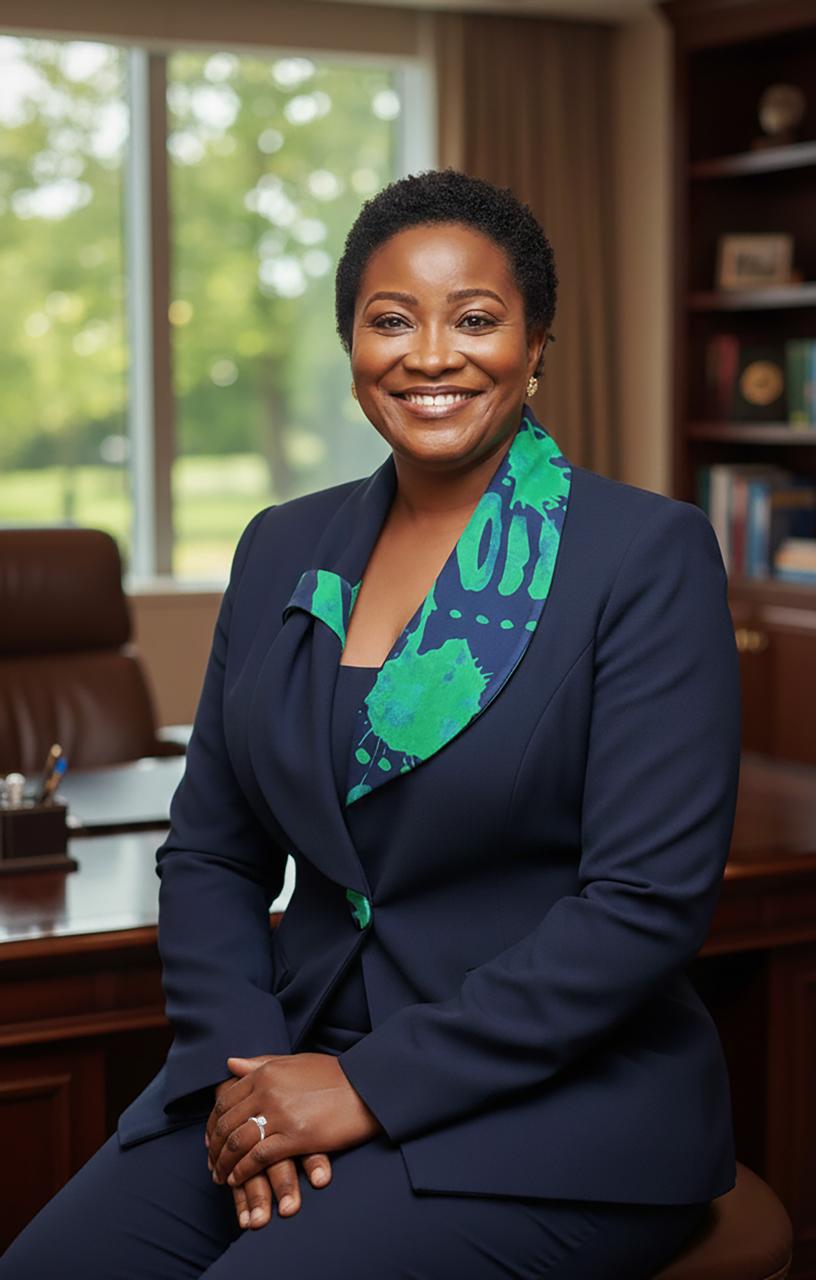
By Nana Owoahene Acheampong
In 2014, Maud Lindsay-Gamrat made a bold decision that would redefine Ghana’s catering industry. After 15 years in senior management at a multinational inflight catering company, she resigned from her corporate role to establish Atlantic Catering and Logistics Ltd.
At the time, Ghana’s oil and gas sector was expanding under local content policies, yet most high-value catering contracts continued to be awarded to foreign firms.
“I had mastered the systems, compliance protocols and operational discipline required to deliver excellence under pressure,” Lindsay-Gamrat recalls. “I knew Ghana needed that expertise, and I knew Ghanaians could deliver at that level.”
Driven by the belief that local businesses could meet international standards, she stepped into a highly competitive space dominated by global players.
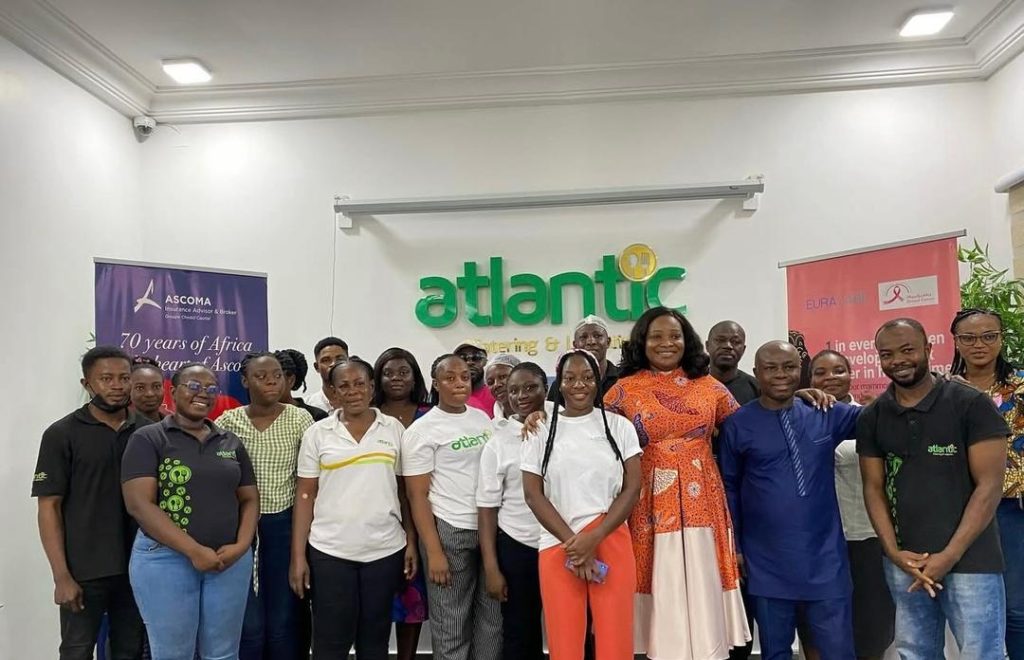
Ten years on, Atlantic Catering has grown into Ghana’s largest catering company, employing over 600 people and ranking 20th on the Ghana Investment Promotion Centre’s (GIPC) Club 100 list. The company provides catering and logistics services to oil and gas multinationals, mining firms and airline companies, operating across Accra, Takoradi and Ahafo.
Atlantic Catering has also set industry benchmarks in compliance and safety. It is the first Ghanaian catering company to join the UN Global Compact Network and holds three ISO certifications covering food safety, environmental management and occupational health and safety.
“In industries where one food safety incident can halt operations, certifications are not optional—they are essential,” Lindsay-Gamrat noted. “These companies needed partners who understood reliability and compliance at the highest level. I had spent years learning exactly that.”
Her corporate background shaped Atlantic Catering’s operational systems, built on precision, consistency and accountability. But beyond systems, she invested heavily in people.
Employee development remains central to the company’s culture, with structured training programmes focused on leadership, emotional intelligence and professional growth, particularly for women.
“The only thing more beautiful than a woman is a group of women,” she said. “I believe in lifting as I climb.”
The company’s impact extends beyond its workforce. Atlantic Catering sources produce from smallholder farmers across the country, supporting rural livelihoods and strengthening local supply chains.
“Every tomato, yam or pepper we buy from a Ghanaian farmer is money that stays in our economy,” she said. “We are not just feeding our clients; we are enabling livelihoods.”
Through the Atlantic Cares Foundation, the company’s Clean Bites initiative has trained more than 1,300 street food vendors nationwide in food safety and sanitation at no cost.
“Excellence should not be reserved for multinationals. Every Ghanaian deserves safe food,” Lindsay-Gamrat stressed.
A graduate of the University of Professional Studies, Accra, and holder of a Global Executive MBA from the China Europe International Business School, Lindsay-Gamrat believes that building world-class local enterprises requires persistence, discipline and strategic investment.
Having proven that Ghanaian businesses can compete at the highest level, she is now setting her sights beyond national borders.
“I want Atlantic Catering to become a leading catering company across Africa,” she said. “It is an opportunity to showcase our diverse cuisines, which are a vital part of our culture.”
A decade ago, foreign firms dominated catering in Ghana’s extractive sector. Today, a homegrown company employs 600 people and serves some of the country’s most demanding clients.
Atlantic Catering’s journey stands as a compelling answer to the question of whether local enterprise can compete globally—and win.