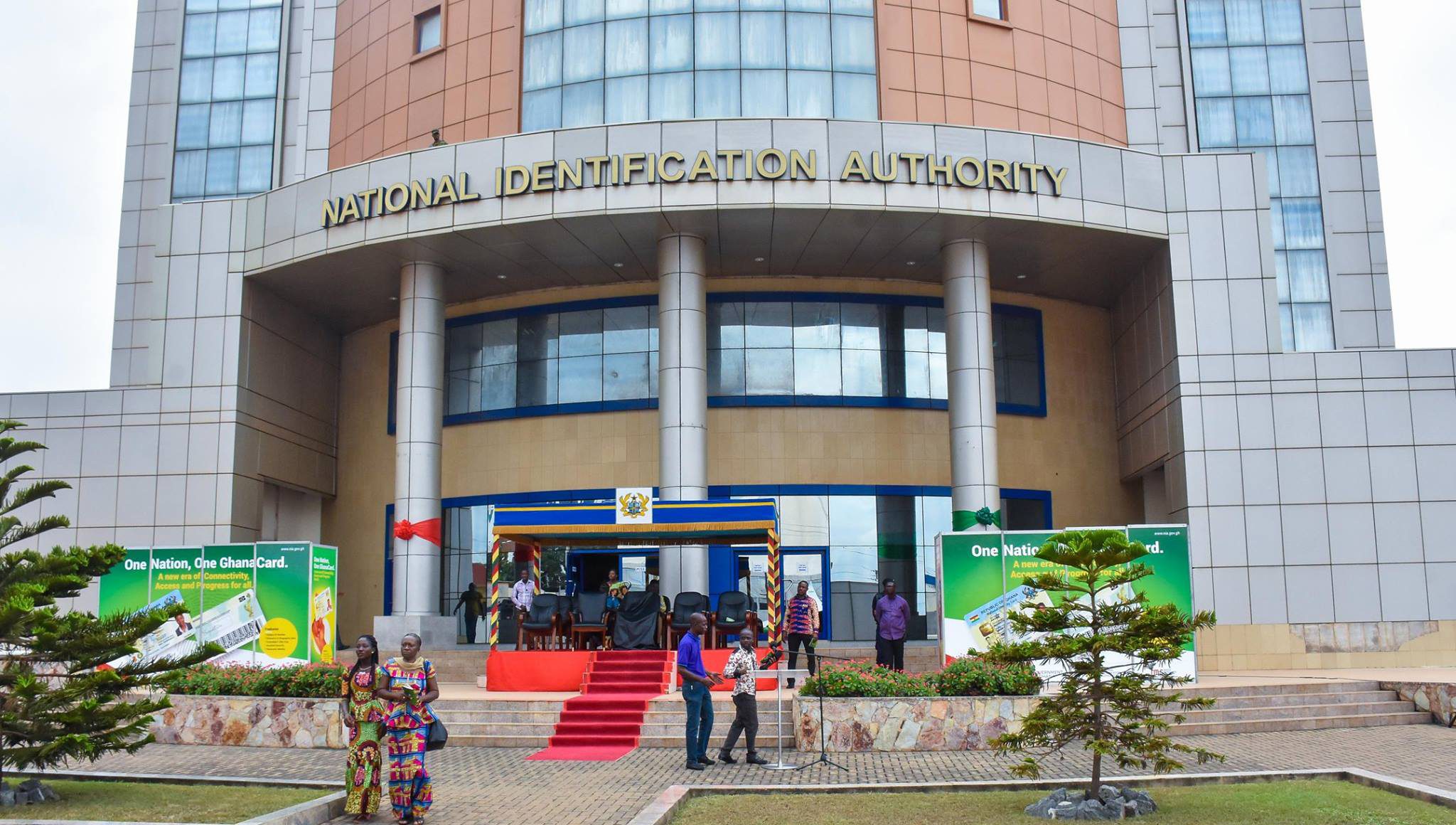
The government has introduced new regulations requiring biometric verification whenever the Ghana Card is used for transactions prescribed by law.
The requirement is contained in the National Identity Register Amendment Regulations, 2026 (LI 2523), which amends portions of the National Identity Register Regulations, 2012 (LI 2111).
The new regulation is aimed at strengthening identity verification and reducing the risk of impersonation and identity fraud in transactions where proof of identity is required.
Under LI 2523, organisations that are legally required to verify a person’s identity before providing regulated services must use an approved biometric verification method.
This means institutions will no longer be expected to rely solely on visual inspection or photocopies of the Ghana Card when verifying the identity of a cardholder.
The regulations also provide that individuals who seek to verify another person’s identity in the course of a private or informal transaction must conduct biometric verification in accordance with the prescribed requirements.
The implementation of LI 2523 does not mean that the Ghana Card itself has been changed.
The Ghana Card remains Ghana’s official national identity card. The major change concerns how the identity of the cardholder is verified when the card is presented for transactions covered by law.
Previously, many institutions verified identity by simply inspecting the Ghana Card or making a photocopy of it before providing a service.
With the new regulations, biometric verification will be required for transactions where the law mandates identity verification.
The biometric process is intended to confirm that the person presenting the Ghana Card is indeed the legitimate cardholder.
For individuals, the new requirement means that presenting a Ghana Card may not be sufficient on its own for certain regulated transactions. Where biometric verification is required, the person’s identity will have to be confirmed using an approved verification system.
Organisations covered by the law will also be required to adopt the approved biometric verification process when providing services that require identity verification.
The move forms part of efforts to improve the reliability of Ghana’s national identification system and ensure that identity information is properly authenticated during transactions.
The National Identity Register Amendment Regulations, 2026 therefore shifts the emphasis from simply checking the physical Ghana Card to verifying the person behind the card through biometric authentication.
Authorities say the measure is intended to provide stronger assurance that individuals accessing regulated services are properly identified and authenticated.
CREDIT: MAVIS FANTEVI