The Motor Traffic and Transport Department (MTTD) of the Ghana Police Service says about 8,000 road crashes have been recorded across the country as of the end of July 2026, with thousands of people killed and injured.
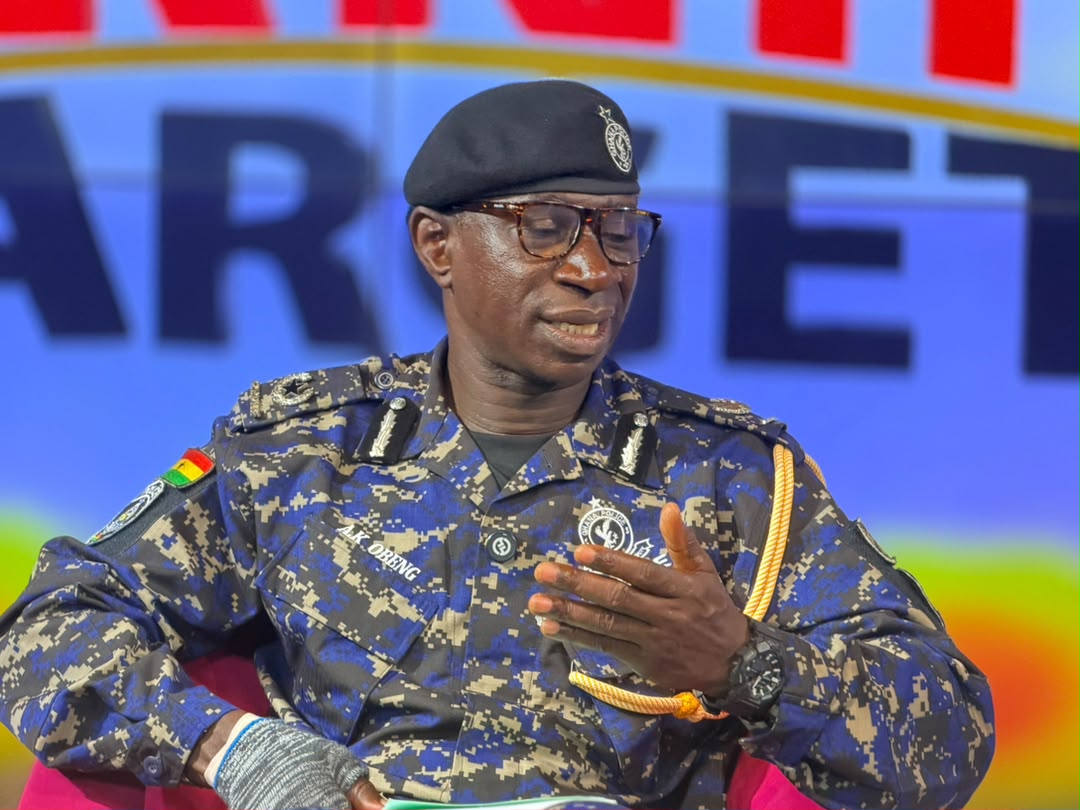
Speaking in an interview on Bullet TV’s Morning Target, Director of Research, Education and Training at the MTTD, ACP Alexander Kwaku Obeng, said the crashes involved about 13,000 vehicles, with approximately 7,700 deaths and 9,800 injuries recorded during the period.
He said although the figures remain worrying, the country is still within its annual road safety reduction target, which seeks to achieve about a five per cent reduction in road crashes compared with the 2021 benchmark.
ACP Obeng, however, stressed that every death or injury resulting from a road crash represents a serious loss and must be prevented wherever possible.
According to ACP Obeng, data collected by the police over the years shows that human behaviour is responsible for between 90 and 96 per cent of road crashes in Ghana.
He explained that road crashes are generally influenced by four major factors, the human, the vehicle, the road and the environment but human actions remain the dominant factor.
He said analysis of current crash data indicates that about 62 out of every 100 crashes are linked to excessive or inappropriate speed.
Other contributing factors include dangerous behaviour at junctions, pedestrian-vehicle conflicts, unsafe motorcycle use, dangerous overtaking, tailgating and driving while distracted by mobile phones.
ACP Obeng also expressed concern over the rising involvement of motorcycles in road crashes.
He said while crashes involving private and commercial vehicles declined by 9.8 per cent and 7.33 per cent respectively compared with the same period last year, motorcycle-related crashes increased by 9.9 per cent.
He disclosed that 1,703 deaths had been recorded from motorcycle-related incidents during the period, with motorcycles accounting for 829 deaths.
According to him, motorcycle-related deaths represent almost 48 per cent of the total deaths recorded among the different categories of road users and vehicles.
He identified failure to wear helmets, dangerous manoeuvring, speeding, zigzagging through traffic and the use of inadequately trained riders as some of the behaviours contributing to motorcycle-related deaths.
ACP Obeng also announced that the police are transitioning from the traditional manual use of speed cameras to an automated road traffic enforcement system under the new Road Traffic Regulations, 2026, LI 2519.
He explained that the new system will use cameras mounted on tripods, police patrol vehicles and static poles at hazardous locations to detect traffic violations.
The cameras will capture violations such as speeding and transmit the information to a police back office, where an electronic notice of violation will be generated and sent to the offender.
Under the new system, motorists will not necessarily be stopped by police officers when they commit a traffic offence. Instead, they could receive an electronic ticket on their phones while still on the road.
ACP Obeng said motorists who receive the electronic notice will be required to pay the applicable fine within 14 days, failing which the matter could proceed to court.
He further warned that repeated speeding offences could lead to the cancellation of a driver’s licence, while speeding attracts a minimum fine of GH¢240 per violation, according to his explanation of the new enforcement regime.
The MTTD Director said the new system is also intended to address a common behaviour where drivers slow down only when approaching police checkpoints and resume speeding after passing them.
He explained that police vehicles equipped with mobile cameras would patrol roads and capture motorists who engage in excessive speeding between checkpoints.
According to him, one deployment on the Accra-Cape Coast road recorded about 2,000 traffic violation events, demonstrating the scale of speeding that can occur outside the immediate presence of police officers.
He said the objective is to create a system where motorists comply with traffic regulations even when they cannot see a police officer.
ACP Obeng also urged passengers and other road users not to remain silent when drivers engage in dangerous behaviour.
He said passengers have the right to speak up when a driver is driving recklessly, dangerously or in a manner that could expose them to a crash.
He encouraged passengers to report dangerous drivers to the police through 191, 18555 or 112, approach police barriers or lodge complaints for further investigation.
He also urged members of the public to report activities such as the unauthorised removal of road signs and other road furniture, stressing that such infrastructure belongs to the community and plays an important role in road safety.
ACP Obeng said stronger enforcement, improved technology and greater cooperation from motorists and other road users would be critical to reducing preventable crashes and saving lives on Ghana’s roads.
CREDIT: MAVIS FANTEVI