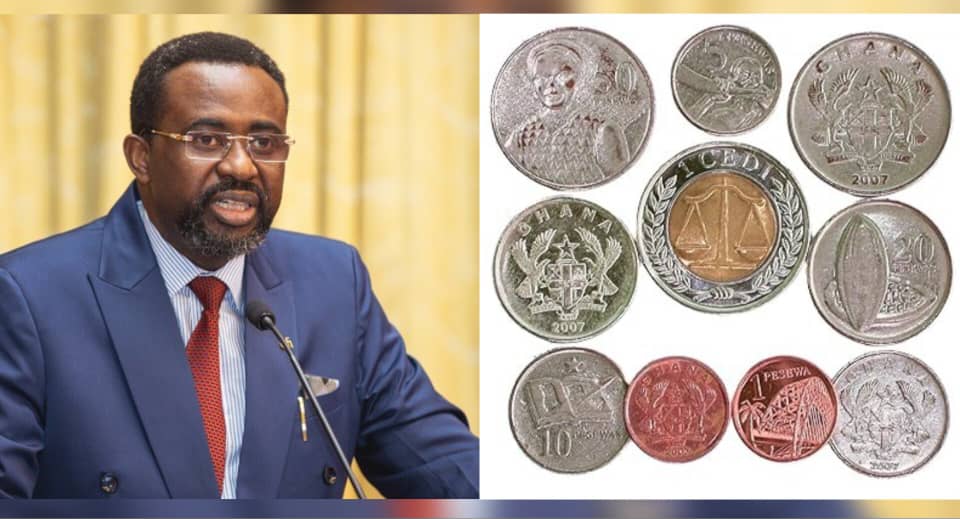
The Bank of Ghana (BoG) has expressed concern over the growing refusal by some traders, transport operators and businesses to accept cedi coins as payment, reminding the public that all coins issued by the central bank remain legal tender and must be accepted in commercial transactions.
In a public notice titled “Rejection of Ghana Cedi Coins: Obligation to Accept Legal Tender and Applicable Criminal Sanctions,” the Bank said it has observed the widespread rejection of 1 pesewa, 5 pesewa, 10 pesewa, 20 pesewa and 50 pesewa coins, as well as the GH¢1 and GH¢2 coins, in exchange for goods and services.
According to the Bank, the notice follows an earlier public advisory that addressed the misuse, abuse and illegal handling of Ghana cedi banknotes. It explained that the latest notice specifically focuses on the unlawful refusal to accept coins that remain valid legal tender.
The central bank reminded the public that all coins issued by the Bank of Ghana remain lawful currency under the Bank of Ghana Act, 2002 (Act 612), as amended, the Currency Act, 1964 (Act 242), and other applicable laws.
The BoG stated that all cedi coins, including the pesewa denominations, remain valid for settling debts and conducting transactions throughout the country, adding that none of the coins has been withdrawn from circulation or demonetised.
It further stressed that no trader, transport operator, business entity or individual has the legal discretion to refuse the coins as payment for goods or services on the grounds of inconvenience, low value or personal preference.
The Bank also warned that refusing to accept legal tender may constitute an offence under the Currency Act, 1964 (Act 242), and indicated that criminal sanctions may apply to persons who unlawfully reject the country’s legal currency.
The BoG urged members of the public and businesses to comply with the law by accepting all valid Ghana cedi coins in day-to-day transactions.