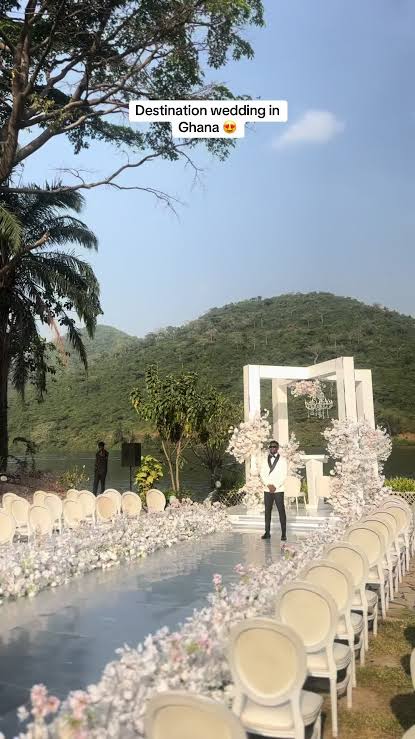
Picture this. The Atlantic Ocean crashing gently in the background. A bride walking barefoot across golden sand as the sun dips low over the water.
No traffic jam, no last-minute chair rental crisis, just the wedding of a lifetime unfolding against one of the most photogenic coastlines in West Africa.
This is the pitch now being made not just to Ghanaians dreaming of a beach wedding at home, but increasingly to couples abroad looking at Ghana as their destination wedding location.
Wedding planners point out that an event costing eighty thousand dollars in the United States can be recreated at the same level of quality in Ghana for a fraction of the price, all while giving international guests the trip of a lifetime.
From beachfront resorts along the coast to colonial era forts overlooking the ocean and garden estates tucked into the hills, the venue options genuinely rival anything you would find in Bali or the Caribbean.
For Ghanaians planning their own big day, the appeal of a destination style wedding closer to home is just as strong.

Coastal spots like Prampram and Kokrobite have become popular for their scenic, intimate feel, with beachfront venues typically costing between twelve thousand and twenty-five thousand cedis.
Riverside venues along the Volta offer a different kind of magic entirely, swapping sea breeze for calm water views.
Compare that to the grand ballrooms of East Legon and Airport City, where prices for a premium indoor experience with air conditioning and built-in sound can start at thirty thousand cedis and climb well past seventy thousand.
So the venues are stunning. The prices, relative to the West, are genuinely attractive. But is the dream actually worth the cost for the average Ghanaian couple footing the bill themselves?
Here is where things get complicated. Even a modest wedding in Ghana today rarely stays modest for long. Catering alone can eat up a huge chunk of the budget.
For a two hundred guest wedding, standard menus of jollof, fried rice and chicken run between one hundred and fifty and two hundred cedis per head, while a premium spread with seafood and grills can hit four hundred and fifty cedis per head.
That is before drinks, décor, photography, a live band, aso ebi cloth, and the increasingly popular trend of flying in a photographer or planner from outside the region, which alone can add several thousand dollars to the bill.
Add the cultural weight that Ghanaian weddings carry, the traditional engagement, the white wedding, sometimes a reception that stretches over two days, and couples can easily find themselves spending far beyond what they planned, often dipping into loans or family contributions that create their own quiet pressures long after the honeymoon ends.
There is also a generational shift happening quietly beneath all this glamour. Younger couples are increasingly pushing back against the idea that a wedding must be a lavish, all guests invited spectacle to count as a real celebration of love.
Smaller, more intimate ceremonies at scenic locations, sometimes with fewer than fifty guests, are becoming a genuine alternative to the two hundred guest ballroom affair, offering many of the same photogenic moments without the crushing bill that follows.
Perhaps the honest answer is that the dream is worth the cost only when the couple, not tradition or social pressure, decides what that cost should be.
Ghana undeniably has the scenery, the hospitality and increasingly the infrastructure to host unforgettable weddings, whether for a couple from Achimota or a couple flying in from Atlanta.
The real work is making sure the memory outlasts the debt.