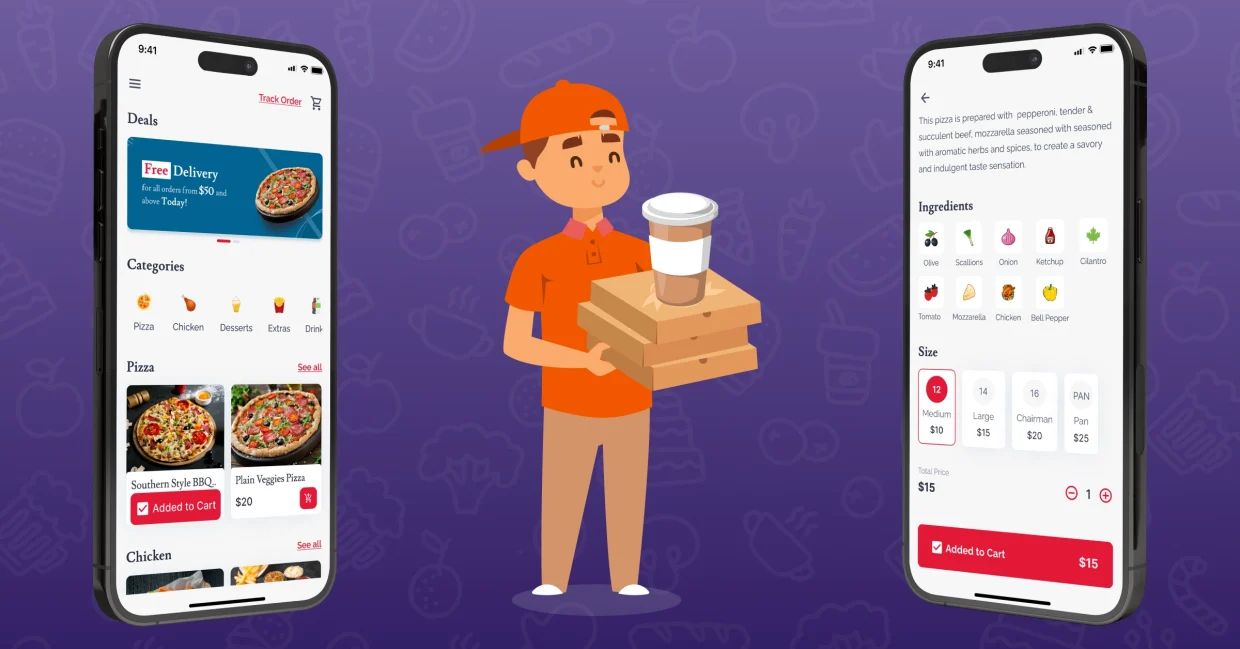
There was a time, not too long ago, when getting a meal, a bag of rice or a bottle of medicine meant physically going out to get it.
Today, a growing number of Ghanaians simply reach for their phone instead, tap a few buttons, and wait for a rider to show up at the gate.
Convenience, it turns out, has quietly become one of the most powerful forces reshaping how the country spends its money.
Bolt Food, one of the biggest players in the space, recently reported that orders beyond simple restaurant delivery, think groceries, pharmacy items, electronics, pet supplies and even flowers, more than doubled in the first half of this year compared to the same period last year, growing by a remarkable one hundred and fifty four percent.
According to the company, this was not the result of some grand new strategy. It happened organically, as customers who already trusted the app to deliver a hot meal on time began quietly expecting the same reliability for everything else on their shopping list.
That shift matters because it signals something bigger than food delivery convenience.
It suggests Ghanaians, particularly in urban centres, are beginning to treat their phones as a genuine substitute for the trip to the supermarket, the pharmacy, or the electronics shop down the road, not just an occasional treat for lazy Friday nights.
The road to get here has not been smooth, though. Anyone tracking this industry over the past few years has watched a fairly brutal shakeout play out.
Jumia shut down its food delivery arm in key markets including Ghana. Glovo, the Spanish delivery giant, made a high profile exit from the market entirely, citing profitability struggles, only for reports to later suggest renewed interest in the space as competition thinned out.
Behind the flashy branding and slick apps, the economics of delivery in Ghana have always been brutal, high fuel and logistics costs, patchy addressing systems that make navigation genuinely difficult, and price sensitive customers who will happily abandon an app the moment fees creep too high.
Yet despite all that turbulence, the underlying appetite for convenience keeps growing, driven by an expanding urban middle class, rising smartphone penetration and a simple truth about modern life, time has become as valuable a currency as money itself, particularly in cities where traffic alone can swallow hours of the day.
But convenience, as always, comes with a price tag that goes beyond the delivery fee stamped on your receipt.
Ordering food or groceries through an app is almost always more expensive than buying the same items in person, once service charges, delivery fees and the occasional markup on menu prices are added together.
For some households, that gap is barely noticed. For others operating on tighter budgets, those small extra charges accumulate quietly into a real dent in monthly spending, a kind of convenience tax most people never sit down to calculate.
There is also a quieter behavioural shift worth paying attention to. When shopping becomes as easy as tapping a screen, impulse spending tends to creep upward.
That extra snack added to a food order, the grocery run that somehow includes three items nobody actually needed, these small additions add up over a month in ways a physical trip to the market, with its natural friction of travel time and carrying capacity, rarely allowed for.
Whether this shift ultimately empowers Ghanaian consumers with more choice and saved time, or quietly nudges households toward spending patterns they never consciously chose, will likely depend on how disciplined shoppers become as the apps get smarter, faster and increasingly difficult to resist.
For now, one thing is certain. The days of Ghanaians treating delivery apps as an occasional luxury are fading fast, replaced by a generation that increasingly cannot imagine going back to doing it any other way.
SOURCE: ApurumManasseh Wintemah Apurum