If you have spent any time on Ghanaian social media over the past couple of years, you have almost certainly seen the phrase. Soft life.
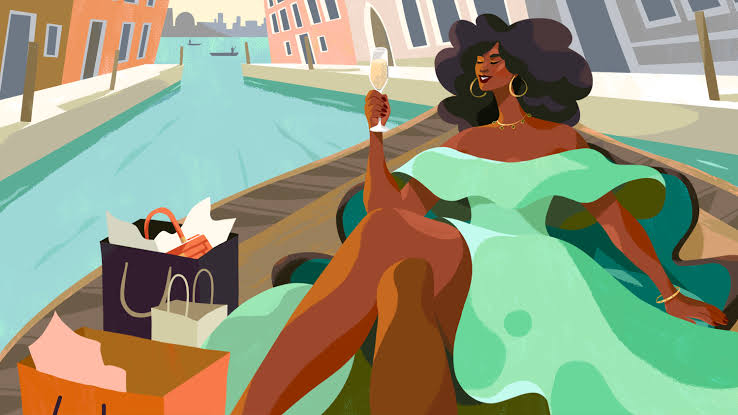
It shows up in captions under photos of brunches in East Legon, spa days in Airport Residential, and carefully curated shots of designer bags and quiet mornings with no alarm clock in sight.
What started as a phrase borrowed from Nigerian and diaspora social media circles has settled comfortably into Ghanaian youth culture, becoming shorthand for a life free of struggle, stress, and the grinding hustle that defined previous generations’ idea of success.
At its most generous interpretation, soft life is simply a rejection of glorified overwork.
Many young Ghanaians watched their parents labour for decades in jobs that offered little rest and even less financial reward, and they have decided, understandably, that they want something different.
They want boundaries at work, time for rest, the freedom to say no to exploitative hustle culture, and enough financial breathing room to actually enjoy their twenties and thirties rather than simply survive them.
Framed this way, soft life sounds less like laziness and more like a healthy correction, a generation prioritising wellbeing over burnout.
But the version that dominates timelines rarely stays that grounded.
On platforms like Instagram and TikTok, soft life has increasingly become synonymous with luxury and leisure divorced from any visible source of income.
Young women in particular are often shown being financially provided for, whether by a partner, a wealthy relative, or an unnamed source that the content conveniently never explains.
The aspiration being sold is not balance. It is escape from work altogether, funded by someone or something outside the frame.
Here lies the tension at the heart of the trend. For a small number of young Ghanaians, soft life genuinely reflects hard-won financial independence, the product of successful businesses, well-paying careers, or smart investments that afford them comfort without constant hustle.
For a much larger number of young people watching from smaller towns or working multiple jobs just to afford data bundles, soft life content sets an aspiration that borders on fantasy, one built on unrealistic expectations rather than achievable financial planning.
Financial counsellors in Accra have started noticing the downstream effects.
Some describe young clients taking on debt, including loans from digital lending apps that have proliferated across the country, to fund a lifestyle that photographs well online but does not match their actual income.
Others point to a growing reluctance among some young people to accept entry-level jobs or apprenticeships that feel beneath the soft life image, even when those roles would provide exactly the financial foundation needed to eventually achieve genuine independence.
The relationship between soft life culture and entrepreneurship is genuinely complicated, and it would be unfair to paint it as purely negative.
Some young Ghanaians have channeled the underlying desire for freedom into building actual businesses, from fashion brands to digital marketing agencies, precisely because they want the independence that comes with owning something rather than working for someone else indefinitely.
Entrepreneurship hubs in Accra have reported growing interest from young founders explicitly citing a desire to escape the traditional nine-to-five grind, energy that, properly channeled, can be genuinely productive for the economy.
The concern arises when the aesthetic of soft life gets mistaken for its substance.
Building a sustainable business or career that eventually affords comfort and rest requires exactly the kind of sustained effort, patience, and occasional discomfort that soft life messaging often implicitly discourages.
There is a real risk of young people internalising the destination, comfort and ease, without appreciating the years of unglamorous work that typically precede it for anyone who achieves that comfort honestly.
Brands have been quick to notice and monetise this trend.
Skincare companies, fashion retailers, and even banks now market products explicitly wrapped in soft life language, promising that the right purchase will bring the buyer one step closer to that curated, relaxed lifestyle.
This creates a feedback loop where consumption itself becomes performance, young people spending money they may not comfortably have in order to visually signal a lifestyle that, ironically, the spending itself often undermines rather than supports.
The honest answer to whether soft life is empowerment or illusion is that it depends entirely on how it is pursued.
A young Ghanaian who works diligently, builds savings, sets boundaries against exploitative work environments, and gradually earns the right to a more comfortable, less frantic life is living out something genuinely healthy and worth encouraging.
A young Ghanaian who borrows money or neglects opportunity in pursuit of an image manufactured for social media likes is chasing something considerably more fragile.
Parents, mentors, and financial educators have a role to play here, not by shaming young people’s desire for rest and comfort, which is a reasonable and human thing to want, but by helping them distinguish between soft life as an earned outcome and soft life as a performed aesthetic.
The former is worth striving for. The latter, however good it looks on a phone screen, tends to leave its performers quietly struggling once the camera turns off.
CREDIT: ApurumManasseh Wintemah Apurum